There is a quiet misunderstanding that often shapes how we approach love—that it must be found, secured, and held before time alters its course. Yet, beneath this urgency lies a quieter truth: real connection does not emerge from pursuit, but from recognition. It is not something we arrive at, but something that reveals itself when we stop insisting on arrival.
In the stillness of observation—in rivers that do not rush, in skies that do not demand alignment—we begin to sense that love may be less about finding the right person and more about becoming capable of understanding them. What follows is not a declaration, but a gradual unfolding—a movement from seeking to seeing, from holding to allowing.
The Shape of Waiting Light

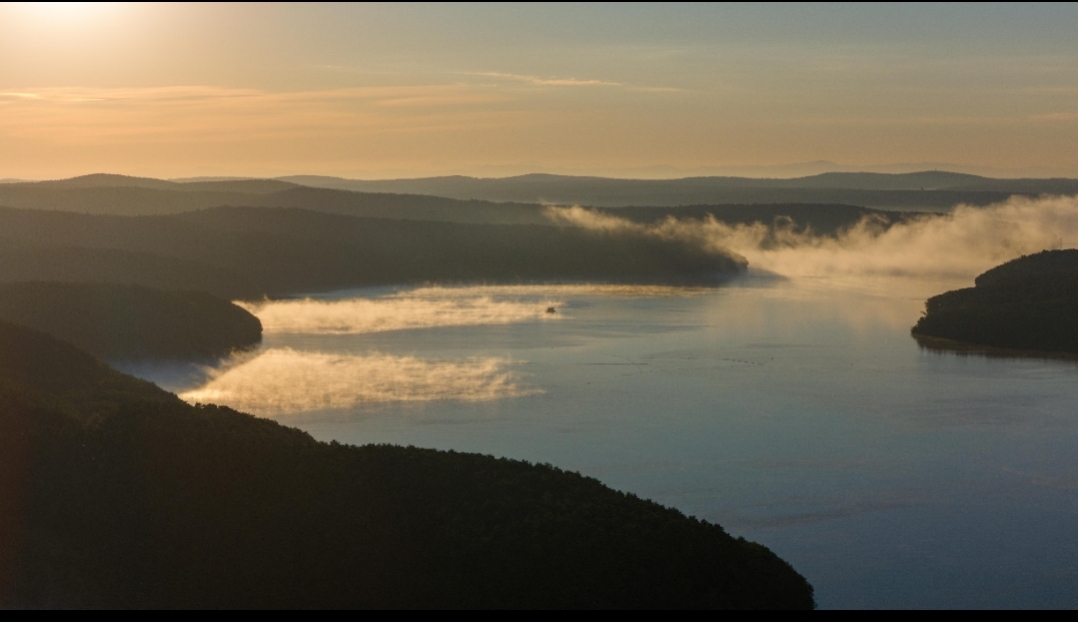
There is a lake that does not hurry
even when the sky changes its mind.

At dawn,
it holds the fading stars
without asking them to stay,
without mourning their departure.

I sit there sometimes—
not searching,
not naming anything—
just watching how stillness
can carry so much movement within it.

It was not always like this.

There was a time
when I believed love arrived like a storm—
loud, undeniable,
something that shook the ground beneath certainty.

I mistook intensity for truth,
urgency for depth,
and the quickening of the heart
for something eternal.

I ran toward people
as though they were destinations,
as though closeness could be measured
by how quickly two lives collided.

But collisions leave fragments.

And fragments,
no matter how beautiful,
do not grow.

—

The mountains in the distance
have been standing there longer than memory.

Snow rests on their shoulders
without claiming permanence.

When the sun arrives,
it does not argue with the cold—
it simply stays long enough
for change to happen.

I did not understand this before:
that warmth does not force transformation,
it allows it.

That love, too,
is not a demand
but a presence.

—

There is a river
that bends around every obstacle
without resistance.

It does not insist on straight lines.
It does not mourn the shape it could have been.

Instead,
it becomes something else—
something quieter,
something enduring.

I think of all the ways
I tried to make love linear,
predictable,
something that could be secured
if only I moved fast enough.

But rivers do not move fast to arrive—
they move because movement is their nature.

And arrival
is simply a consequence.

—

You cannot rush a horizon.

No matter how quickly you walk,
it remains at a distance—
not because it is retreating,
but because it was never meant
to be reached.

Perhaps love is like this.

Not something to grasp,
but something to walk within.

—

There were moments
when I feared silence between two people.

I filled it with words,
with reassurances,
with the need to define something
before it could define itself.

But silence,
like the space between mountains,
is not emptiness.

It is where echoes learn their shape.

Now,
I sit in quiet conversations
that do not demand completion.

I have learned
that understanding
does not always speak.

—

The wind moves through tall grass
without being seen.

Yet everything bends in response.

There are people like that—
they do not impose,
they do not overwhelm,
they do not ask you to become something else.

And still,
in their presence,
you begin to change.

Not abruptly.
Not violently.

But in small, almost invisible ways
that feel like remembering
rather than becoming.

—

A tree grows unevenly
because the wind has touched it for years.

No branch is symmetrical.
No direction is perfect.

And yet,
it stands—
rooted,
alive,
honest in its imperfection.

I think this is what it means
to accept someone’s past.

Not to smooth it,
not to rewrite it,
but to see how it has shaped them—
and to love the shape,
not despite its history,
but because of it.

—

There was a time
when I thought love meant holding on tightly.

Now I see—
what is held too tightly
cannot grow.

The right presence
does not close around you.

It opens.

It gives you back your own sky.

—

Two constellations
can exist in the same vastness
without colliding.

They do not compete for space.
They do not demand alignment.

And still,
they are seen together.

Perhaps this is what it means
to grow with someone.

Not to merge into sameness,
but to remain distinct—
and still connected
by something larger than either self.

—

Autumn does not apologize
for letting go.

Leaves fall
without hesitation,
without grief.

Because the tree understands
that release
is part of continuation.

I am learning this too—
that love is not threatened by change.

That growth
is not abandonment.

That becoming more
does not mean becoming distant.

—

A lighthouse stands
through changing tides.

It does not chase ships.
It does not demand to be seen.

It simply remains—
steady,
present,
trusting that its light
will find those who need it.

Perhaps love is this kind of presence.

Not pursuit.
Not urgency.

But a quiet consistency
that does not waver
with every passing storm.

—

I no longer ask
when love will arrive.

Because I am beginning to understand
that it does not arrive at all.

It reveals itself
in the way someone listens,
in the space they do not invade,
in the freedom they do not fear.

It grows
where it is not rushed.

It stays
where it is not forced.

—

The lake is still there.

Morning after morning,
it reflects whatever the sky becomes.

It does not choose the stars.
It does not resist the sun.

It simply receives—
fully,
quietly,
without needing to hold anything forever.

I think this is what I am learning.

To love like the lake.

To allow presence
without possession.

To trust
that what is real
does not disappear with time—
it deepens.

—

And if someone walks beside me one day,
not as a destination,
not as a solution,
but as a fellow traveler—

I will not rush toward them.

I will not ask them to stay.

I will simply walk.

And in that walking,
if our silences begin to understand each other,
if our freedoms do not conflict,
if our growth does not separate—

then perhaps,
without even noticing,
we will have built something real.

Something patient.

Something that does not fear time.

—

Because real love
is not found in moments of arrival.

It is found
in the quiet courage
to let things unfold.

And to trust
that what is meant to grow
will do so—

in its own time,
in its own shape,
under a sky
that has never once
been in a hurry.

Love, then, is not an erasure but an inclusion—a quiet willingness to sit beside all that has been, without trying to rearrange it into something more convenient. It does not rush toward certainty, nor does it weaken with time; instead, it deepens in the spaces where patience is allowed to breathe. There is a gentleness in this understanding—that what is real does not demand urgency, and what endures is rarely loud. In such a space, freedom is not distance, but trust made visible.
And perhaps this is where love finally reveals its truest form—not as something that completes us, but as something that grows with us. It asks for neither perfection nor constant proximity, only the courage to remain open as life continues to shape us. What unfolds slowly takes root more deeply, and what is given time learns how to stay. In the end, love is not something we find all at once, but something we recognize, again and again, as we continue becoming.

Leave a Reply