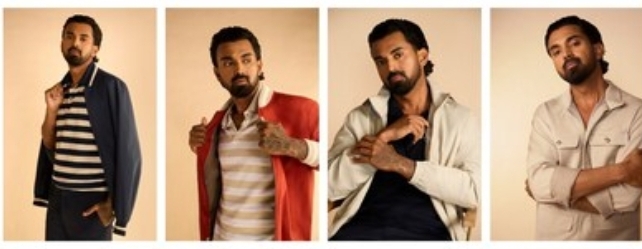
KL Rahul Paul & Shark Capsule: A Fashion Launch or a Strategic Shift in Luxury Power?
The KL Rahul Paul & Shark capsule might appear to be just another celebrity-led fashion drop—but that interpretation misses the deeper structural shift underway in global luxury.
Because this is not just about clothing.
It’s about how luxury brands are redesigning their strategy to stay relevant in culturally complex, fast-evolving markets like India.
The Illusion: Celebrity Fashion as Surface-Level Glamour
At first glance, a collaboration between KL Rahul and Paul & Shark fits a familiar template:
- A high-profile athlete
- A premium European brand
- A seasonal capsule collection
It’s easy to dismiss it as brand marketing dressed up as design innovation.
But that lens is outdated.
In today’s luxury economy, collaborations are not peripheral—they are central to market strategy, cultural positioning, and long-term brand relevance.
What’s Actually Happening: Cultural Localization as Strategy
For decades, luxury brands—especially those rooted in Italy and France—operated on a one-directional model:
Design in Europe → Export globally → Maintain exclusivity
That model worked when aspiration was driven by distance.
But in markets like India, something fundamental has changed.
Consumers are no longer satisfied with imported identity.
They expect recognition, representation, and relevance.
The KL Rahul Paul & Shark capsule reflects this pivot:
- The reinterpretation of the Bandhgala → embedding cultural familiarity
- Cricket-inspired design cues → contextual storytelling
- Lightweight, climate-aligned fabrics → functional adaptation
This is not aesthetic experimentation.
It is market-specific product engineering.
The System Behind It: Why Athletes Are the New Cultural Bridges
Luxury brands have options—actors, influencers, designers.
Yet increasingly, they are choosing athletes.
Why?
Because athletes like KL Rahul occupy a rare strategic position:
1. Performance-Based Credibility
Unlike influencers, their authority is earned, not manufactured.
2. Multi-Domain Influence
They shape narratives across:
- Style
- Discipline
- Fitness
- Lifestyle
3. Hybrid Identity
KL Rahul represents:
- Global competitiveness
- Indian cultural grounding
- Urban sophistication
This makes him an effective bridge between European heritage luxury and Indian consumer psychology.
He is not just endorsing a product.
He is translating a brand into a culture.
The Strategic Signal: India Is No Longer an “Emerging Market”
One of the most telling aspects of the KL Rahul Paul & Shark capsule is the explicit positioning of India as a key market.
This is a significant shift.
Luxury markets have historically been categorized as:
- Core → Europe, United States
- Growth → China
- Emerging → India
India is now transitioning into a strategic priority market.
This is driven by:
- Rising high-income consumer segments
- Rapid urban premiumization
- Increasing cultural confidence among buyers
Consumers are no longer asking, “Is this international?”
They are asking, “Is this relevant to me?”
This shift forces brands to rethink everything:
- Design language
- Brand storytelling
- Partnership strategy
The capsule is not a creative experiment.
It is a strategic response to market evolution.
The Silent Trade-Off: Authenticity vs Scalability
However, this strategy introduces a complex challenge.
How do brands localize deeply without diluting their identity?
There is a fine balance:
- Over-localization risks brand dilution
- Under-localization risks cultural disconnect
The KL Rahul Paul & Shark capsule attempts to strike that balance:
- Retaining Italian craftsmanship and materials
- Introducing Indian cultural references in controlled ways
- Leveraging athlete identity without over-commercialization
But this balance is fragile.
As more brands adopt similar strategies, we may see:
- Cultural motifs becoming overused
- Collaborations losing authenticity
- Identity turning into a commoditized asset
The Behavioral Shift: From Aspiration to Alignment
The modern luxury consumer—especially in India—is undergoing a psychological shift.
Earlier, luxury consumption was driven by:
- Aspiration
- Status signaling
- Western validation
Today, it is increasingly driven by:
- Identity alignment
- Cultural resonance
- Personal authenticity
Consumers are asking:
- Does this brand understand my context?
- Is this authentic or performative?
- Does this reflect my identity or overwrite it?
This fundamentally changes how luxury operates.
It moves from exclusivity-driven demand to relevance-driven demand.
The Larger Pattern: Athlete-Led Cultural Economies
The KL Rahul Paul & Shark capsule is not an isolated case.
It reflects a broader structural trend:
Athletes are evolving into multi-dimensional cultural platforms.
They are no longer limited to:
- Sport performance
- Brand endorsements
They now operate across:
- Fashion
- Media
- Entrepreneurship
- Cultural influence
KL Rahul exemplifies this transition:
- Athlete → Style influencer
- Performer → Cultural signal
- Individual → Ecosystem
This shift is redefining how brands build long-term equity.

Global Context: A New Luxury Playbook
While India is central to this collaboration, the underlying strategy is global.
Luxury brands are increasingly:
- Localizing narratives in key markets
- Collaborating with culturally embedded figures
- Designing products with regional context in mind
China underwent this transformation earlier.
India is now entering a similar phase—but with greater cultural diversity and complexity.
This makes localization both more necessary and more difficult.
Conclusion: What This Capsule Really Reveals
The KL Rahul Paul & Shark capsule is not just about fashion, design, or celebrity appeal.
It reveals a deeper truth about modern luxury:
This is not just about a collaboration—it reflects how global brands are restructuring themselves around culture, identity, and relevance in markets like India.
The future of luxury will not be defined by heritage alone.
It will be defined by how intelligently brands adapt that heritage to new cultural realities—without losing its essence.
And that is a far more difficult task than launching a capsule collection.

Leave a Reply