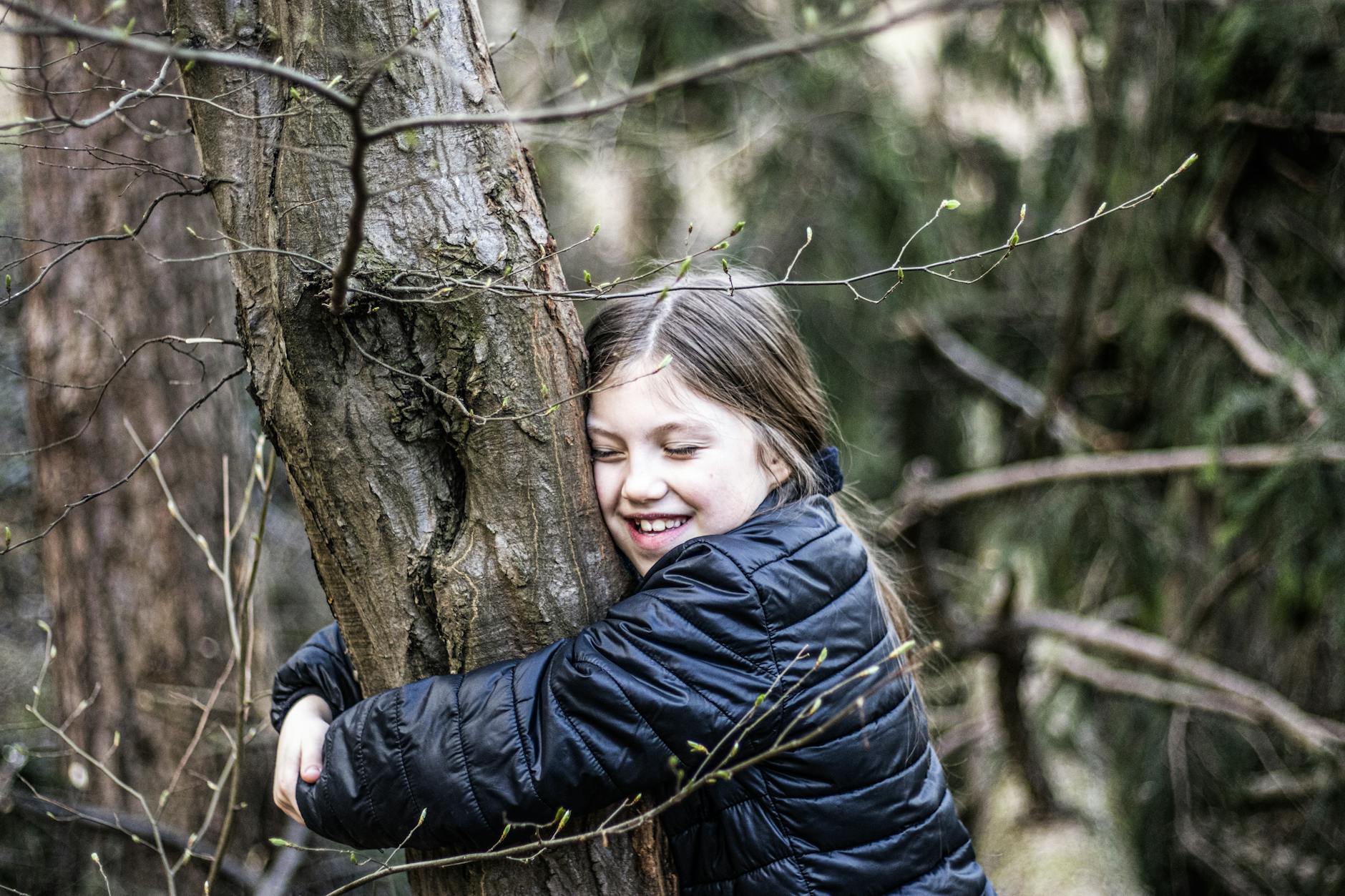
In a world shaped by constant notifications, fragmented attention, and digital overload, the idea of Shinrin-yoku forest bathing feels almost foreign—yet deeply necessary.
It is not a trend.
It is not a wellness aesthetic.
In fact, it is a return to a forgotten mode of being.
And in many ways, it begins where modern family life quietly unravels:
In the loss of shared attention.
We have grown used to being physically together but mentally elsewhere.
A family sits in the same room.
A meal is shared.
A conversation begins.
But attention no longer belongs to the moment.
A screen interrupts.
A notification pulls.
A second world opens silently inside the same space.
We are together, but we are elsewhere.
This is no longer occasional. It is structural.
The Real Shift: From Shared Time to Parallel Time
One of the most overlooked effects of technology is not reduced family time—but transformed family time.
Technology transforming family life is not about absence. It is about fragmentation.
Time is still present.
But experience is no longer shared.
Each individual occupies a different cognitive space:
- personalized feeds
- algorithm-driven content
- private digital realities
The result is not separation by distance, but separation by attention.
Why Shinrin-yoku Forest Bathing Matters Now
In contrast, —or forest bathing—offers a radically different structure of experience.
It originated in Japan as a response to stress, burnout, and urban overstimulation.
Its principle is simple:
Be fully present in nature using all senses, without distraction.
No optimization.
No multitasking.
And, no parallel input streams.
Just presence.
What Modern Homes Have Lost
Modern Indian family life reflects a quieter version of the same fragmentation.
The home is still intact.
The people are still present.
The routines still function.
But something essential has changed:
Attention is no longer shared.
Instead:
- conversations are partial
- silences are filled
- moments are split across devices
This creates a condition where proximity remains, but experience diverges.
The Invisible Problem: Attention Fragmentation
The core issue is not technology itself, but attention fragmentation.
When attention is divided, experience becomes divided.
And when experience becomes divided, emotional presence weakens—even without conflict.
This is why families can feel distant without any visible separation.
We Used to Arrive in the Same Moment
There was a time when shared presence did not require effort.
Even ordinary moments were synchronized:
- meals were uninterrupted
- conversations were continuous
- boredom turned into interaction
We used to arrive in the same moment.
Not perfectly. Not always. But naturally.
What Shinrin-yoku Reveals About Human Attention
Forest bathing removes what modern life constantly adds:
- interruption
- urgency
- comparison
- digital distraction
What remains is uninterrupted awareness.
And in that awareness, something subtle returns:
- slower thought
- deeper perception
- shared presence with environment
This is not escape from life.
It is re-entry into it.
The Hidden Parallel: Nature and Family Life
The relevance of Shinrin-yoku forest bathing is not symbolic—it is structural.
Both nature immersion and family life depend on the same condition:
undivided attention
When attention fragments:
- nature becomes background
- family becomes co-presence without connection
When attention is restored:
- experience becomes shared again
Technology Did Not Remove Togetherness
This is where perception must shift.
Technology did not remove family togetherness.
It replaced:
- shared time
with - parallel time
This is why change feels invisible.
Nothing disappears.
Everything splits.
We Are Together, But We Are Elsewhere
The modern condition is not absence.
It is duplication of presence without unity of attention.
We are together, but we are elsewhere.
This is the defining emotional architecture of digital life inside homes.
The Question Is No Longer About Distance
The real question is no longer:
- Are families spending time together?
The real question is:
What happens to relationships when attention is no longer shared?
Because attention—not proximity—is the foundation of emotional connection.
The Return of Presence
Shinrin-yoku forest bathing does not solve this problem.
It simply reveals what was lost:
- uninterrupted awareness
- shared sensory experience
- absence of digital fragmentation
And in doing so, it quietly reframes the issue:
Presence is still possible.
It is just no longer automatic.
We Used to Arrive in the Same Moment
As attention becomes more fragmented, this idea becomes more important—not nostalgic, but diagnostic.
We used to arrive in the same moment.
The question today is not whether we remember that.
It is whether we can still access it—
without escape,
without distance,
without leaving the world we are already in.
Final Reflection
The future of connection is not about reducing technology.
It is about restoring attention.
Because when attention returns, presence follows.
And when presence returns, togetherness is no longer just physical.
It becomes shared again.

HOW TO RECLAIM SHARED ATTENTION IN A FRAGMENTED WORLD
There is a point where reflection alone is not enough.
Understanding that attention is fragmented is one thing.
Living differently inside that fragmentation is another.
If Shinrin-yoku forest bathing reveals what undivided attention feels like in nature, then the challenge in modern life is not replication—it is translation.
Not escaping into forests.
But learning how to reconstruct presence in ordinary spaces.
This begins with small, almost invisible shifts.
1. Reduce simultaneous presence
Most fragmentation does not come from absence of time, but from duplication of attention.
A simple starting point is not “less screen time,” but single-threaded attention:
- one conversation without secondary activity
- one meal without parallel scrolling
- one interaction without background distraction
The goal is not restriction. It is restoration of continuity.
2. Reintroduce uninterrupted micro-moments
Modern attention is trained to expect interruption. Reversing this does not require hours—it requires minutes that are protected.
Even 5–10 minutes of:
- undivided conversation
- shared silence
- looking at the same point in time (not screens)
begins to rebuild what fragmentation erodes.
Presence is not built in duration. It is built in quality of attention density.
3. Make silence usable again
In many homes, silence has become something to fill.
But silence is not absence—it is a shared state.
Allowing silence without immediate substitution (phone, TV, scrolling) reintroduces a forgotten form of togetherness:
non-performative coexistence.
This is where emotional recalibration begins.
4. Observe attention instead of controlling it
The most powerful shift is not behavioural, but observational.
Instead of asking:
- “How much time am I spending on my phone?”
Ask:
- “What is my attention doing while I am physically present?”
This single shift reveals fragmentation in real time, without judgment.
Awareness precedes change.
5. Design environments, not just habits
Attention is not only personal—it is environmental.
Homes today are designed for interruption:
- screens in every room
- constant notifications
- always-available digital escape
Small redesigns matter:
- device-free zones
- shared-screen boundaries
- intentional “no-input” spaces
You are not fighting attention loss.
You are reshaping its architecture.
Closing Thought
The insight of this entire exploration is simple, but uncomfortable:
We did not lose family connection.
We lost shared attention without interruption.
And anything that fragments attention will eventually fragment experience.
But the reverse is also true.
When attention becomes shared again—even briefly—
togetherness is not reconstructed.
It reappears.
Quietly.
Naturally.
Without announcement.
Just as it once did.

Leave a Reply