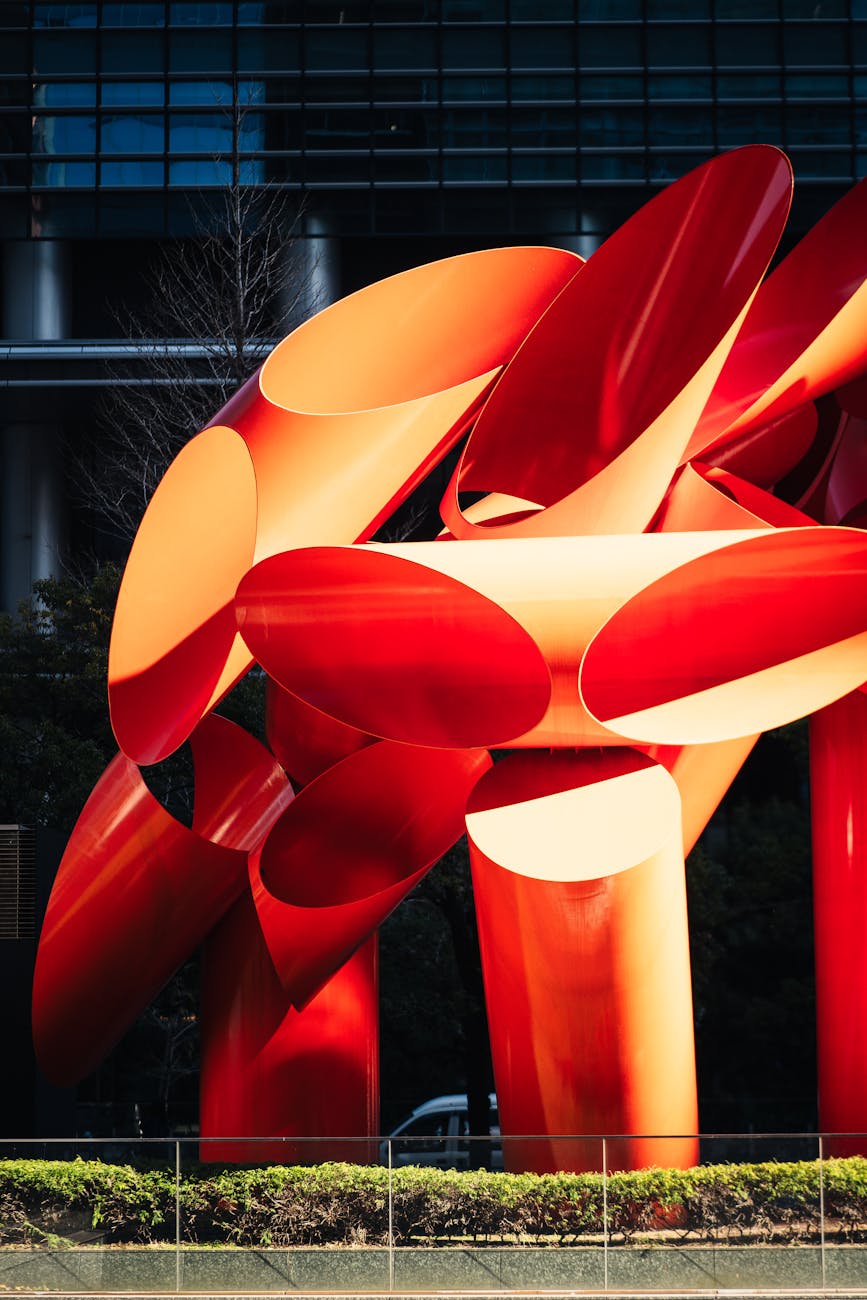
When Celebration Masks a Deeper Shift
The International Sculpture Day is typically framed as a celebration of artistic excellence—a moment led by institutions like the International Sculpture Center to honor creators who shape culture through form, texture, and permanence.
But this year, the celebration feels incomplete.
Because behind the admiration lies a quieter truth:
Sculpture is not disappearing—but it is slowly becoming invisible in everyday life.
“This is not just about celebrating sculpture — it’s about confronting how modern attention is reshaping what we value.”
The Illusion of Timeless Relevance
Sculpture carries the weight of history.
From the works of Michelangelo to Donatello, it has defined civilizations, documented belief systems, and shaped collective identity. In India, temple architecture and intricate carvings have done the same—embedding stories into stone for centuries.
The assumption is simple:
What has lasted this long will remain relevant.
But relevance today is no longer determined by endurance.
It is determined by visibility within the attention economy.
The Attention Economy Doesn’t Favor Sculpture
Modern content ecosystems are optimized for:
- Speed
- Accessibility
- Repeat consumption
Sculpture operates on the opposite principles:
- Stillness
- Physical presence
- Time investment
That mismatch is not trivial—it’s structural.
Platforms reward what can be:
- Scrolled
- Shared
- Reduced to a screen
Sculpture resists all three.
“If art cannot be consumed instantly, it risks being excluded entirely.”
From Public Presence to Peripheral Experience
There was a time when sculpture was embedded in daily life:
- Public squares
- Temples
- Civic structures
Today, its presence is increasingly confined to:
- Museums
- Galleries
- High-profile installations
Even when large-scale works gain attention, they function more as visual spectacles than deeply engaged experiences.
The shift is subtle but significant: From lived interaction → to occasional observation
India’s Global Rise, Local Disconnect
India continues to play a critical role in global sculpture.
Artists like Anish Kapoor have redefined contemporary sculptural language, while creators such as Naresh Kumar Kumawat have expanded India’s presence through hundreds of installations across continents.
Their work signals scale, ambition, and technical mastery.
Yet, within India itself, sculpture rarely occupies mainstream cultural conversation.
“Global visibility is increasing — but local engagement is quietly eroding.”
This is the paradox:
- India exports sculptural excellence
- But under-consumes it domestically
The Silent Trade-Off: Convenience vs Depth
The decline in engagement is not due to lack of appreciation.
It is driven by a deeper behavioral shift.
Digital content offers:
- Immediate gratification
- Low effort consumption
- Infinite variety
Sculpture demands:
- Time
- Movement
- Attention
In a system optimized for efficiency, depth becomes a liability.
“Convenience doesn’t just change behavior — it redefines what feels valuable.”
What Gets Lost When Sculpture Fades
The consequences are not just artistic—they are cultural.
Loss of Tangibility
Sculpture anchors ideas in physical reality. Without it, cultural narratives become abstract and detached.
Decline of Craft Lineages
Skills like:
- Stone carving
- Bronze casting
are not easily scalable or digitizable. Reduced demand directly impacts their survival.
Shift in Creative Identity
When visibility defines value, slower art forms are perceived as less relevant—regardless of their depth.
Global Adaptation — With Limits
Globally, sculptors are evolving.
Artists like Louise Bourgeois have expanded sculpture into emotional and psychological territories, while contemporary creators experiment with scale, material, and context.
Cities are integrating sculpture into:
- Urban branding
- Public installations
- Experiential spaces
Yet, these adaptations don’t fully solve the core issue.
Because the challenge isn’t innovation.
It’s alignment with how people consume experiences today.
“Sculpture can evolve in form — but it cannot abandon its need for presence.”
The Modern Paradox of Artistic Value
We are witnessing a contradiction:
- The world celebrates sculpture more visibly than ever
- But engages with it less frequently than ever
This creates a distorted ecosystem where:
- Recognition ≠ Relevance
- Visibility ≠ Engagement
And that distortion has long-term implications for how art evolves.

Beyond Celebration: A Necessary Recalibration
International Sculpture Day is not just a tribute.
It is a checkpoint.
A moment to ask whether:
- Cultural value is being shaped by algorithms
- Physical experiences are being deprioritized
- Entire art forms are being sidelined—not by rejection, but by neglect
“Some art forms don’t fade because they lose meaning — they fade because they require effort.”
The Question That Actually Matters
Sculpture does not need reinvention to survive.
It needs re-engagement.
Because the real issue is not whether sculpture remains important.
It is whether modern audiences are willing to:
- Slow down
- Show up
- Experience art beyond the screen
The International Sculpture Day significance ultimately lies here:
Not in celebrating what sculpture has been—
but in deciding whether it still has a place in how we live today.

Leave a Reply