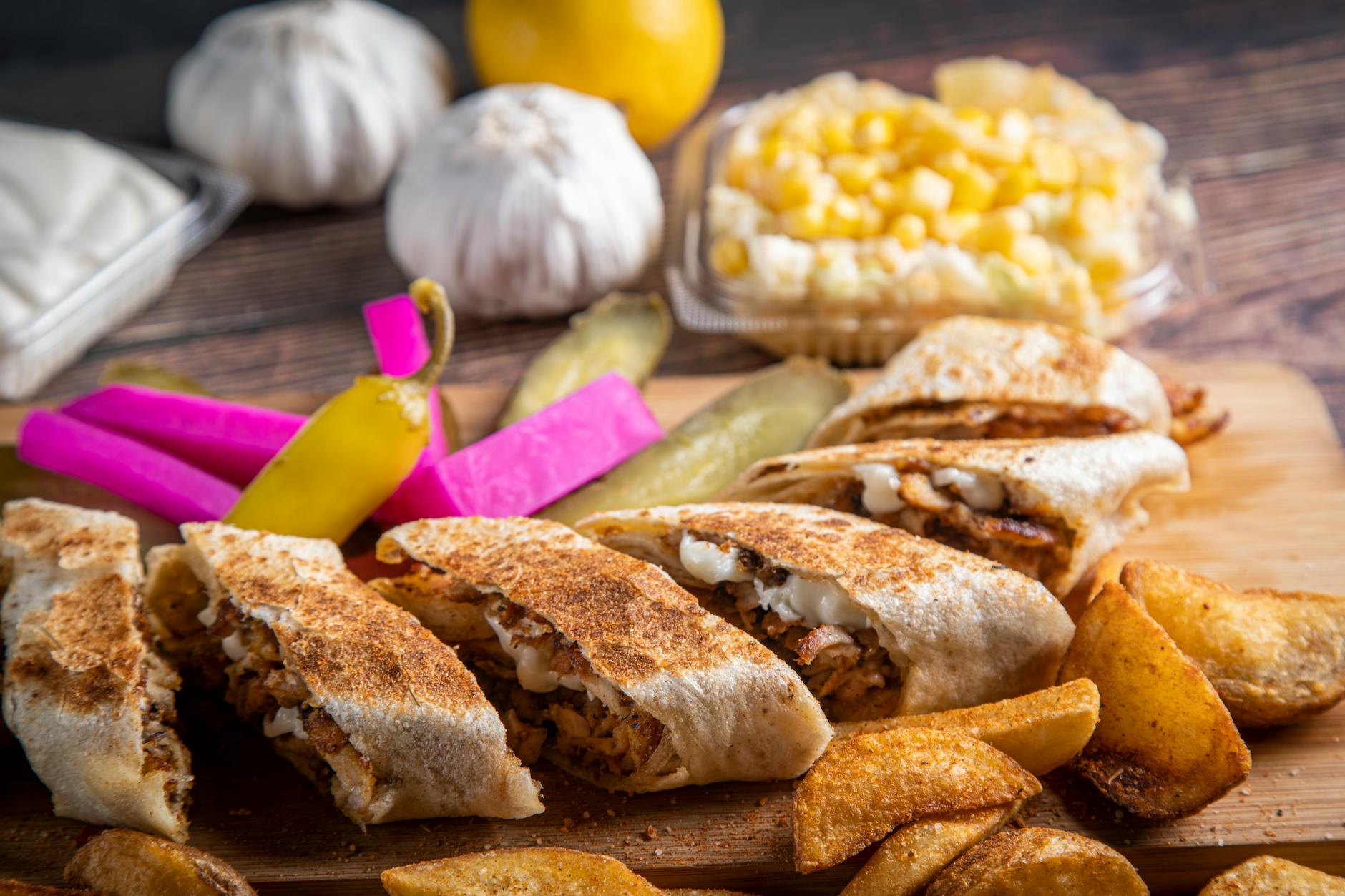
The rise of cloud kitchen food brands India is not just about more options on Swiggy or Zomato.
The launch of a new shawarma brand rarely warrants attention beyond food enthusiasts. Yet, when a company builds that brand inside a tightly controlled, scalable system and deploys it across a city almost instantly, the story shifts. What appears to be a culinary expansion begins to resemble something else entirely—a structural transformation in how they produce, distribute, and experience food.
The rise of cloud kitchen food brands India is not just changing where food comes from. It is redefining what food it allows to be.
At the center of this shift is a quiet contradiction. Indian food culture has historically thrived on fragmentation—hyperlocal vendors, inconsistent recipes, and deeply personal taste variations. Shawarma, in particular, has been a street-level category, shaped more by improvisation than precision. Every vendor had a version. Every version had an audience.
What platforms like Skope Kitchens are doing is systematically removing that variability.
The promise is simple: consistency, reliability, scalability.
But what they remove in the process is less obvious.
To understand this, one has to look beyond the product and into the system that produces it. Cloud kitchens are not restaurants. They are operational frameworks. Their primary objective is not culinary expression but repeatability under constraints—time, cost, logistics, and platform algorithms.
In such systems, food becomes a variable that must conform.
The emergence of cloud kitchen food brands India reflects a broader transition from chef-led creativity to system-led production. Recipes are no longer just about taste; they are about:
- Shelf stability during delivery
- Assembly speed in high-pressure kitchens
- Ingredient standardization across locations
- Compatibility with aggregator platforms
In this context, authenticity becomes engineered rather than inherited.
Take shawarma itself. Traditionally, it is slow-cooking, layering, and deeply dependent on technique. But in a delivery-first model, the product must survive transit, maintain temperature, and deliver a predictable bite every time. This forces subtle but significant changes—bread thickness, sauce composition, meat texture, packaging design.
Over time, these optimizations do something powerful: they redefine the category.
Consumers begin to associate the optimized version with the “real” one.
This is where the economic layer becomes critical. India’s food delivery market is not driven by culinary exploration; it is driven by frequency and convenience economics. A ₹400-for-two price point is not arbitrary—it is for repeat consumption. The goal is not to create a memorable meal but a default option.
And defaults are where markets are won.
Cloud kitchen food brands India are increasingly built around this principle. Instead of chasing peak experiences, they optimize for minimum friction decisions:
- Familiar flavors with slight variation
- Predictable pricing
- Reliable delivery times
- Algorithm-friendly menus
The result is a new kind of food behavior: habitual ordering without emotional attachment.
This has implications not just for consumers but for the entire food ecosystem. Independent vendors, who once thrived on differentiation, now compete against systems that can replicate and distribute at scale. The competitive advantage shifts from taste to infrastructure.
In such an environment, the question is no longer “Who makes the best shawarma?” but “Who can deliver acceptable shawarma at scale, consistently?”
Globally, similar patterns have already emerged. In markets like the UAE and the US, food categories have undergone phases of consolidation where independent variation gives way to standardized chains. The difference in India is the speed at which this transformation is happening—accelerated by platforms like Swiggy and Zomato, and fueled by urban consumption patterns.
What took decades elsewhere is unfolding in years here.
There is also a technological layer that often goes unnoticed. Cloud kitchens operate with data feedback loops. Every order, rating, and repeat purchase informs micro-adjustments. Over time, this creates algorithmically optimized food products—menus that are not just designed by chefs but refined by user behavior at scale.
This raises an uncomfortable question:
Are we still choosing what we eat, or are we being gradually guided toward what systems can efficiently produce?
The answer is not binary. Consumers benefit from convenience, affordability, and reliability. For many, these are not trade-offs but upgrades. The unpredictability of street food—once part of its charm—can also be a barrier in a fast-paced urban life.
Yet, there is a subtle loss embedded in this efficiency.
When food becomes standardized, it loses its role as a cultural expression and becomes a functional commodity. The emotional layer—the story behind a recipe, the individuality of a vendor, the unpredictability of taste—gets compressed into a controlled experience.
This is not necessarily a decline. It is a transition.
The rise of cloud kitchen food brands India signals a shift from food as culture to food as infrastructure.
And infrastructure behaves differently. It scales. It optimizes. And, it consolidates.
For companies like Skope Kitchens, this is a strategic advantage. By operating both B2B and B2C models, they are not just participating in the market—they are shaping its underlying architecture. They enable other brands to scale while simultaneously building their own, leveraging the same systems.
This dual positioning is particularly powerful in a delivery-first economy. It allows for rapid experimentation, faster rollout of successful concepts, and tighter control over quality.
But it also accelerates homogenization.
As more brands adopt similar systems, the diversity of offerings may appear to increase, but the underlying structures—and therefore the outcomes—begin to converge.

Different names. Similar experiences.
This is the modern paradox of food innovation:
More choice at the surface, less variation underneath.
The expansion of a shawarma brand across Bangalore is, therefore, not just about market penetration. It is a signal of how quickly categories can be redefined when they are absorbed into scalable systems.
What we are witnessing is not the disappearance of traditional food culture but its parallel evolution into a new form—one that prioritizes efficiency over expression, consistency over individuality, and systems over stories.
For consumers, the shift will feel gradual, almost invisible. Orders will become easier, experiences more predictable. The friction will reduce.
And with it, perhaps, the surprise.
The real question is not whether this transformation is good or bad. It is whether we recognize it while it is happening.
Because once systems define taste, reversing them is far harder than adopting them.

Leave a Reply