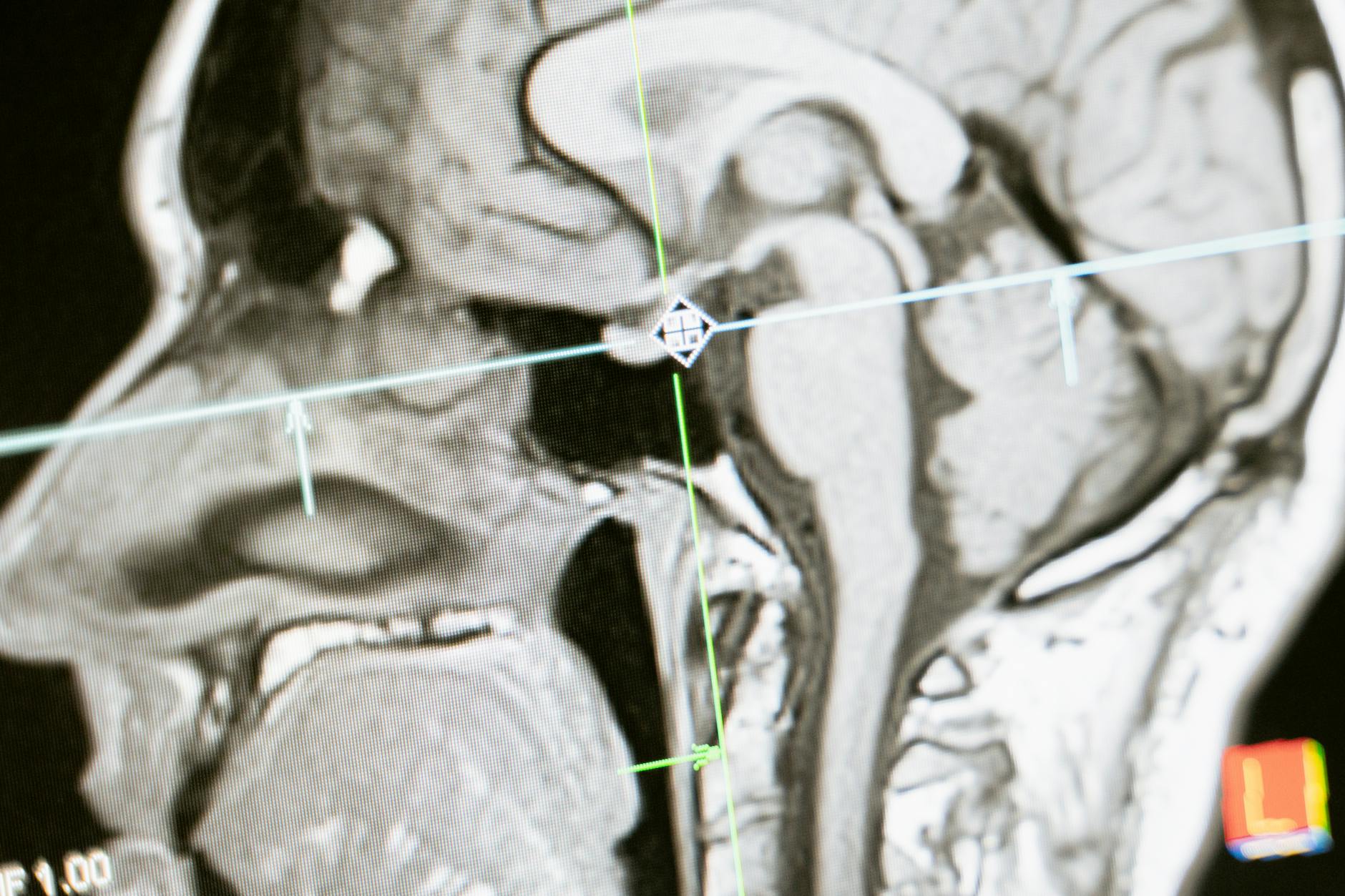
The recent partnership between MintNeuro and Motif Neurotech signals something deeper than innovation. It marks the early formation of a therapeutic brain-computer interface ecosystem—where treatment is no longer chemical-first, but computational.
The announcement of a partnership between and might appear, at first glance, as another incremental step in neurotechnology. But beneath the surface, it signals something more fundamental: mental health treatment is beginning to migrate from chemistry to circuitry.
For decades, the dominant model of treating conditions like depression or bipolar disorder has relied on pharmaceuticals—selective serotonin reuptake inhibitors, mood stabilizers, and antipsychotics. These interventions operate through systemic biochemical modulation, often with delayed feedback loops and unpredictable patient responses. What this partnership introduces is a radically different paradigm: precision neuromodulation driven by real-time data and embedded intelligence.
This is not just about building smaller implants. It is about redefining how the brain is treated—as a system that can be monitored, interpreted, and adjusted continuously.
The Problem Isn’t Treatment—It’s Precision
Mental health disorders are notoriously complex, not because we lack treatments, but because we lack precision. Two patients with identical diagnoses may respond completely differently to the same drug. Side effects often rival therapeutic benefits, and treatment-resistant depression remains a significant global burden.
The device being developed by Motif Neurotech—a blueberry-sized implant known as the DOT—introduces a different approach. Instead of flooding the brain with chemicals, it delivers targeted electrical stimulation while simultaneously recording neural activity. This creates the possibility of a closed-loop system, where therapy adjusts dynamically based on real-time feedback.
This is where MintNeuro’s role becomes critical. Their ultra-low-power, miniaturized chips are not just components—they are the decision-making infrastructure inside the implant. Without efficient sensing and stimulation at microscopic scale, the entire concept of continuous neuromodulation collapses.
The real shift here is subtle but profound: treatment is no longer episodic (doctor visits, prescriptions), but continuous and computational.
From Devices to Systems: The Hidden Architecture
Most discussions around therapeutic brain-computer interfaces focus on the implant itself. But that’s only the visible layer. The deeper transformation lies in the system architecture being built underneath.
A therapeutic brain-computer interface is not a device—it is a stack:
- Sensors capturing neural signals
- Chips processing data in real time
- Algorithms interpreting patterns
- Stimulators delivering precise interventions
MintNeuro’s semiconductor platform sits at the foundation of this stack. By aligning chip development with Motif’s clinical roadmap, the partnership effectively synchronizes hardware evolution with medical validation—a rare alignment in healthcare innovation.
This matters because healthcare systems typically lag behind technology cycles. Here, the two are being co-developed. That creates a feedback loop where clinical insights directly shape hardware iterations, accelerating both safety and efficacy.
In effect, this partnership is not building a product. It is building infrastructure for a new category of medicine.
The Trade-Off No One Is Talking About
While the promise of therapeutic brain-computer interfaces is compelling, it introduces a set of trade-offs that are often underexplored.
First is invasiveness vs. effectiveness. Even though Motif’s implant avoids direct brain contact and can be placed in a 20-minute outpatient procedure, it remains an implanted device. This raises questions about long-term safety, maintenance, and patient acceptance.
Second is data ownership. Continuous neural monitoring generates deeply sensitive data—arguably more intimate than genetic information. Who owns this data? The patient, the provider, or the company operating the system?
Third is algorithmic dependency. Closed-loop systems rely on models that interpret neural signals and decide when to stimulate. This introduces a layer of abstraction between patient experience and treatment decisions. If the algorithm is wrong, the consequences are not just technical—they are psychological.
These trade-offs are not peripheral. They are central to whether therapeutic brain-computer interfaces will achieve widespread adoption or remain niche interventions.
Why This Matters Now
The timing of this partnership is not accidental. Mental health is moving into a phase where traditional approaches are reaching diminishing returns. At the same time, advances in semiconductor technology, wireless power, and machine learning are converging to make implantable systems viable.
Motif Neurotech’s recent FDA approval to begin clinical trials for treatment-resistant depression marks a critical inflection point. Regulatory validation transforms neurotechnology from experimental to actionable.
Additionally, initiatives like the UK government’s Advanced Research and Invention Agency (ARIA) and its Precision Neurotechnologies programme are injecting public funding into this space. The Brain Mesh project—a £4.7 million collaboration—signals that governments are beginning to treat neurotechnology as strategic infrastructure.
This convergence of regulatory, technological, and financial momentum suggests that therapeutic brain-computer interfaces are moving out of the lab and into the clinic.
The Global Context: From Niche Innovation to Healthcare Backbone
Globally, healthcare systems are under pressure—from rising mental health cases to increasing treatment costs. Traditional models, which rely heavily on clinician time and pharmaceutical supply chains, struggle to scale efficiently.
Therapeutic brain-computer interfaces offer a different scaling model. Once deployed, they can operate continuously with minimal intervention, potentially reducing long-term costs and improving outcomes.
Countries like the United States and the United Kingdom are leading early adoption, but the implications are global. In regions with limited access to mental health professionals, implantable systems could provide a form of autonomous care.
However, this also introduces inequality risks. Advanced neurotechnology may initially be accessible only to high-income populations, widening the gap in mental healthcare access.
The question is not whether this technology will scale—it is how equitably it will scale.
A Shift in How We Define Treatment
Perhaps the most profound implication of this partnership is philosophical. It challenges the very definition of treatment.
In the pharmaceutical model, treatment is external—a substance introduced into the body to correct imbalance. In the BCI model, treatment becomes internal and adaptive, integrated into the body’s own signaling systems.
This blurs the line between therapy and augmentation. If a device can stabilize mood, could it also enhance focus? If it can prevent depressive episodes, could it optimize cognitive states?
These questions move the conversation beyond healthcare into ethics, identity, and autonomy.

What This Reveals About Modern Medicine
This is not just about a therapeutic brain-computer interface. It reveals a broader transition in medicine—from reactive to proactive, from generalized to personalized, and from biological to computational.
The partnership between MintNeuro and Motif Neurotech is a signal that the building blocks of this future are falling into place. Semiconductor innovation, clinical validation, and system integration are converging into a cohesive ecosystem.
But the trajectory is not linear. Adoption will depend not just on technological success, but on trust—trust in devices, in algorithms, and in the institutions deploying them.
The real question is not whether we can build systems that interface with the brain. It is whether we are prepared to live with the consequences of doing so.
And that is where the story truly begins.

Leave a Reply