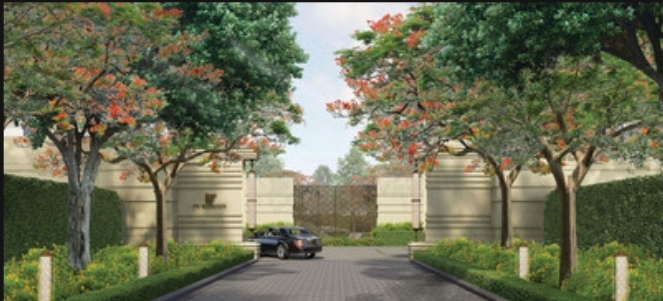
The announcement of a new JW Marriott Vrindavan resort might appear, at first glance, as a predictable continuation of India’s luxury hospitality expansion. Another property. Another global brand. And, nother partnership.
But this reading misses the underlying shift.
This is not simply about adding rooms to a portfolio. It is about redefining what a destination means—and who it is being redesigned for.
When Espire Hospitality Limited partners with Marriott International to bring a JW Marriott property near Vrindavan, the decision reflects a deeper transformation underway in India’s tourism and consumption landscape.
Because Vrindavan is not Goa. It is not Udaipur. It is not a leisure-first destination.
In fact, it is a place of devotion.
And that is precisely what makes this move strategically significant.
The Shift From Destination to Experience Architecture
For decades, Indian hospitality followed a relatively stable logic:
leisure destinations received luxury infrastructure, while pilgrimage destinations remained functional.
This separation is now dissolving.
The upcoming JW Marriott Vrindavan resort signals the emergence of what can be described as experience architecture—where destinations are not merely visited, but systematically redesigned to deliver layered emotional, cultural, and sensory value.
The involvement of a brand like JW Marriott is critical here. Unlike mid-market or business hotel chains, the JW Marriott positioning is rooted in mindfulness, wellness, and curated luxury. This aligns unusually well with the philosophical undertones of a place like Vrindavan.
But this alignment is not accidental.
It is engineered.
The 14-acre layout, water bodies, curated landscapes, wellness spa, and event infrastructure are not just amenities—they are components of a controlled experience narrative. One where spirituality is not replaced, but reframed through luxury.
The question is not whether this works.
The question is what it changes.
The Commercialization of Spiritual Geography
Vrindavan has historically attracted millions of pilgrims, driven by faith rather than infrastructure. The economic model was volume-driven, not value-driven.
Luxury hospitality disrupts this equation.
By introducing high-end accommodation, curated experiences, and destination weddings, the JW Marriott Vrindavan resort effectively repositions pilgrimage as a premium consumption category.
This introduces a subtle but powerful shift:
Faith remains the reason to visit.
Luxury becomes the way to experience it.
This dual-layer model expands the monetization potential of the region without necessarily increasing footfall. Instead, it increases per-capita economic value.
For stakeholders—developers, hospitality brands, and local economies—this is a more sustainable model.
But it also introduces tension.
Can a place defined by simplicity coexist with curated opulence?
Or does one inevitably reshape the other?
The Strategic Role of Indian Hospitality Players
The role of Espire Hospitality Limited in this development is particularly important.
Unlike global chains, Indian hospitality groups operate with a deeper contextual understanding of regional dynamics—cultural sensitivities, land economics, and local stakeholder ecosystems.
Their previous success with Six Senses Fort Barwara demonstrates a capability to transform heritage or culturally rich locations into globally competitive luxury destinations.
But Vrindavan is a different challenge.
It is not a restored fort.
It is a living spiritual ecosystem.
This makes the Espire–Marriott partnership structurally complementary:
- Espire brings local intelligence and asset ownership
- Marriott brings brand equity, global distribution, and experience frameworks
Together, they create a hybrid model that neither could fully execute alone.
This model is increasingly becoming the blueprint for India’s next phase of hospitality growth.
The Economics of Proximity to NCR
One of the most under-discussed aspects of this project is its proximity to Delhi NCR.
At roughly an hour’s drive from Delhi, Gurgaon, and Noida, the JW Marriott Vrindavan resort is not just a destination—it is a weekend ecosystem.
This positioning unlocks multiple high-value segments:
- Urban affluent families seeking short escapes
- Corporate MICE (Meetings, Incentives, Conferences, Exhibitions) demand
- Destination weddings with easier logistics
- Wellness tourism driven by time-constrained professionals
In effect, Vrindavan is being repositioned from a “once-in-a-lifetime pilgrimage” to a repeatable premium getaway.
This dramatically alters demand patterns.
Instead of seasonal spikes driven by festivals, the region can now sustain year-round premium traffic.
This is not just a hospitality shift.
It is a demand-engineering strategy.
The Silent Trade-Offs
Every structural shift carries trade-offs, and this one is no exception.
The introduction of luxury hospitality into spiritually dense regions creates three critical tensions:
1. Cultural Dilution vs Cultural Amplification
Luxury resorts often package culture into curated experiences. While this can make traditions more accessible, it also risks reducing them to consumable formats.
2. Local Economy Inclusion vs Exclusion
High-end developments can generate employment and infrastructure, but they can also create economic silos where benefits are unevenly distributed.
3. Authenticity vs Comfort
Pilgrimage traditionally involves a degree of discomfort—crowds, simplicity, unpredictability. Luxury removes these frictions, but in doing so, it changes the nature of the experience itself.
These are not flaws in the model.
They are inherent tensions that must be managed.
The Global Context: A Familiar Pattern
What is happening in Vrindavan is not unique to India.
Globally, spiritually or culturally significant destinations have undergone similar transformations:
- Bali evolved from a spiritual retreat into a luxury wellness hub
- Kyoto integrated high-end hospitality within traditional cultural frameworks
- Sedona in the United States became a premium destination for spiritual tourism
In each case, the pattern is consistent:
- Cultural significance attracts initial visitors
- Infrastructure develops to support demand
- Luxury brands enter to capture premium segments
- The destination is redefined for global consumption
India is now entering this third phase at scale.
The JW Marriott Vrindavan resort is a clear indicator of that transition.
The Reframing of Luxury Itself
There is another layer to this development that goes beyond geography.
Luxury itself is evolving.
Traditional luxury was defined by excess—space, material, exclusivity.
Modern luxury, especially in brands like JW Marriott, is increasingly defined by meaning:
- Wellness over indulgence
- Experience over possession
- Context over uniformity
This shift makes spiritually significant destinations more compatible with luxury hospitality.
In a way, places like Vrindavan are not being adapted to luxury.
Luxury is being adapted to them.
This is a critical inversion.

What This Means for the Future of Indian Hospitality
The JW Marriott Vrindavan resort is not an isolated development. It is part of a broader structural shift that will likely define the next decade of Indian tourism.
Three directional signals emerge:
1. Tier-2 and Tier-3 Destinations Will Dominate Growth
Metro saturation is pushing hospitality expansion into culturally rich but underdeveloped regions.
2. Hybrid Experiences Will Replace Single-Purpose Travel
Leisure, spirituality, wellness, and corporate travel will increasingly overlap.
3. Indian Developers Will Drive Asset Creation, Global Brands Will Drive Positioning
This partnership model will become standard.
For investors, operators, and policymakers, these signals are not speculative—they are actionable.
The Larger Insight
At its core, this development forces a more fundamental question:
What happens when places built for introspection are redesigned for experience?
The answer is not binary.
It is layered.
The JW Marriott Vrindavan resort represents both opportunity and transformation. It enhances accessibility, elevates infrastructure, and introduces global standards.
But it also reshapes expectations.
And once expectations change, destinations rarely return to their original form.
This is not just about a hotel.
It is about the evolving relationship between culture, commerce, and consumption in modern India.
And that relationship is only becoming more complex.

Leave a Reply