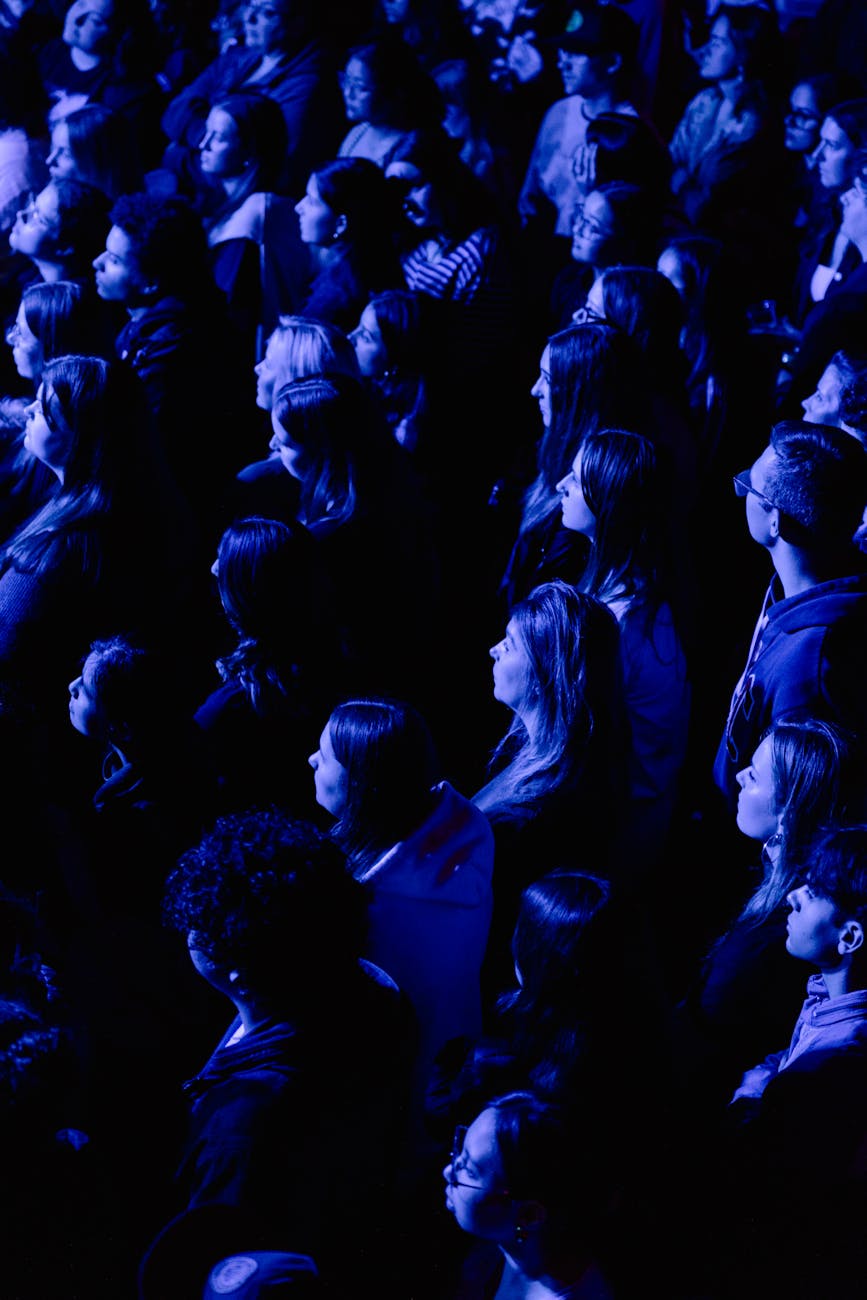
What is the best concert you have been to?
The Best Concert Experience Is Rarely About Music
Some people remember concerts with photographic precision.
Not the setlist. Not the lighting rig. And, not even the artist’s exact performance.
They remember the feeling.
The air before the first note. The strange silence of thousands waiting together. The synchronized scream when a familiar intro begins. The temporary disappearance of self-consciousness. The sensation that, for a few hours, modern life stopped fragmenting attention and started concentrating emotion.
That is why asking someone about the best concert experience they have ever had often produces unusually emotional answers. The response rarely sounds like entertainment criticism. It sounds closer to memory retrieval.
This is important because it reveals something larger than music.
In an era where almost every form of entertainment has become infinitely accessible, infinitely replayable, and algorithmically personalized, live concerts have become more emotionally valuable — not less.
That appears contradictory at first
Streaming platforms provide unlimited music instantly. Social media gives direct access to artists. High-definition performances exist online within hours. Technology has eliminated scarcity from music consumption.
Yet live concerts continue becoming economically and psychologically stronger.
Ticket prices rise. Demand intensifies. People travel internationally for performances. Entire identities now form around tours and festival attendance.
The modern concert is no longer merely a musical event. It has become a reaction against digital abundance itself.
The Streaming Era Made Music Constant — and Less Tangible
For most of modern history, music consumption required friction.
People bought records, waited for radio broadcasts, attended local performances, or physically gathered around sound systems. Listening was bounded by limitation. Scarcity increased attentiveness.
Streaming fundamentally changed this relationship.
Today, millions of songs exist in permanent availability through platforms like Spotify and other digital ecosystems. Music became ambient infrastructure rather than a distinct event. Songs now accompany commuting, exercising, scrolling, studying, working, and shopping simultaneously.
Paradoxically, this convenience reduced musical intensity.
When access becomes infinite, attention becomes fragmented.
People consume more music than ever while often remembering less of it emotionally. Songs increasingly operate as background regulation for mood management rather than focal experiences demanding presence.
Concerts reverse this dynamic completely
A live performance forces temporal commitment. You cannot infinitely pause it, multitask it, skip sections, or algorithmically optimize it. A concert imposes a shared timeline onto thousands of people simultaneously.
That constraint is psychologically powerful.
The scarcity is no longer the music itself. The scarcity is undivided attention.
This explains why even technologically saturated generations continue gravitating toward live experiences. Concerts restore something modern digital systems systematically erode: collective immersion.
Why Concerts Feel Emotionally Larger Than Their Components
If concerts were purely about audio quality, many would fail the comparison.
Studio recordings are cleaner. Headphones are more precise. Streaming is more convenient.
Yet concerts routinely produce stronger memories than technically superior listening environments.
Why?
Because human emotional systems are deeply social.
One of the most important concepts here is — a sociological phenomenon describing the emotional amplification people experience during synchronized group participation.
Concerts create exactly this condition.
Thousands of individuals:
- sing together,
- move rhythmically together,
- anticipate together,
- react simultaneously,
- emotionally mirror one another.
The crowd itself becomes part of the experience architecture.
This is why even mediocre live vocals can produce extraordinary emotional reactions. The psychological impact does not emerge solely from musical precision. It emerges from synchronized participation.
Modern society increasingly lacks spaces where strangers feel emotionally aligned without political conflict, transactional incentives, or digital mediation.
Concerts temporarily recreate tribal synchronization
That is not nostalgia. It is social neurobiology.
The “best concert experience” is often the one where an individual most completely dissolved into collective emotional momentum.
The Rise of Experience Capitalism
Concert economics also reveal a deeper shift in consumer psychology.
Previous generations often pursued status through ownership: cars, homes, luxury goods, physical collections.
Younger demographics increasingly pursue status through experiences.
This transition reflects broader economic and cultural realities:
- urban living constraints,
- digital identity construction,
- social media visibility,
- declining attachment to material permanence.
Experiences now function as identity signals.
Attending a major performance by artists like or is not simply entertainment consumption. It often becomes participation in a cultural moment with social currency attached to it.
The experience itself acquires narrative value.
People do not merely attend concerts anymore. They archive them. Document them. Broadcast them. Integrate them into personal identity.
This creates an interesting contradiction.
Concertgoers frequently claim they seek “living in the moment,” yet many experience events partially through recording devices intended for future social validation.
Modern concerts therefore exist at the intersection of two competing desires:
- authentic immersion,
- performative visibility.
The tension between these forces shapes contemporary live-event culture more than most industries acknowledge.
The Emotional Economics of Scarcity
The increasing cost of concerts has produced another revealing phenomenon.
Even during economic uncertainty, consumers often preserve spending for live events while cutting back elsewhere.
This appears irrational through purely financial logic.
But behavioral psychology suggests otherwise.
Experiences produce disproportionately durable emotional returns compared to material purchases. Research frequently discussed within shows that experiential spending often generates stronger long-term satisfaction because memories evolve positively over time.
A concert does not remain fixed after consumption. It becomes narrativized.
People retell it. Emotionally edit it. Attach life periods to it.
“The concert where…” becomes a memory framework.
That explains why audiences tolerate extraordinary inconvenience:
- long queues,
- dynamic pricing,
- expensive travel,
- crowded venues,
- logistical exhaustion.
Objectively, many concerts are uncomfortable experiences.
Emotionally, they often become disproportionately meaningful precisely because effort increases perceived value.
Scarcity intensifies emotional imprinting
The more difficult an experience feels to access, the more psychologically significant it becomes afterward.
This is one reason mega tours now resemble cultural pilgrimages more than ordinary entertainment events.
Why Live Music Feels More “Real” Than Digital Life
There is another reason concerts retain unusual power.
Modern digital life increasingly produces a crisis of emotional certainty.
Online interactions are filtered. Images are edited. Algorithms mediate visibility. Attention is fragmented across competing stimuli continuously.
Many people now spend enormous portions of life consuming representations rather than participating physically.
Concerts interrupt this abstraction.
The sound vibrates physically. The crowd reacts unpredictably. The environment cannot be perfectly controlled.
Even mistakes become emotionally valuable because they signal authenticity.
A missed lyric during a performance may generate stronger audience connection than technical perfection because imperfection confirms reality.
Humans appear increasingly hungry for environments where experiences feel undeniably physical and temporally unrepeatable.
This may explain why live events across categories — concerts, sports, festivals, immersive theater — continue growing despite digital alternatives becoming more advanced.
Technology optimized convenience. It did not eliminate the psychological need for collective physical experience.
In some ways, the digital era accidentally increased the emotional value of events that cannot be fully digitized.
Concerts became resistance against simulation fatigue.
The Globalization of Shared Emotional Culture
Concert culture has also become globally synchronized in ways previous generations rarely experienced.
A tour announcement now becomes an international online event instantly. Setlists circulate globally in real time. Fans coordinate rituals across countries. Entire online communities form around shared anticipation.
This creates an unusual hybrid condition: concerts are deeply local physical experiences occurring within globally networked emotional ecosystems.
Someone attending a performance in Mumbai may emotionally participate in a larger collective phenomenon shared simultaneously by audiences in Tokyo, London, São Paulo, or Los Angeles.
The emotional geography of fandom has become borderless.
At the same time, this globalization creates homogenization risks.
Many large-scale concerts increasingly resemble standardized entertainment architectures: identical lighting, identical crowd moments, identical social media documentation patterns.
Ironically, audiences often seek authenticity through experiences that are becoming industrially optimized for predictability.
This is one of the defining paradoxes of modern entertainment: people seek emotionally unique experiences inside increasingly systematized event ecosystems.
Yet the emotional outcome still feels real because human synchronization itself remains real.
That distinction matters.
The Best Concert Is Ultimately About Recognition
When people describe the best concert experience of their lives, they are often describing a rare psychological alignment.
The music matched a life phase. The crowd amplified emotion. The environment reduced self-consciousness. Time felt temporarily concentrated.
For a brief period, attention stopped scattering.
That is increasingly rare in modern life
The true power of concerts may therefore have less to do with music than with relief.
Relief from fragmentation. Relief from isolation. And, relief from endless digital partial-attention.
A great concert creates temporary coherence between body, emotion, memory, sound, and collective presence.
People leave exhausted but emotionally clarified.
This explains why even years later, individuals can describe specific concerts with unusual sensory precision while forgetting thousands of hours spent consuming digital entertainment online.

Most digital consumption disappears into cognitive blur. Certain live experiences resist forgetting.
The best concert experience is therefore not necessarily the loudest, biggest, or most technically perfect performance.
It is the moment when an experience became emotionally undeniable.
And in an increasingly synthetic, optimized, and endlessly mediated world, that feeling may be becoming one of the most valuable experiences people can still buy.

Leave a Reply