I have been thinking about sediment. How it doesn’t arrive with ceremony — no announcement, no bright edge of something changed — just the patient accumulation of what falls through still water and rests.
This is how choices settle. Not with the drama we imagined when we made them, standing at the edge of something, heart loud in our chest like a thing trying to escape, but slowly, over years, becoming the ground beneath everything else.
I have walked into rooms of my own choosing and found them empty, or too full, or full of strangers who expected someone I hadn’t yet become. I have opened doors that led nowhere I recognised and stood in the nowhere a long time, waiting for it to become something I could call my life.
· · ·
There is a difference — and no one tells you this — between a choice that is right and a choice you can live with. Right belongs to a court you will never find, presided over by a judge who does not exist, applying laws written in a language that changes every decade. But liveable — liveable is a thing you can check at three in the morning, when the mind sits up in the dark and runs its audits.
Can you hold this? Can the body bear the particular weight of this particular life you have assembled, year by year, from whatever was available? Not: is it beautiful? Not: is it what you meant? But only: can you stand inside it without the ceiling pressing down?
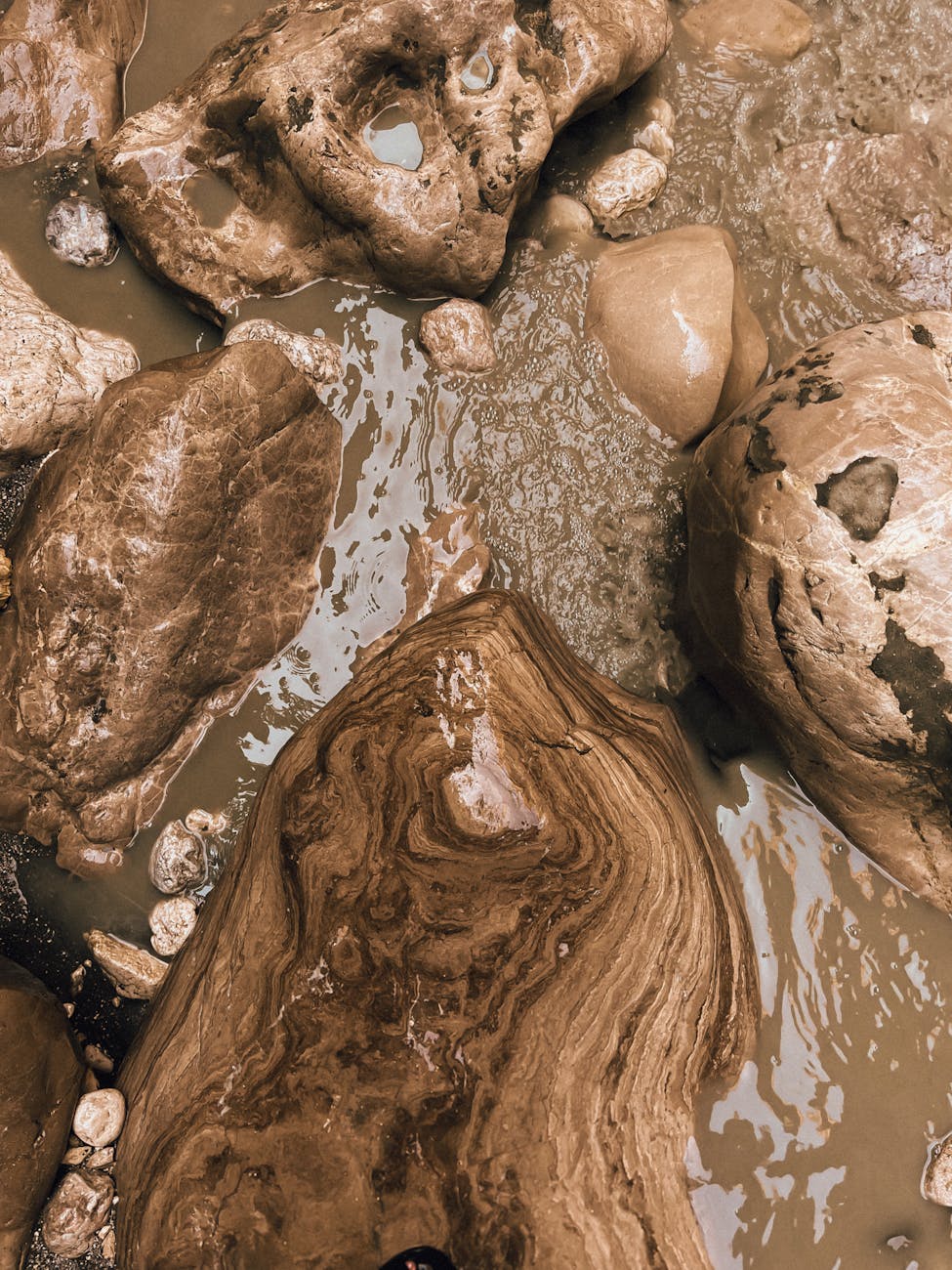
The river does not grieve its canyon. I have watched rivers. They do not pause at the lip of the gorge they have carved and ask whether they chose well. They just move. The moving is the answer. The canyon is evidence of fidelity, not of error.
But we are not rivers. We have the difficult gift of knowing that we are choosing. The stone in the riverbed is shaped by water and knows nothing of its shaping. We are shaped and watching. We feel the current and feel ourselves feeling it. This is the peculiar burden of being the kind of creature that carries consequence.
· · ·
I think of the night the decision was made — whatever night it was, whichever decision I am living in now. I think of the person who was me then, younger by the distance between before and after, standing in the lit kitchen or the dark car park or the hospital corridor or the quiet morning holding a phone.
They knew what they knew, which was not enough, which is always not enough, because you cannot know what you need to know until the need has already passed and the knowing arrives like starlight, delayed by the distance it travelled from a source that no longer exists.
You cannot be angry at starlight for being late. You cannot be angry at that person in the kitchen for choosing in the dark. The dark was real. The choosing was real. The not-knowing was not a failure — it was the weather they were standing in.
· · ·
In autumn, the mountain holds its first snow long before the valley is ready for winter. The mountain does not question this. It does not ask whether the snow will stay, whether it chose correctly to be so high, whether another mountain would have managed better. It simply holds the weight until the holding is done.
There is a kind of wisdom in this that has nothing to do with not caring. The mountain cares, I think — in the way a thing cares that gives itself entirely to what it is. The mountain is not at war with its altitude. It chose nothing and carries everything and maybe that is a different kind of teaching: you are already holding what you’re holding. The question is only how.
Some years ago I learned that trees do not mourn the leaves they release in autumn. What looks like loss from the outside is an act of self-preservation, a choice made in the grain of the wood long before — the decision to let go of what cannot survive the cold in order to survive the cold. This is not indifference. This is a choice you can live through.
· · ·
I have made choices I could not live with and lived with them anyway. I want to be honest about this. Sometimes you make the unbearable choice and then you bear it, not because you were stronger than you thought but because the only alternative to bearing it was something you could bear even less.
This is not failure. This is the deep human competence we never put on our resumes: the ability to absorb what we did not choose and what we chose badly and what we chose well but badly timed and what we chose in love and what we chose in fear and keep choosing and keep choosing and keep choosing.
Because the extraordinary thing is not that we get it right. The extraordinary thing is that we continue. The sun does not ask whether yesterday’s light was worth the burning. It rises again in the east, moving through its ancient, chosen arc, and the world turns its face toward it the way we have always turned toward warmth without needing to justify the turning.
· · ·
So here is what I am learning — slowly, the way all important things are learned, which is against the grain of urgency:
Before you choose, be still long enough to hear the question beneath the question. Not: will this make me happy? Not: will I regret this? But: is this something I can carry without it becoming a weapon I turn on myself in the small hours? Is there enough of me in this choice that when I look back, I will recognise my own handwriting in the letter I wrote to my future life?
And after you choose, let the choice become the ground. Don’t keep prying at it to see if something better is buried beneath. Water the thing that grows from what you chose. Let the old leaves fall without ceremony. Tend the roots. Tend the roots. This is what it means to live with something — not to have made peace with it once, but to keep making peace with it, the way the shore keeps negotiating with the tide, over and over, always arriving at the same edge, always finding it changed.
· · ·
Look up sometime at the stars and remember that the light you are seeing has been travelling for longer than you can meaningfully imagine. Some of those stars have already ended. What reaches your eyes is a remnant, a consequence of something that happened before consequence meant anything to anyone.
And still — still you look up. Still you name them. Still you navigate by them, these echoes of extinct light, and somehow you arrive somewhere that was worth arriving at.
This is what I think of when someone says: try to make choices you can live with. I think of the navigator who does not know if the star is still there but steers toward it anyway because the light is real and the water is dark and choosing your direction is the only way to move through the night without being lost in it.
· · ·
Tomorrow there will be another choice. And another after that. They will not slow down to let you be ready. The world does not wait for your readiness — this is one of the things it never promised.
But you have been doing this for longer than you know. You have been choosing since before you had language for the choosing. Your body remembers what to do even when the mind forgets. The lungs breathe. The heart commits to its next beat without deliberating. There is something to learn from this: sometimes the wisest part of choosing is the part that doesn’t hesitate.
So stand at the edge of this small ordinary moment. Not a cliff. Not a crossroads. Just the next place where the path divides in the way paths always divide without drama, without signs.
Feel the weight of what you’re carrying. Don’t put it down — not yet — just feel it. Notice where it settles in your body. Notice what lightens when you imagine going left and what tightens when you imagine going right. The body knows something the mind is still trying to argue its way toward.

And then go. Not perfectly. Not with certainty. And, not with the guarantee that this is the one you will never have to forgive yourself for. Just go toward the thing you can imagine inhabiting on a cold Tuesday in November, when there is no audience and no occasion and the choice is just your life and you are just living it.
That is enough. That has always been enough. The stone worn smooth by the river did not need to be a different kind of stone to become the thing it is. It only needed time, and water, and the faithfulness of return.
Go quietly. Choose honestly. Carry what you carry with something like grace — not because you managed to be graceful, but because you kept carrying and that, in the end, is what grace looks like from the inside.


Leave a Reply