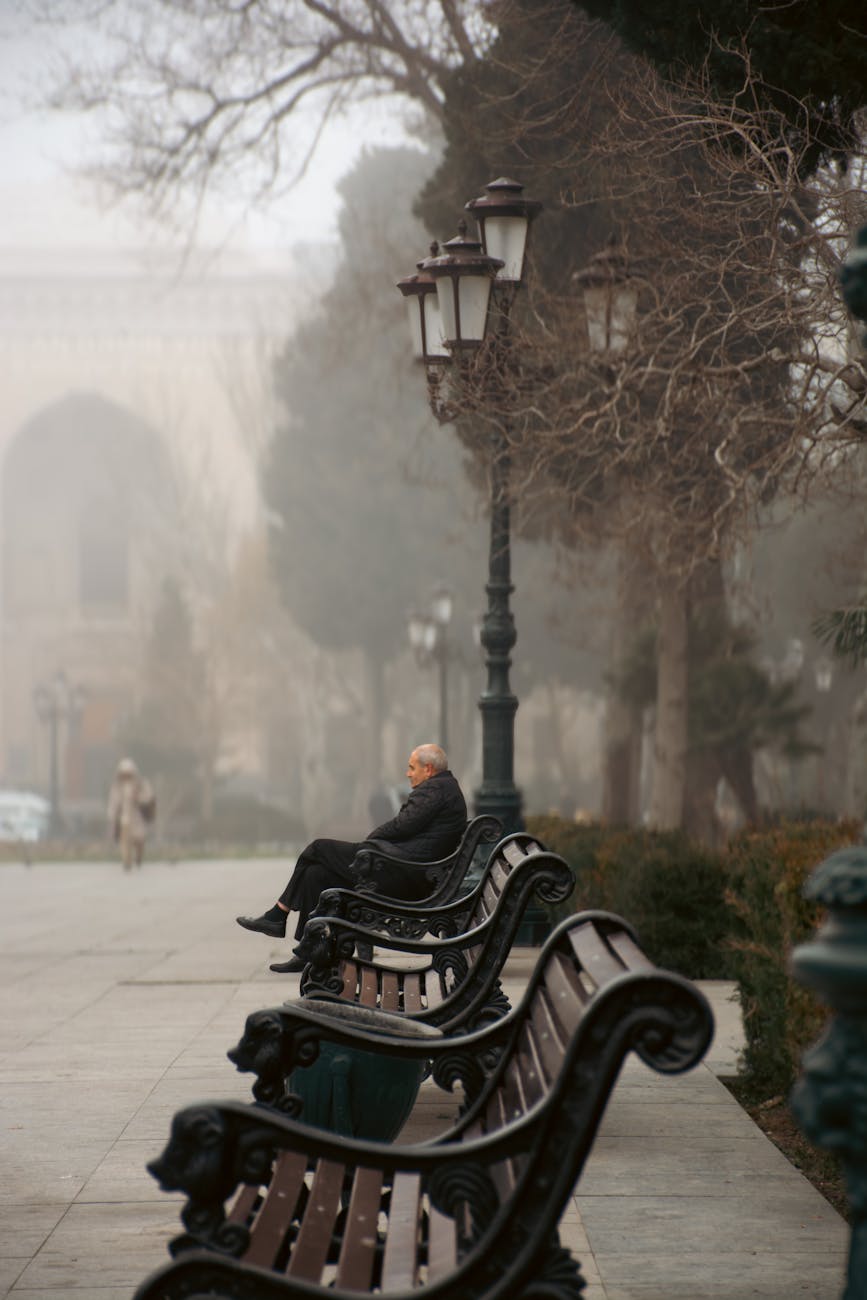
Some griefs are too large to look at directly — so we find ourselves counting pigeons instead. This poem watches an old man on a bench, and discovers what counting can and cannot keep at bay.
Cinquain (2 – 4 – 6 – 8 – 2)
Old man
on the park bench,
his newspaper unread,
the world's wars folded on his lap—
just birds.

Haiku (5 – 7 – 5)
He counts the pigeons—
one, two; her name fills the pause,
then the number three.
The Cinquain holds the exterior view: the bench, the unread headlines, the great noise of the world reduced—by age, by choice, by grief—to birds. The Haiku moves inward. We understand now why he is not reading. He is counting pigeons, a small and manageable thing, until memory interrupts even that. Her name surfaces between two and three. Then he finds his way back.
The birds in the Cinquain become the pigeons he counts; the world’s wars folded quietly on his lap become the pause that her name fills. The mood does not overturn so much as deepen—from observation to interior, from the geopolitical to the unbearably personal.
Some griefs are too large to look at directly — so we find ourselves counting pigeons instead.
This poem watches an old man on a bench, and discovers what counting can and cannot keep at bay.
This week I wrote a poem called Counting for the W3 poetry challenge — a challenge that invited writers to combine one Western poetic form with one Japanese poetic form.
I chose the Cinquain (syllabic structure: 2–4–6–8–2) and the Haiku (5–7–5). Two forms. Two movements. One exterior, one interior.
The Cinquain holds the outside. An old man on a park bench. His newspaper unread. The world’s wars folded neatly on his lap. And then — just birds.
There is something in that image I keep returning to. The newspaper is the world making its daily demands — headlines, crises, noise. And here is a man who has quietly folded it all away. Not out of indifference. But because he has arrived, as the very old sometimes do, at something more essential than news.
The Haiku moves inward — and earns, I hope, what the first part withholds.
He counts the pigeons. One, two. Her name fills the pause. Then the number three.
That pause is everything. It’s where grief actually lives — not in the dramatic moments, not in the announced announcements, but in the strange gap between two and three, when something interrupts even the smallest ritual you’ve invented to get through a Tuesday afternoon.
We all have our version of counting pigeons. The thing we do when we cannot quite stop moving but cannot bear to think. The cup of tea made for two before we remember. The habit that outlives the person who gave us the habit.
Poetry is particularly good at these small devastations. It slows down long enough to look at a bench, a folded newspaper, a bird — and find there what we have been carrying all along.
The two forms ended up working together in a way I hadn’t fully planned but came to love in revision. The Cinquain ends on just birds — a reduction, a quieting. The Haiku begins in that same quiet and then ruptures it from within. No fanfare. Just a name, surfacing between two numbers, on an afternoon when someone was only trying to count pigeons.
If this resonates, the full poem and poet’s note are at the link below. And if you’ve ever caught yourself counting something small just to keep going — I think this one is for you.


Leave a Reply