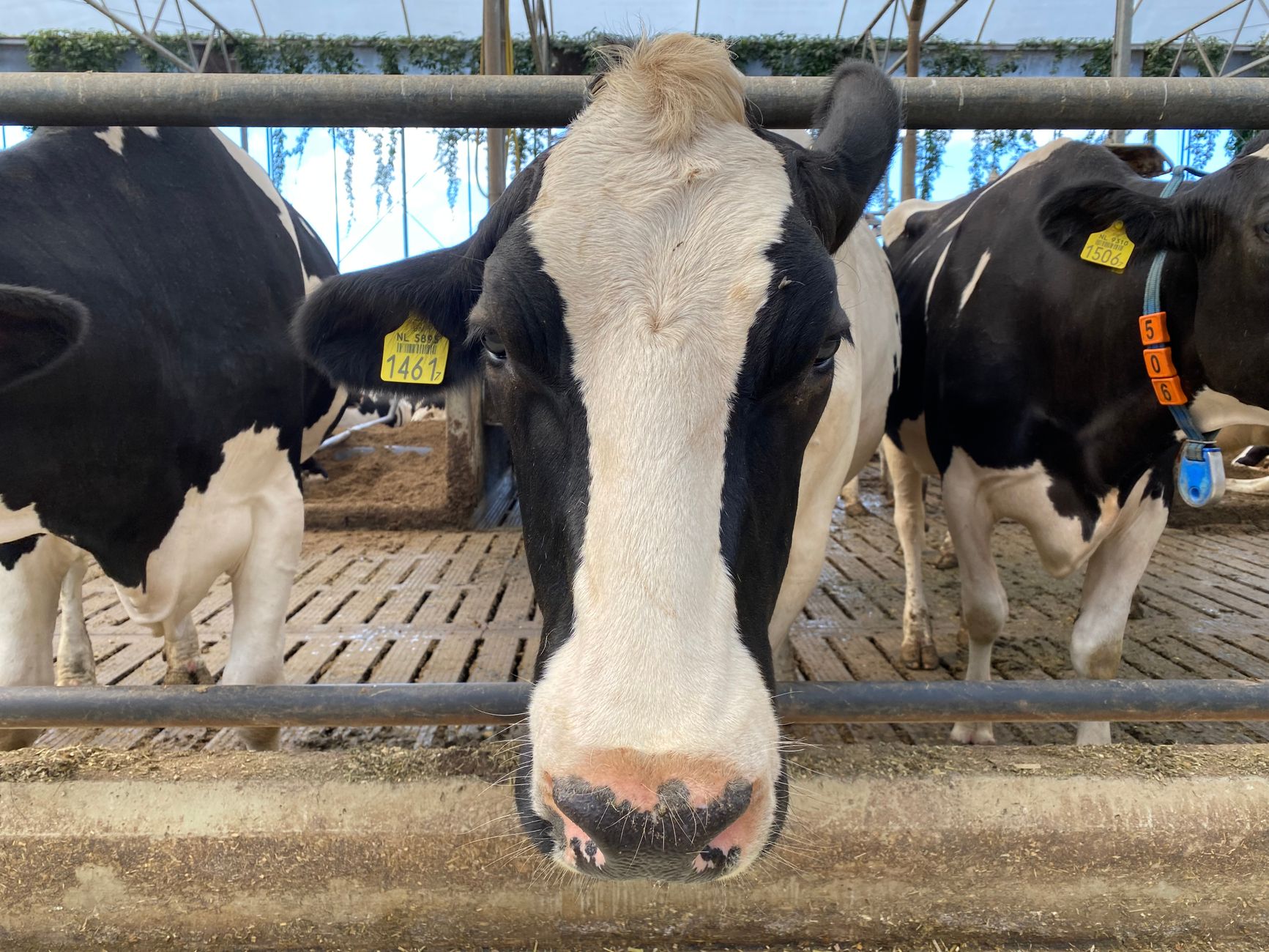
Food security and trade negotiations refer to the growing integration of agricultural resilience into international trade policy. Governments increasingly weigh market access against the need to protect domestic food production, reduce supply chain vulnerabilities, and strengthen long-term economic sovereignty.
For decades, international trade was largely judged by one question: Would it make goods cheaper and markets more efficient? Agriculture was no exception. Governments negotiated tariffs, export quotas, and market access with the expectation that freer trade would benefit consumers through lower prices and greater choice.
Today, that equation is changing.
Food security and trade negotiations are becoming deeply interconnected as governments, businesses, and consumers recognize that reliable access to food is not simply an economic issue—it is also a matter of national resilience. Events over the past several years, from pandemic-related supply chain disruptions to geopolitical conflicts and climate-related shocks, have exposed vulnerabilities in global food systems that were once taken for granted.
As countries prepare for future trade negotiations, the conversation is expanding beyond exports and imports. Increasingly, policymakers are asking how trade agreements can support both economic growth and long-term food security.
Food Security Is Becoming a Strategic Priority
The traditional view of globalization emphasized efficiency. Countries specialized in producing what they could make most competitively, while importing products that others could produce more cheaply.
That model delivered significant benefits, but it also created new dependencies.
When shipping routes were disrupted, labor shortages emerged, or geopolitical tensions escalated, food supply chains proved more fragile than many expected. These experiences prompted governments around the world to reconsider how much domestic production capacity they should preserve.
Food is increasingly being viewed alongside sectors such as energy, healthcare, and critical manufacturing—as infrastructure that supports national stability rather than simply another market commodity.
This shift is changing the way food security and trade negotiations are approached.
The Growing Importance of Food Sovereignty
Food sovereignty refers to a country’s ability to influence and maintain its own food production systems while reducing excessive dependence on external suppliers.
Although countries continue to benefit from international trade, many are becoming more cautious about relying too heavily on imports for essential agricultural products.
This is not necessarily a rejection of globalization. Instead, it reflects a growing recognition that resilience sometimes requires maintaining domestic production capacity even when imported alternatives appear less expensive.
The debate has therefore evolved.
Instead of asking whether imported food is cheaper, policymakers are increasingly asking whether domestic production provides strategic value during periods of uncertainty.
Trade Negotiations Are No Longer Only About Market Access
Historically, agricultural trade negotiations focused on expanding exports and reducing barriers between countries.
Today’s negotiations involve a more complicated balancing act.
Governments must consider:
- Consumer affordability
- Domestic agricultural competitiveness
- Supply chain resilience
- National food security
- Long-term economic stability
These objectives do not always point in the same direction.
Opening markets may increase competition and lower prices, while protecting domestic production can improve resilience but sometimes increase costs. Policymakers are increasingly tasked with finding a balance between these competing priorities.
Public Opinion Is Shifting Alongside Policy
Recent survey findings from Nanos Research, commissioned by Dairy Farmers of Canada suggest that many Canadians support maintaining domestic control over food production and defending agricultural interests during trade negotiations.
While these findings reflect Canadian public opinion, they also illustrate a broader international trend.
Across many countries, food production is increasingly viewed not simply as an industry but as an essential national capability.
That perception is likely to influence future political and trade decisions well beyond agriculture.
Introducing the “Resilience Premium”
One way to understand this shift is through what can be called the Resilience Premium.
Resilience Premium is the growing willingness of governments and societies to accept higher short-term economic costs in exchange for stronger long-term stability, reliable domestic production, and reduced dependence on vulnerable global supply chains.
For many years, efficiency was considered the primary objective.
Today, resilience is becoming equally important.
Countries are recognizing that systems optimized exclusively for cost may perform poorly during periods of disruption. Maintaining domestic production capacity, even if it appears less efficient during stable times, can provide strategic advantages when unexpected events occur.
This concept extends well beyond agriculture.
It is increasingly visible in discussions about semiconductor manufacturing, pharmaceutical production, critical minerals, energy security, and industrial policy.
Why This Matters Beyond Farmers
Food security affects far more than agricultural producers.
Reliable domestic food systems influence:
- Inflation management
- Rural employment
- National security
- Supply chain stability
- Consumer confidence
- Emergency preparedness
When food systems become more resilient, economies are generally better positioned to absorb external shocks.
Conversely, heavy dependence on complex international supply chains can create vulnerabilities that become apparent only during crises.
This broader perspective explains why agricultural policy is receiving renewed attention in international economic discussions.
A New Era of Economic Thinking
Globalization encouraged specialization because specialization maximized efficiency.
Today’s environment increasingly rewards redundancy.
Maintaining multiple suppliers, preserving domestic production capacity, and diversifying sourcing strategies may appear less efficient under normal circumstances, but they improve resilience when disruptions occur.
This represents one of the most significant shifts in economic thinking over the past generation.
Rather than treating resilience as an unnecessary expense, policymakers increasingly view it as an investment.
The goal is no longer simply to build the cheapest system.
It is to build one that continues functioning under pressure.
What Future Trade Agreements May Look Like
Future trade negotiations are likely to place greater emphasis on balancing openness with resilience.
Governments may continue pursuing international cooperation while simultaneously protecting strategic sectors that contribute to national stability.
This does not necessarily signal the end of global trade.
Instead, it reflects a more nuanced approach that recognizes both the benefits of international commerce and the importance of maintaining essential domestic capabilities.
As geopolitical uncertainty, climate pressures, and supply chain risks continue to evolve, food security and trade negotiations are likely to remain closely connected.
Trade policy will increasingly be measured not only by its ability to expand commerce but also by its contribution to long-term resilience.

Looking Ahead
The future of global trade will not be defined solely by how efficiently countries exchange goods.
It will also be shaped by how effectively they protect the systems that sustain their populations during periods of uncertainty.
Food security is no longer a niche agricultural issue. It has become a strategic economic priority that influences national resilience, public confidence, and long-term policy decisions.
The countries that successfully balance open markets with resilient domestic food systems may be better positioned to navigate an increasingly unpredictable global economy.
As this transformation continues, food security and trade negotiations will remain one of the defining policy conversations of the decade.
Reflection: As governments rethink trade policy, should resilience carry as much weight as economic efficiency when decisions affect a nation’s food supply?

Leave a Reply