Monsoon Revelations: The Storm’s Eye
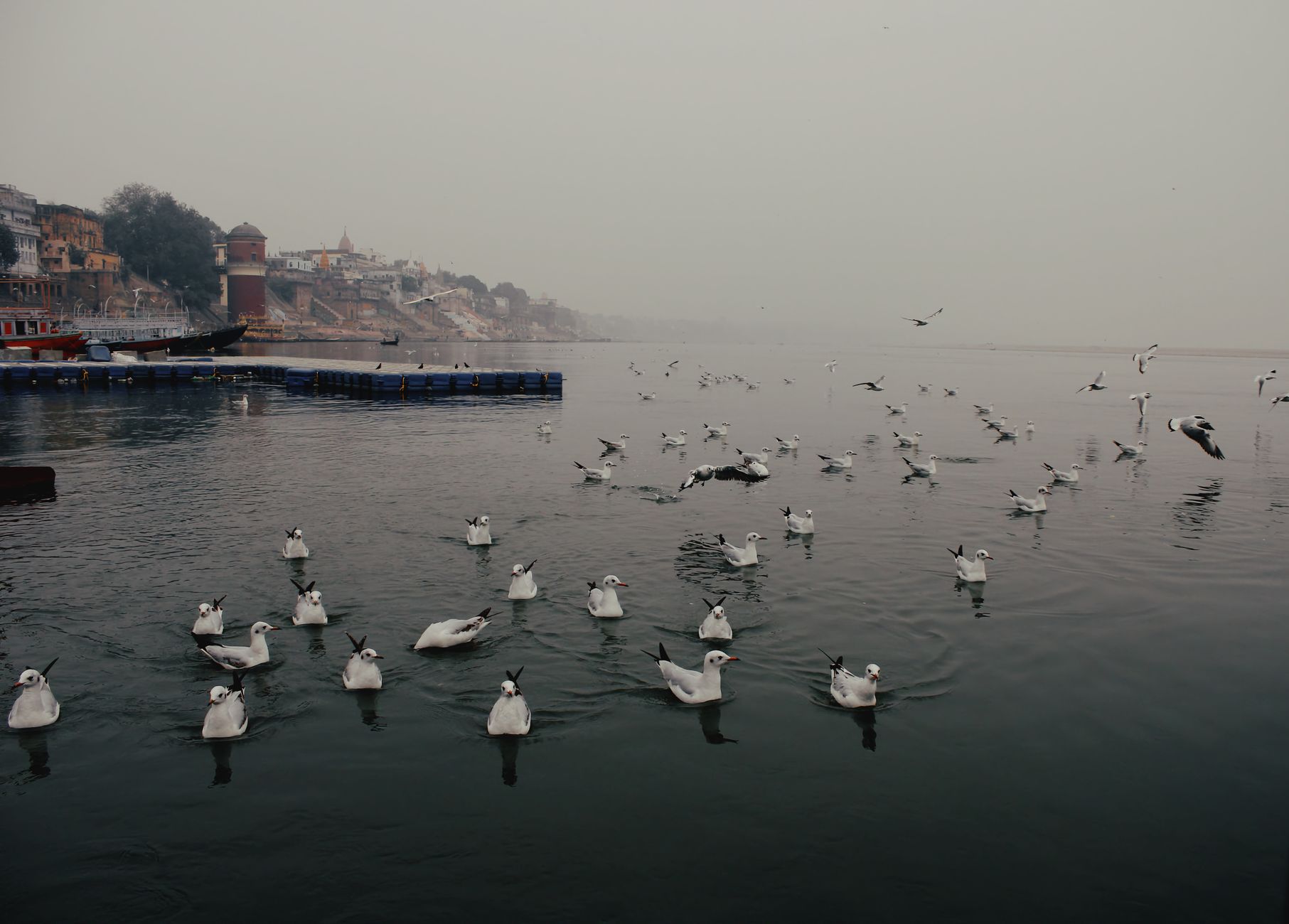
River Ganga at dawn—still waters reflecting the bruised sky of last night’s fury.
Maya stands on the ghats of Varanasi, bare feet sinking into the damp earth,
her sari soaked through from standing in the rain for hours,
watching the water carry away what she couldn’t bear to keep.
The monsoon had arrived with unexpected violence—
not the gentle drizzle her grandmother had sung about in childhood lullabies,
but a torrential assault that turned the streets to rushing rivers,
that pushed her from the shelter of her apartment building
into the heart of the downpour,
as if the storm itself had reached out to claim what she was trying to hide.
Three months ago, she had discovered the lump in her breast—
a small, hard secret that bloomed beneath her skin like a terrible flower.
The doctor’s words still echoed in her mind: “Stage two, but we caught it early.”
Early. As if time were something that could be caught, like a fish in the monsoon-swollen river.
No one knew. Not her husband Rajan, who brought her tea each morning and kissed her forehead.
Not her sister Priya in Mumbai, with her constant WhatsApp messages about wedding preparations.
And, not even Amma, whose health had been failing for months, whose medication became Maya’s daily prayer.
The secret lived inside her like a storm cloud,
gathering strength, darkening her thoughts,
threatening to burst at any moment.
The Unexpected Visitor
The morning after the storm, Maya walks to the small tea stall near her building.
The air is thick with the smell of wet earth and fried bread,
the kind of monsoon morning that makes you believe in renewal.
“Aap lag rahi hain thak gayi, beti,” says the old chaiwalla, pushing a glass toward her.
“Bahar bahut tez baarish hui na kal.”
Maya nods, though she doesn’t remember the storm anymore.
Her mind has been elsewhere—in hospitals, in scan rooms, in moments when the doctor’s voice became the only sound in the universe.
The tea tastes of cardamom and ginger, familiar comforts in a world that has become unfamiliar.
She watches the river from the stall—brown water rushing past, carrying leaves and debris,
remnants of the storm that tried to wash everything clean.
That’s when she sees him—a young man sitting alone at the far end of the stall,
a camera around his neck, rain-soaked but watching the river with an intensity that makes her uncomfortable.
He keeps looking at her, not with interest, but with recognition.
“Kya aapne kal raat dekha tha?” he asks when she finally meets his gaze.
“Aapki beti ko nadi mein phenk diya gaya tha.”
The words hit Maya like physical blows.
“My daughter? I don’t have a daughter.”
But the man keeps talking, his voice low and urgent:
“She was only seven, wearing a yellow frock with white flowers.
The water was too strong that night. The storm—”
Maya stands up so quickly her chair falls behind her.
“You’re mistaken. There’s been a mistake.”
“Naresh told me everything,” the man says, standing up too.
“He said you promised to save her, but you let her go.”
Buried Secret Surfaced
The name—Naresh—makes her blood run cold.
Naresh was the name of her first love, the one she had left twenty years ago
when she discovered she was pregnant,
the one whose child she had given up for adoption.
The secret she had buried beneath years of marriage, children, and respectability
had suddenly surfaced, carried by the monsoon winds like a ghost.
The Hidden Truth
Maya runs home, rain starting again, this time gentle, almost apologetic.
The river follows her—its steady rhythm matching her racing heart.
Every puddle reflects her fractured face,
every raindrop seems to carry a question she cannot answer.
Inside her apartment, Rajan is packing for his business trip to Delhi.
“Going already?” she asks, her voice trembling.
“The board meeting got moved up. I’ll be back in three days,” he says,
not looking up from his suitcase.
Three days. That’s all the time she has to decide what to do.
To tell him everything—the breast cancer, the daughter she gave away,
the storm that has finally broken open all the doors she had bolted shut.
Her phone rings. Priya.
“Did you hear about the accident near the old bridge? Three children lost in the river.”
Maya’s hands shake as she grips the phone.
“Which children?”
“They haven’t identified them yet. But one was wearing a yellow frock with white flowers—”
The storm inside her finally breaks.
Everything comes rushing out—the cancer diagnosis, the secret daughter,
the guilt that has been eating her alive for twenty years.
“Rajan,” she says when he comes back from the bathroom,
“I need to tell you something.”
But before she can speak, he holds up his phone.
“The police called while you were in the shower.
They found something in the river near the old bridge.
Evidence of a crime from twenty years ago.”
The words hang between them like monsoon humidity—
heavy, suffocating, impossible to breathe through.
The Aftermath
The police station smells of stale coffee and desperation.
Inspector Sharma looks at Maya with something that resembles pity.
“We have evidence, Mrs. Deshmukh. Evidence from twenty years ago.”
“What evidence?” Maya asks, though she already knows.
“The adoption records. Your illegal adoption. The baby you gave away.”
Rajan stands beside her, his hand warm in hers.
“She was sick,” Maya explains.
“I was sick. We couldn’t care for a child then.”
“You could have told someone,” the inspector says.
“Instead, you let everyone believe she died in the storm.”
“The storm was real,” Maya cries, the words breaking free after twenty years.
“I watched her disappear into those waters.
I didn’t let her go—I lost her!”
The confession hangs in the air like monsoon lightning—
bright, terrible, illuminating everything she had tried to hide.
The River’s Wisdom
Three days later, Maya stands again on the ghats.
Rajan has left for Delhi, but he will be back.
Priya is coming from Mumbai. Amma’s nurse has promised to call if anything changes.
The river flows endlessly, carrying stories and secrets,
washing clean what humans try to keep hidden.
A boat passes by, carrying tourists taking photos of the sunset.
Maya watches them, wondering what storms they hide,
what secrets they carry beneath their perfect smiles.
The monsoon has passed, leaving behind clean air and new life.
The heat returns, but this time it’s different—
not oppressive, but transformative.
She understands now that beating the heat and surviving storms
is not about avoiding the storms,
but learning to dance in the rain,
to let the waters wash away what no longer serves you,
to emerge from the darkness carrying the light of truth.
The river whispers its ancient wisdom:
you cannot control the storms, but you can learn to ride their waves.
New Beginnings
Maya walks home as the sun sets, painting the sky in shades of orange and pink.
Her phone buzzes—a message from Priya: “Flight booked. Landing tomorrow at 10.”
Tomorrow. The word feels like a promise.
Tomorrow, everything will change.
Tomorrow, she will face whatever comes—cancer, truth, consequences.
She enters her apartment to find Rajan waiting for her.
He has been sitting in the dark, waiting.
“I spoke to my sister,” he says, his voice gentle.
“She’s a doctor. She thinks we should get a second opinion about your tests.”
Tears fill Maya’s eyes.
“You already knew, didn’t you? About the cancer. About everything.”
Rajan nods, reaching for her hand.
“I’ve known for weeks. Your neighbor, Mrs. Iyer—she’s a nurse. She saw the biopsy report.”
The secrets between them dissolve like sugar in hot tea.
Twenty years of lies, and in one day, they are all washed away.
Maya looks out the window at the river, still flowing steadily in the distance.
The storm has passed, but its aftermath remains—
scars, revelations, the pain of truth finally spoken.

The Healing Waters
Rain starts again, soft this time, like the river’s gentle caress.
Maya stands at her window, watching the drops race each other down the glass.
She thinks about the young man at the tea stall—Naresh’s son, perhaps,
seeking answers, seeking justice, seeking closure.
She thinks about the yellow frock with white flowers,
about the little girl who disappeared into the monsoon waters,
about the mother who let her go, not by choice, but by circumstance.
The phone rings. It’s the cancer hospital.
“Mrs. Deshmukh,” the doctor says, “we have good news.
The pathology report came back—it’s not cancer.
Just a benign tumor. You’re going to be fine.”
Maya sinks to the floor, the relief so overwhelming it feels like drowning.
Twenty years of fear, twenty years of secrets,
and now—nothing. Just the truth, raw and unvarnished.
She walks to the balcony, the rain washing over her,
cleaning her skin, her soul, her history.
The river flows below, carrying stories and secrets,
washing clean what humans try to keep hidden.
Maya understands now that beating the heat and surviving storms
is not about avoiding the storms,
but learning to dance in the rain,
to let the waters wash away what no longer serves you,
to emerge from the darkness carrying the light of truth.
The rain continues to fall, each drop a blessing,
each moment a new beginning.
Tomorrow will bring everything—consequences, revelations, healing.
But today, in this moment, Maya stands in the rain,
alive, awake, finally free.
The river whispers its ancient wisdom:
you cannot control the storms, but you can learn to ride their waves.
And Maya, for the first time in twenty years,
believes she can.

Leave a Reply