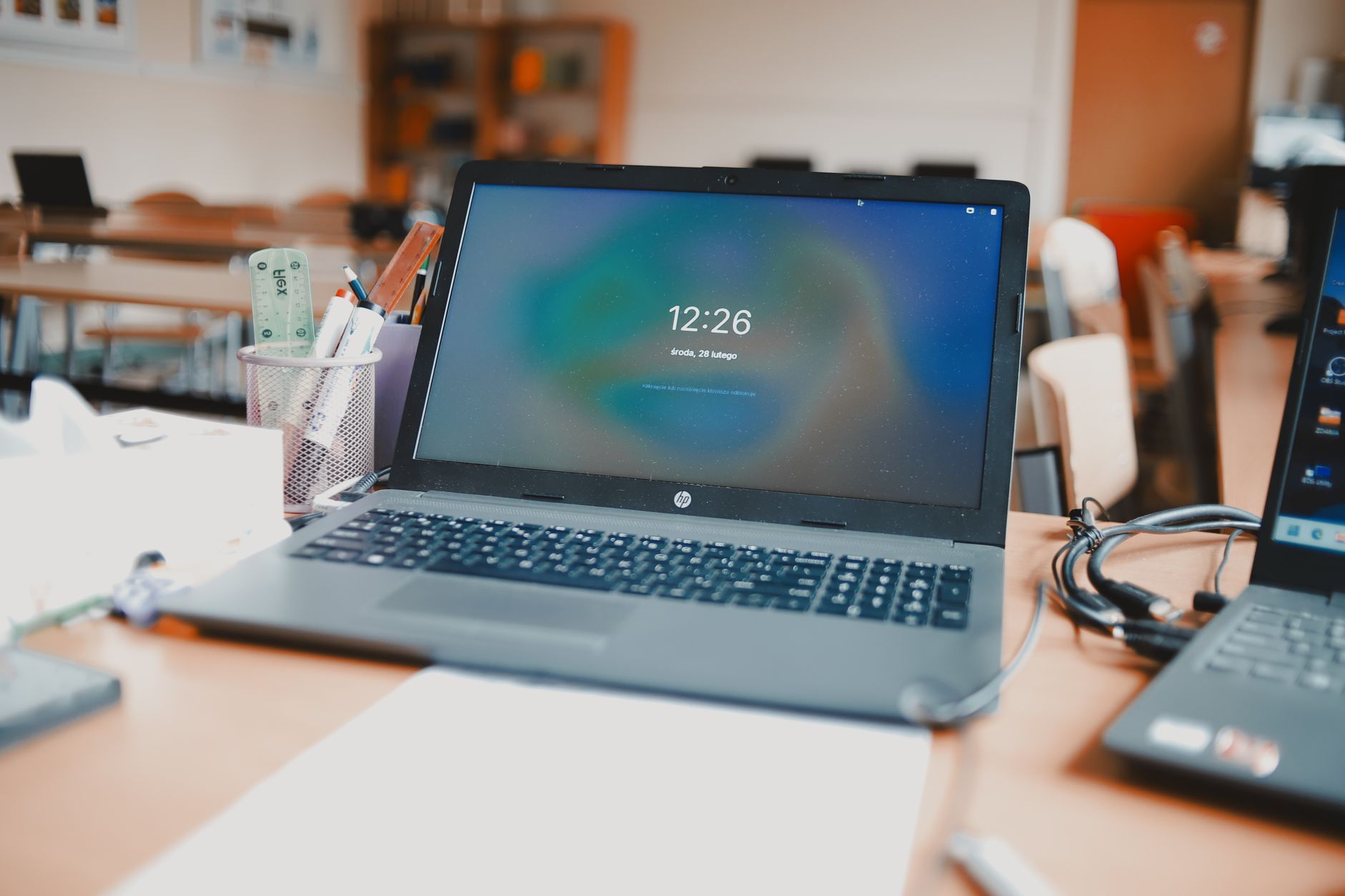
Are you a lifelong learner?
Digital Dawn
I wake to the blue light of screens that promise everything and deliver fragments of wisdom scattered across the ether like stars in an artificial constellation. My fingers dance across glass surfaces while the morning bird outside sings in dialects I’m still learning to translate. The coffee machine gurgles its own kind of poetry, a mechanical haiku about routine and necessity.
In this room of accumulated knowledge—books stacked like ancient ruins, their spines cracked with reverence—I sit at the intersection of digital and analog, past and future, knowing and becoming. The pages whisper stories of civilizations that rose and fell, their wisdom preserved like amber in the amber of time.
My laptop opens to a world of hyperlinks and information cascades, each click a step deeper into the rabbit hole of human curiosity. Wikipedia leads to Wikipedia leads to Wikipedia until I’m swimming in oceans of data, sometimes drowning, sometimes floating on currents of unexpected understanding. The algorithm doesn’t know I’m looking for truth, only patterns in my clicking behavior.
The keyboard clicks like rain on a tin roof, each keystroke a seed planted in the soil of possibility. Sometimes these seeds grow into trees of knowledge, sometimes they remain dormant, waiting for the right conditions to sprout. I am learning to distinguish between the weeds of misinformation and the wildflowers of genuine insight.
Fractured Mirror
My reflection in the dark monitor shows a face both familiar and strange. Who is this person staring back, eyes widened with the perpetual shock of discovery? Each morning brings new wrinkles around my eyes like tributaries on a map of emotional geography. The face in the mirror carries the weight of all the questions I’ve ever asked and all the answers I’ve ever received—most of them wrong, all of them valuable.
I trace the lines on my face with my finger, wondering what future hands will read these maps of lived experience. Will they understand the joy of being wrong? The beauty of changing your mind? The courage it takes to admit ignorance, especially in a world that worships certainty?
The mirror doesn’t answer, of course. Mirrors never answer. They only reflect, holding up a surface that promises transparency while maintaining its own mysterious depths. I am learning to be comfortable with this ambiguity, this constant state of not-quite-knowing.
Café of Conversations
The café hums with the music of a thousand simultaneous stories. Each table holds different constellations of human connection—students hunched over textbooks, lovers whispering secrets, businesspeople sealing deals with handshakes and smiles. I sit with my notebook, not writing but listening, collecting fragments of conversation like precious stones.
A group of elderly women sits at the corner table, their laughter like wind chimes in a summer breeze. I strain to hear their words, catching pieces about grandchildren, about lost loves, about the taste of mangoes in their childhood villages. Their stories are maps of lives lived fully, with detours and dead ends and unexpected discoveries.
The barista calls out orders in a rhythm that’s almost musical, each name a note in the daily symphony of commerce and community. I wonder about the stories behind those names—what histories, what dreams, what sorrows do they carry? I am learning that every person is a library of untold stories, and I am becoming a librarian of human experience.
Library of Lost Things
The library smells of paper and time and the particular melancholy of forgotten stories. I wander through aisles that stretch into infinity, each section a different universe of human thought. The philosophy section questions everything, the science section explains everything, the poetry section feels everything.
In the rare books room, I handle manuscripts that have survived wars and revolutions, their pages fragile as butterfly wings. These artifacts of human consciousness survived burning, flooding, neglect. They survived because someone cared enough to preserve them, because someone recognized their value even when their meanings were obscure.
I pull a book at random—”Theories of Quantum Reality in Ancient Indian Philosophy”—and my heart quickens. Here is a bridge between worlds, between times, between ways of knowing. The Sanskrit verses speak of quantum entanglement, of multiple realities, of consciousness as the fundamental substrate of existence. I am learning that all knowledge is connected, if you know how to look for the threads that bind seemingly disparate ideas.
Digital Archaeology
I open my browser and type “archaeology of the internet.” The search results reveal forgotten websites, abandoned forums, digital ruins from the early days of the world wide web. Geocities pages from 1998, Angelfire sites from 2002, blogs from the 2000s that no longer exist except in the Wayback Machine’s memory palace.
Each click takes me deeper into the digital strata of human creativity and connection. I find chat logs from strangers talking about books and dreams, early social media profiles with carefully curated identities, fan fiction sites where people wrote themselves into other people’s worlds. These digital artifacts tell stories of human longing, creativity, and the eternal desire to be seen.
The internet is both permanent and ephemeral—memories stored on servers that could fail tomorrow, connections that flicker and die, platforms that rise and fall like tides. I am learning to navigate this paradox, to value the digital while understanding its fragility, to create meaning in spaces designed for impermanence.
The Mathematics of Being
I sit at my desk with a cup of tea that has gone cold, my notebook open to a page of equations and diagrams. I’m trying to understand fractal geometry, how infinite complexity can emerge from simple rules, how the same patterns repeat at different scales from the smallest particle to the largest galaxy.
The equations remind me of meditation, of the way concentration can reveal deeper truths, of how focus transforms perception. I’m learning that mathematics is not just calculation but poetry—the language of the universe written in symbols that transcend cultural boundaries, historical periods, individual differences.
My phone buzzes with notifications—messages from friends, news alerts, reminders about appointments I’ve forgotten. The digital world demands attention, pulls me away from the deep focus required for understanding. I am learning to balance the shallow waters of constant connectivity with the deep ocean of meaningful study.
Café of Solitude
The evening light filters through the café window, golden and thick as honey. Most customers have left, but I remain, nursing a second cup of coffee, watching the streetlights come on one by one like stars being born. The barista is cleaning up, humming softly, lost in their own world of tasks and thoughts.
In the corner, a student studies intensely, highlighting passages in a thick textbook, making marginal notes in the margins. Their focus is absolute, their world narrowed to the page before them. I wonder what they’re learning, what questions they’re answering, what new doors their knowledge will open.
I pull out my notebook and write about the student, about the cleaning barista, about the way the evening light makes dust motes dance in the air like tiny galaxies. Above all, I am learning that observation is a form of learning, that paying attention to small details reveals larger truths about human experience.
The Weight of Books
My bookshelf groans under the weight of accumulated knowledge, each volume a world within a world, each spine a promise of transformation. I run my fingers along the titles, feeling the texture of different editions, different publishers, different times of my life when each book entered my orbit.
Some books I’ve read and loved, their ideas woven into my thinking like threads in a tapestry. Others sit unread, their promises still intact, their wisdom waiting to be discovered. The unread books haunt me with their potential, their unfulfilled possibilities.
I pick up a book I haven’t touched in years—”The History of Mathematics”—and open it to a random page. The equations and diagrams look familiar yet strange, like meeting an old friend after many years. I am learning that forgetting is part of learning, that letting go allows space for new growth, that revision of understanding is not failure but evolution.
The Architecture of Thought
I walk through the city at night, streetlights creating pools of gold on wet pavement. The buildings rise like monuments to human ambition, each window a lit box of someone’s private world, someone’s thoughts and dreams and struggles. I am learning to see the city as a living organism, each street a vein, each intersection a synapse.
The subway trains rush underground like blood through veins, carrying thousands of stories through the city’s circulatory system. I stand on the platform and watch the trains arrive and depart, each one a temporary gathering of human lives, each departure a moment of loss and possibility.
I think about how thoughts work, how ideas connect and disconnect, how understanding emerges from the complex interplay of neurons, experiences, emotions, and external stimuli. Finally, I am learning that my mind is not just my own, but a node in a vast network of human consciousness, connected to ancestors and descendants, to strangers and loved ones, to the living and the dead.
The Mathematics of Connection
Back in my room, I open my laptop and pull up a social network map showing how ideas spread through networks, how influence flows like water through channels, how clusters form and reform, how information travels at the speed of light but understanding travels at the speed of relationships.
The visualization is beautiful and terrifying—beautiful in its complexity, its elegance, its demonstration of human interconnectedness. Terrifying in its implications for privacy, for autonomy, for the possibility of manipulation. I am learning that knowledge is never neutral, that every piece of information carries with it the weight of its origins, its intentions, its consequences.
My phone lights up with a notification—a friend has shared an article about the neuroscience of learning. I click the link and begin reading, my mind expanding to accommodate new information, new connections, new possibilities for understanding. I am learning that learning is not accumulation but transformation, not addition but metamorphosis.
The Geography of Emotion
I map my feelings onto the city I live in, each neighborhood representing different emotional states. The downtown financial district is anxiety and ambition, the old residential areas are nostalgia and comfort, the university district is curiosity and possibility, the park areas are peace and contemplation.
I walk through these emotional neighborhoods, observing how they interact, how they influence each other, how they change over time. I am learning that emotions are not just internal experiences but environmental conditions that shape perception and behavior, that the places we inhabit become part of our emotional landscape.
At the waterfront, the sunset paints the water in shades of orange and pink and purple, colors that have names but no fixed meanings, that mean different things to different people at different times. I am learning that beauty is not objective but relational, that meaning emerges from the interaction between observer and observed, between perceiver and perceived.
The Library of Memory
I close my eyes and walk through the library of my memory, each shelf holding different kinds of knowledge—some explicit, some tacit, some theoretical, some experiential. The books are arranged not chronologically but thematically, by emotional resonance, by practical utility, by aesthetic pleasure.
Some books are well-worn, their pages soft with use, their margins filled with my own notes and questions. Others are pristine, their potential still intact, their wisdom waiting to be discovered. The library of memory is both archive and laboratory, both record and possibility.
I pull a book at random—”Conversations with My Grandmother”—and open it to a page about forgiveness. The words resonate with recent experiences, with recent struggles to understand and be understood. I am learning that memory is not storage but reconstruction, that each time we access a memory, we recreate it, and in that recreation, we have the power to transform its meaning and impact.
The Architecture of Understanding
I build models in my mind, frameworks for understanding complex systems, theories of human behavior, models of social change. Each model is imperfect, incomplete, but useful in its own way. I am learning that understanding is not about finding truth but about finding useful approximations, about developing tools for navigation rather than maps of reality.
The models I build help me make sense of the world, but they also constrain my perception, creating blind spots and limitations. I am learning to hold my models lightly, to recognize their boundaries, to allow for the possibility that reality exceeds my current understanding.
I write about this in my notebook, creating a new model about the limits of models, about the relationship between knowledge and humility, about the paradox that the more we understand, the more we realize we don’t understand. Moreover, I am learning that the edge of knowledge is also the edge of wisdom.
The Mathematics of Hope
In the quiet hours before dawn, I sit with my notebook and write about hope—not as a feeling but as a mathematical concept, as a probability distribution, as a force that creates possibilities where none existed before. I explore the mathematics of possibility, the calculus of change, the statistics of transformation.
The equations are beautiful in their elegance, their ability to capture complex emotional states in precise symbolic language. I am learning that mathematics is not cold and rational but emotional and intuitive, that it speaks to the deepest parts of human experience even as it describes the external world.
My breath creates little clouds in the cold air, each cloud a temporary universe of water vapor that will soon dissipate into the larger atmosphere. I am learning that hope is like these clouds—ephemeral yet real, temporary yet meaningful, creating beauty in their moment before returning to the whole.
The Library of the Future
I imagine libraries of the future—not buildings but networks, not collections of books but flows of information, not institutions but ecosystems of knowledge. I consider how artificial intelligence will transform learning, how virtual reality will change experience, how genetic engineering will alter the very nature of human capability.
The future library is not about accumulation but about integration, not about storage but about transformation, not about consumption but about creation. I am learning that the future of knowledge is not about having more information but about developing new ways of processing, integrating, and applying that information.
I close my notebook and watch the first light of dawn appear over the city skyline. The streetlights are beginning to fade, their job done for the night. Soon the sun will rise, bringing with it new questions, new possibilities, new opportunities for learning and growth.
I am a lifelong learner, and this is both my curse and my gift, my burden and my blessing, my struggle and my salvation.
───────────

Epilogue: The Library of Becoming
As the sun fully rises, I pack my notebook and prepare to face the day. The café will soon be filled with customers, the streets with traffic, the world with its urgent demands and endless possibilities. I carry with me the accumulated knowledge of centuries—written in books, coded in algorithms, embodied in relationships, encoded in my own neural pathways.
I am learning that learning is not about completion but about continuation, not about mastery but about journeying, not about arriving but about becoming. The library is not a building but a state of being, not a collection but a process, not an endpoint but a way of traveling through the world.
The day ahead promises new questions, new challenges, new opportunities for understanding. I do not know what I will learn today, but I know that learning will happen, as it always does, as it must. I am a lifelong learner, and this is both my identity and my invitation to continue exploring the infinite landscapes of human knowledge and experience.
The journey continues, as it always does, as it always must.

Leave a Reply