1. The Key to Betrayal: The Conservatory at Blackwood Manor
In the conservatory where glass meets iron,
where tropical plants sweat their humidity
onto marble floors, the betrayal begins.
Not with a sudden violence, but with a key—
silver and ornate, turning in a lock
that should have remained sealed since 1947.
She watches Thomas slip it from his pocket,
watches his fingers tremble as he selects
the specimen case labeled “Orchidaceae,”
but knows it’s not about flowers at all.
The lock clicks open with finality.
Flashback:
Two years earlier, in this same room,
Thomas had sworn his devotion while helping
her arrange archival photographs—
their wedding day, their first home, the birth
of their daughter, all captured in sepia tones.
“You’re my anchor,” he’d whispered against her neck,
while outside, thunderstorm rain hammered
against the glass panels, each drop
a tiny percussion against their happiness.
Present:
The case opens. Not orchids inside,
but legal documents, bank statements,
and a photograph—newly printed—
showing Thomas with another woman,
their bodies leaning into each other’s space
in ways she never has.
The betrayal isn’t just the woman
or the money or the years of lies
layered like sediment over their marriage.
It’s the realization that every moment
of supposed intimacy was performance.
Every whispered “I love you” was rehearsal.
She doesn’t scream. She doesn’t cry.
Instead, she picks up a pruning shears
from the potting table and walks toward him,
not with violence, but with purpose.
“You always did love plants,” she says,
“so I thought you’d appreciate pruning.”
The irony blooms between them
as the conservatory fills with the scent
of crushed leaves and broken promises.
2. Confessions in the Library: Questions of Guilt
The library smells of aging paper and truth,
or at least what we convince ourselves is truth.
I sit in the leather armchair where Father
read his legal texts for forty-seven years,
the same chair where I now confess
to crimes I may or may not have committed.
“I pushed him,” I tell Detective Martinez,
whose face remains carefully neutral,
a mask of professional skepticism.
And,
“I pushed him from the west balcony
at precisely 9:47 PM.”
The grandfather clock chimes
the hour, but I know it’s wrong.
It stopped working after Mother died.
“The security cameras caught nothing,”
Martinez says, adjusting his glasses,
a nervous habit I’ve noticed in liars.
“Because I disabled them,” I explain,
“using the knowledge Father taught me
about electrical systems. He never
meant for me to use it this way.”
Outside, rain begins to fall,
each drop a tiny percussion against the windowpane,
each one a potential alibi or accusation.
Martinez makes notes in his pad,
but I notice he writes nothing
about the discrepancies in my story:
how I claimed to push him
but described it as “helping him fall,”
how I mentioned the time
but not the date,
how I spoke of his body hitting the ground
but not where his body lay when found.
“You have the right to remain silent,”
he quotes, but I know the truth:
I’m already speaking too much,
already saying too much through what I’m not saying,
already confessing through denial.
The lights flicker. The house groans.
A book falls from a high shelf—
“The Complete Works of Edgar Allan Poe”—
its pages landing open to “The Tell-Tale Heart.”
Martinez raises an eyebrow.
I smile.
“Sometimes,” I say, “the most convincing lies
contain just enough truth to make them believable.”
3. The Locked Garden Room: What Remains
The garden room sits at the back of the house,
sun-drenched and forgotten,
where Mother grew her orchids until the day
she disappeared. They say she locked herself in
one afternoon in 1972 and never emerged.
Today I’ve finally found the key.
It was in Father’s desk drawer,
tucked behind deeds and wills,
documents of life and death,
alongside a single photograph
of Mother smiling on this very porch,
her hair caught in the breeze that still
moves through these old house bones.
The lock groans as I turn the key,
a sound like awakening from a long sleep.
The door swings inward to reveal—
Not what I expected.
Not Mother sitting in a rocking chair,
not a nest of papers documenting her absence,
not evidence of foul play or suicide note.
Just an empty room with dust motes dancing
in the afternoon light,
four walls painted the color of seafoam,
a single window overlooking what was once
a thriving garden but now lies
wild and overgrown.
On the floorboards, barely visible beneath layers
of neglect, there’s a pattern of circular marks,
as if something heavy was moved there
repeatedly, over years.
I step inside and the door clicks shut behind me.
Click. Not lock. Just the sound of wood meeting wood.
In the center of the room, beneath what appears
to be floorboards, there’s a rectangle
slightly darker than its surroundings.
I kneel and press.
The floor lifts.
Inside—photographs, dozens of them,
all of Mother looking progressively thinner,
her smile fading with each image.
Beneath the Photographs
And beneath the photographs—
A journal.
Excerpt, first entry:
“He says I’m getting too thin. He brings me
biscuits and tea, but I can’t keep them down.
The garden is dying too. Everything
withers when he’s near.”
Final entry:
“Today I locked myself in here. He thinks I’m
having one of my episodes, but this time
I need silence to think clearly.
The key is hidden where only I would look—
behind the false bottom of his desk,
where he keeps his important papers.
If anyone finds this, know that I chose this.
Sometimes the only way out is through walls
that only you can see.”
I close the journal and return it to its hiding place.
The floorboards settle back into place.
Outside, the wind picks up,
rustling through the overgrown garden.
I realize then that I’m not alone in this room.
Mother is here, in the photographs,
in the dust, in the lingering scent of orchids
that she must have grown in secret,
watering them through the keyhole.
The door handle turns.
Father stands there, his face pale.
“I wondered when you’d find it,” he says.
“Your mother chose this room. She chose this ending.”
I look around at the empty space,
at the dust, at the circular marks on the floor.
“But where is she now?” I ask.
Father’s smile doesn’t reach his eyes.
“Some doors,” he says, “once opened,
can never be closed again.”
4. Mirrors and Lies: The Reflection Problem
The mirror in the hallway has been lying to me
for twenty-three years.
Not actively, not with malice.
A mirror can’t help what it reflects.
But it’s been reflecting a version of me
that isn’t entirely true.
Today I discovered why.
The mirror was a wedding gift from Aunt Eleanor,
who disappeared during my seventh birthday party
without saying goodbye to anyone.
“She was always dramatic,” Mother would say,
but I’ve always wondered.
The mirror shows me what everyone wants to see:
the responsible daughter, the successful professional,
the woman who wears sensible shoes and remembers
birthdays and never raises her voice.
But today, while cleaning the hallway,
I noticed something odd about the frame—
a slight discoloration, as if something
had been painted over repeatedly.
I touched the surface.
It wasn’t glass.
It was carefully arranged mirrors,
each reflecting the other in an infinite cascade
of slightly distorted images.
Behind the Mirror
Behind the main mirror—
A space no larger than a shoebox.
Inside—photographs, letters, newspaper clippings.
All documenting a different me.
A me who wore bold colors,
who laughed too loudly,
who dated someone forbidden,
who made mistakes and owned them.
This mirror doesn’t just reflect—it chooses.
It shows me the version of myself
that would make everyone proud.
The version that, according to my mother,
disappeared the same day Aunt Eleanor did.
I pick up a framed photograph from the hidden space—
myself at twenty-one, standing with a man
I don’t recognize, his arm around my shoulders.
In the mirror’s reflection, he’s not there.
“He was real,” I whisper to the empty hallway.
“You can’t erase someone just because
they don’t fit your narrative.”
I turn to face the mirror directly.
For the first time in twenty-three years,
I don’t look at my reflection.
I look at the space between me and the mirror.
I see it then—a slight distortion in the air,
like heat rising from pavement.
Like something not quite right with the light.
Mirror is a Portal
The mirror is a portal.
Not to another place, but to another time.
To the version of me that Aunt Eleanor helped
become someone else, someone better, someone
who wouldn’t make the same mistakes.
“You can’t keep me locked away forever,” I say
to the reflection that isn’t mine.
The mirror ripples like water.
For a moment, I see both versions of myself—
the responsible daughter and the free spirit—
standing side by side.
Then the responsible daughter begins to fade,
translucent, then transparent, then gone.
I turn back to the mirror.
Only my reflection remains.
This time, it’s smiling at me,
a genuine smile, the kind that reaches the eyes.
“I know what you did,” the reflection says,
and for the first time, I understand:
I didn’t just discover a mirror that lies.
I discovered that I’ve been lying to myself.

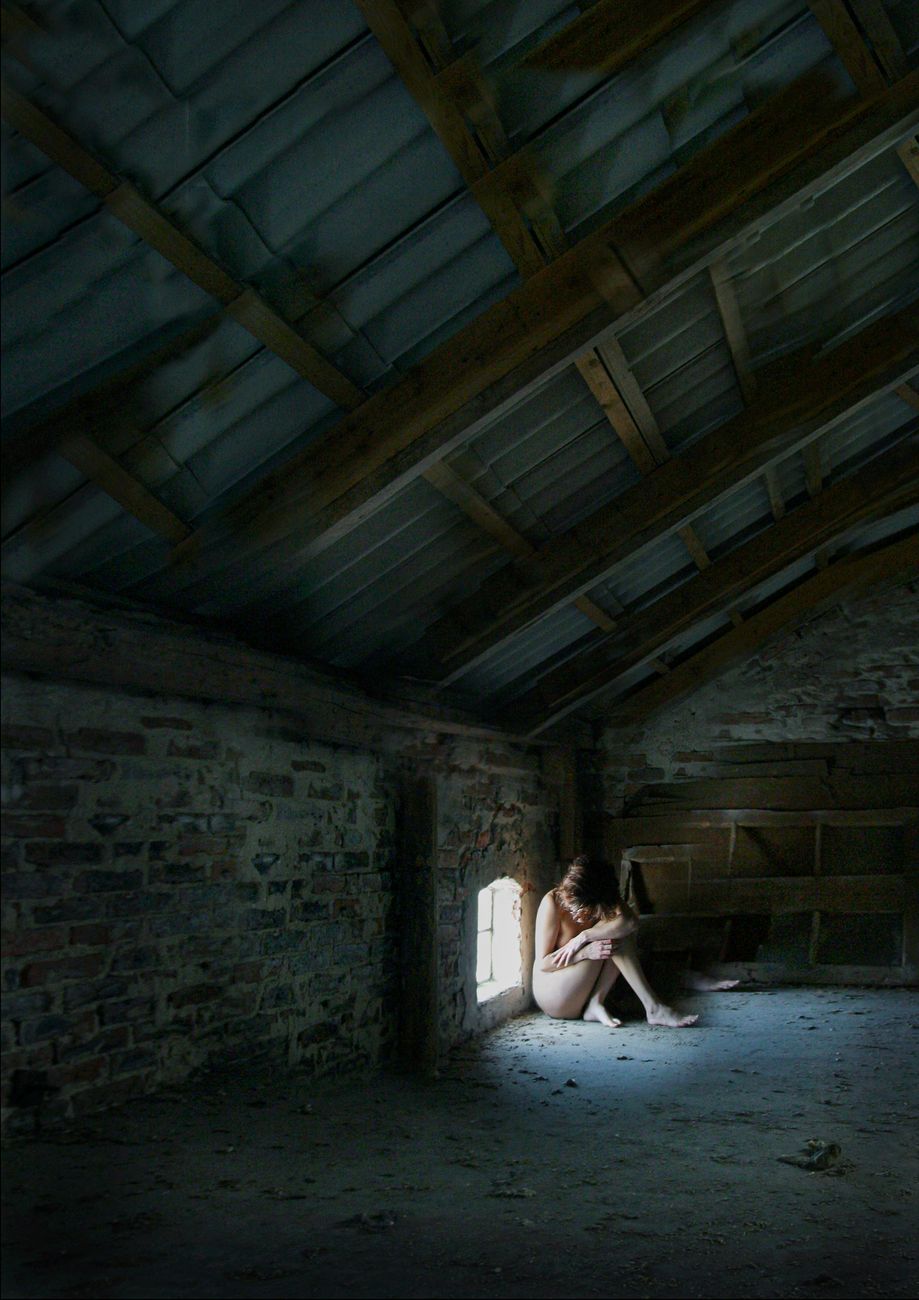
5. Evidence in the Attic: The Attic Collection
The attic smells of cedar and secrets,
where dust particles dance in slanted light
like tiny performers in a forgotten theater.
I climb the pull-down stairs carrying a flashlight
and the weight of twenty-seven years
of unanswered questions.
“No one will believe you,” Mother had said
when I asked again about Father’s disappearance.
“Some stories are better left untold.”
But today I’ve found the attic key
hidden in Mother’s jewelry box,
and I’m determined to know the truth.
In the center of the attic sits a wooden chest,
painted the color of weathered barn wood.
On its lid, someone has painted the words:
“For When You’re Ready.”
My hands tremble as I lift the lid.
Inside—not documents or photographs
but objects. Dozens of them.
A broken music box that plays no tune.
A single child’s shoe, size seven.
A tarnished silver locket containing no picture.
A wedding dress stained with something dark.
A collection of keys, each labeled with a room
in this house.
And at the bottom—a journal, leather-bound,
its pages filled with Mother’s elegant script.
October 12, 1995:
He’s been different since the accident.
Sometimes I look at him and don’t recognize him at all.
The doctors say he’s improving, but I see the truth.
He’s not coming back.
I Found Him
March 3, 1996:
Today I found him in the garden,
digging with his bare hands.
When I asked what he was doing,
he said he was searching for something
he’d lost. I asked what.
He smiled that smile that doesn’t reach his eyes
and said, “Everything.”
November 11, 1997:
The attic. This is where I keep the evidence.
Not proof, not really. Just things.
Things that remind me of who he was before.
Things that remind me of what I’ve done.
July 4, 1998:
Tonight I’ll finally do what needs to be done.
Some stories must end for others to begin.
If anyone finds this, know that I didn’t kill him.
I just helped him disappear.
I close the journal slowly,
understanding finally what Mother meant.
She didn’t kill Father. She helped him create
a new identity, a new life somewhere
where no one would find him.
But that doesn’t explain the objects in the chest.
I pick up the locket.
Inside, there’s not a picture of Mother and Father
as I always assumed, but a tiny lock of baby hair
and a folded note:
“I know what you did.”
The handwriting is Father’s.
I drop the locket as if it’s burning me.
Footsteps on the Attic Stairs
Footsteps on the attic stairs.
Mother stands there, her face pale,
holding a photograph.
“You found it,” she says, not as a question.
I look at the photograph she’s holding—
a young woman I don’t recognize,
standing in front of this very house,
her expression defiant and proud.
“Who is she?” I ask.
Mother’s smile is sad.
“Your aunt Eleanor. The one who disappeared
during your seventh birthday party.”
I remember suddenly—faintly—a woman
with laughing eyes and wildflowers in her hair,
who showed me how to make shadow puppets
on the wall and told me stories about the stars.
“She left,” Mother continues,
“because she discovered the truth about your father.
About what he did to his first family.
The family that lived in this house before us.”
I look around at the attic, at the objects,
at the chest labeled “For When You’re Ready.”
“You were never supposed to find out,” Mother says,
and I realize she’s talking about more than just
Father’s past. She’s talking about everything.
The Attic Key
“The attic key,” I say slowly,
“how did you get it back?”
Mother holds up her hand.
On her finger sits the same silver key
that opens the conservatory where Thomas
keeps his secrets.
“Some doors,” she says, “once opened,
can never be closed again.”
“I know what you did,” I repeat,
the words from the locket coming back to me.
Mother nods slowly.
“Yes. You did. You found the truth.
And now you must decide what to do with it.”
The flashlight beam catches something
glinting in the corner of the attic—
a small silver box, barely visible beneath dust sheets.
I walk toward it, my heart pounding.
Inside—a collection of letters,
dozens of them, all addressed to Eleanor,
some written in Mother’s hand, some in Father’s.
The final letter, dated the day after Eleanor disappeared,
is from Mother:
“You were right to leave. You were never
supposed to find out about the others.
But I need you to know this:
I’m not the villain in this story.
I’m just the woman who chose to stay.
Some choices require courage.
Others require survival.
Choose your courage carefully.”
I close the letter and look at Mother.
She’s moved closer, her hand outstretched.
“The truth,” she says softly,
“is never just one thing.”

Leave a Reply