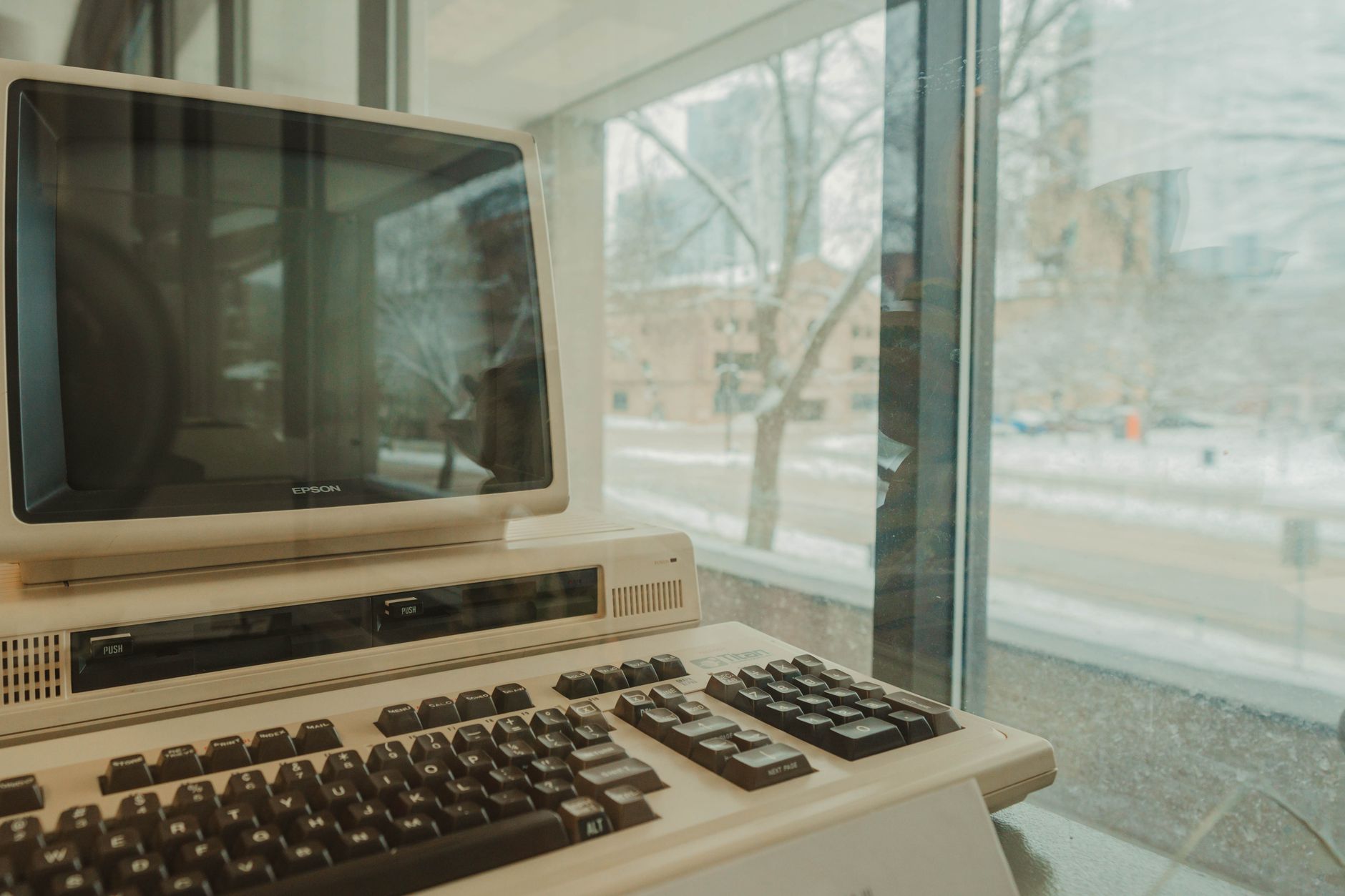
Which outdated technology do you miss the most, and why?
The Vinyl Heartbeat
In rooms where dust motes dance like forgotten notes, I still remember the ritual—the careful removal of cellophane, the crinkle of plastic as fingers trembled with anticipation. An Outdated Technology I Miss the Most wasn’t just about sound. It was about the sacred ceremony of music discovery, the way my grandmother would sit cross-leg on the floor, her weathering hands selecting cassettes from stacks taller than herself, each one a vessel of stories waiting to be release.
The click of the plastic case opening, that specific sound of possibility—it was the prelude to something intimate, something shared between the listener and the artist, mediated through these plastic rectangles that held entire worlds inside their magnetic strips. I remember the thrill of discovering that rare Kishore Kumar cassette at Chor Bazaar, bargaining with vendors whose eyes lit up when they recognized my genuine love for the music, not just its commercial value.
Magnetic Memories
The rewind button became my meditation, thumb pressing repeatedly against that small plastic square, watching the counter spin backward through seconds, minutes, hours—each rewind a prayer, each forward press a revelation. An Outdated Technology I Miss the Most taught me patience in an age of instant gratification. The way the cassette would stuck sometimes, requiring the gentle persuasion of a pencil to press the stuck tape back into place, our hands working together to restore harmony.
My sister and I would spend entire afternoons making mixtapes for each other, carefully selecting songs that captured our moods, our crushes, our secret dreams. The blank tape became a canvas, its 90-minute capacity both limitation and liberation—enough space for our feelings, not so much that we could drown in them completely. We’d record over Radio Ceylon broadcasts, catching fragments of songs between the crackles of static, these precious moments of serendipity that streaming algorithms could never replicate.
The Physical Poetry
Each cassette came with its own poetry—the liner notes that we’d study for hours, reading translations, understanding contexts, seeing the faces of artists whose voices had become part of our family’s soundtrack. The album art was a portal, a visual companion to the auditory journey it contained. An Outdated Technology I Miss the Most wasn’t just functional; it was decorative, a presence in our homes that announced our tastes, our identities, our belonging to certain communities of sound.
The wear and tear told stories—tapes that had been played so many times the magnetic ribbon had stretched thin, the plastic cases cracked from endless handling, the labels faded from sunlight exposure. These weren’t defects; they were love stories told through physical evidence, each scratch and skip a testament to the times we had danced to these songs, cried to these melodies, celebrated to these rhythms during festivals and heartbreaks alike.
Communal Cords
I miss how music traveled between people—the way we’d gather around someone’s Walkman, four heads pressed together trying to catch every note that escaped those tiny earbuds. The sharing was physical, deliberate, requiring actual presence rather than digital transmission. An Outdated Technology I Miss the Most forced us to be present with each other, our bodies close, our attention shared, our experiences communal rather than individual.
The mixtapes I made for friends became artifacts of our relationships, each track carefully chosen to reflect something about the person I was giving it to—songs for my best friend during her board exams, devotional tracks for my grandmother’s puja room, romantic ballads for that boy I was too shy to speak to directly. These weren’t files to be uploaded and downloaded; they were love letters in plastic casings, tangible evidence of my care and attention.
The Analog Soul
There was something about the imperfections that made the music more real—the slight warble, the occasional dropout, the way the sound would change depending on how you positioned the tape inside the player. These weren’t bugs; they were features, the human fingerprints on an otherwise mechanical process. An Outdated Technology I Miss the Most understood that beauty lived in the cracks, that perfection was neither possible nor desirable.
The ritual of flipping the cassette mid-way through—the interruption, the pause, the deliberate act of continuation—reminded us that music consumption wasn’t passive. We had to participate, to engage with the medium, to care enough about what came next to physically intervene in the process. This active engagement made the music more precious, more earned, more integrated into the fabric of our daily lives.
Digital Ghosts
Now I scroll through playlists on screens that never sleep, my fingers dancing across glass that responds instantly to my touch. The music is infinite, available, perfect in its clarity, and somehow less meaningful for all its accessibility. I sometimes wonder if we lost something essential when we gave up the friction, the delay, the physical presence that made listening an act of devotion rather than consumption.
The old tapes sit in boxes now, collecting dust in air-conditioned rooms, their magnetic strips slowly degrading, their plastic cases becoming brittle with time. But sometimes, when the power goes out during Mumbai’s infamous monsoons, or when the internet fails during a video call with family, I find myself longing for those simpler times—the way music felt more special because it was harder to obtain, more meaningful because it required effort to access, more communal because sharing required physical presence.

Resonant Echoes
Even as I navigate this digital landscape with ease, part of me remains tethered to those plastic rectangles that held so much of my emotional history. The algorithms don’t understand that the song I want to hear isn’t just about the melody—it’s about the context, the memory, the person I was when I first encountered it. An Outdated Technology I Miss the Most understood that music was never just sound; it was time machine, identity marker, relationship builder, cultural anchor.
Perhaps what I truly miss isn’t the technology itself but what it represented—a slower pace of life, more intentional consumption, deeper human connection, the joy of discovery, the ritual of appreciation. In our hurry toward efficiency, we may have forgotten that sometimes the best things in life require effort, patience, and presence—qualities that those plastic cassettes taught me to value, even if I can no longer physically experience them in their original form.
The music still plays, of course, clearer than ever, more accessible than before, but something essential has been lost in translation between magnetic and digital, between physical and virtual, between presence and absence.

Leave a Reply