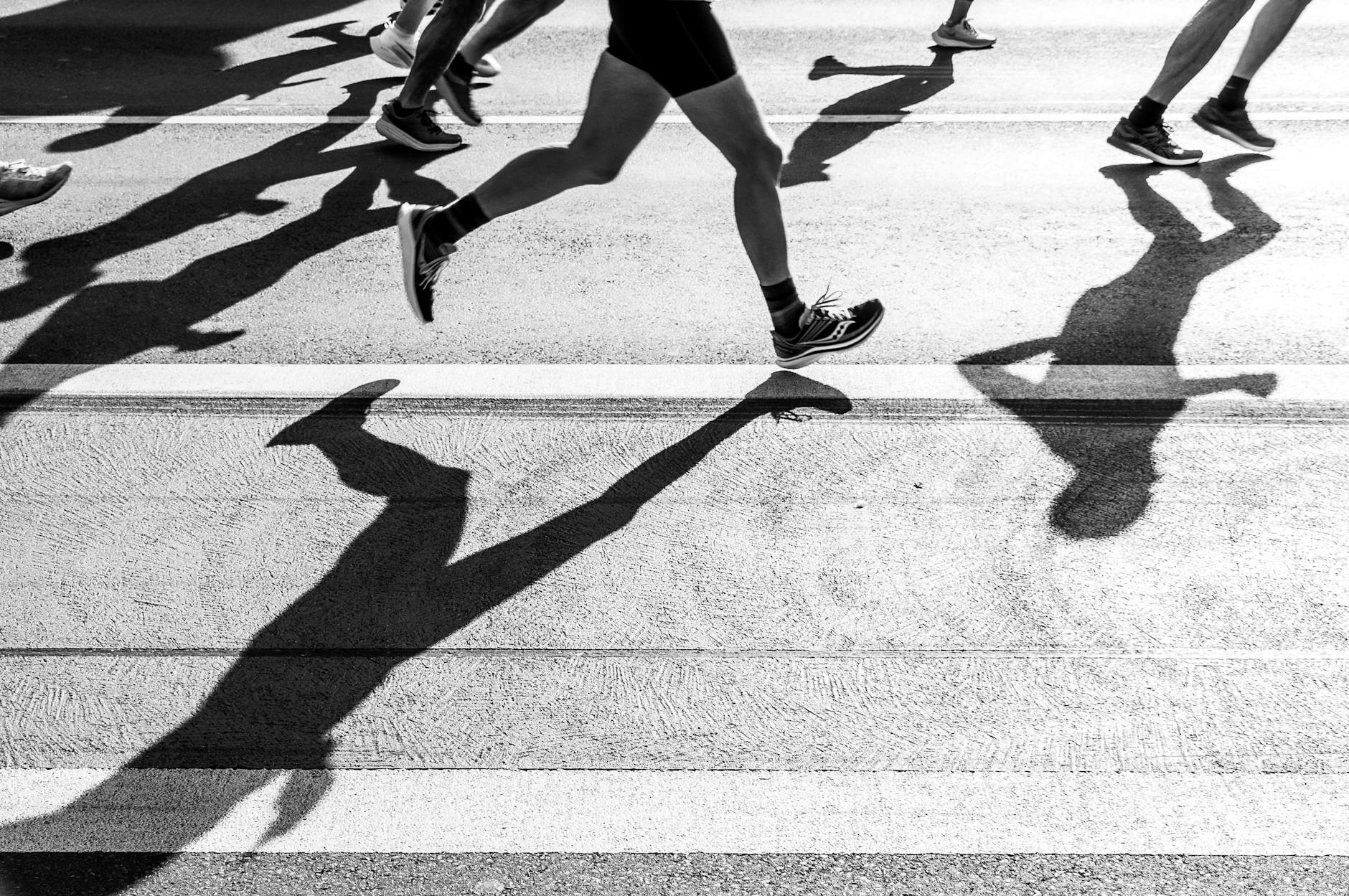
In a world obsessed with speed and instant success, we often overlook the deeper journeys that unfold quietly. This poem explores the idea that those who finish last are remembered not for their timing, but for their endurance, depth, and silent transformation. It is a reflection on patience, resilience, and the unseen paths that shape who we become.
“Because those who finish last are remembered—not for when they arrived, but for how they endured.”
By the time he arrived,
the banners had already begun to fall.
The air still held a memory of noise—
a faint echo of applause
lingering like dust in late sunlight.
But the crowd had moved on.
They always do.
The finish line ribbon
hung loosely now,
one side torn,
the other brushing gently
against the indifferent wind.
No one waited.
No one counted his steps.
No one marked his time.
And yet—
he did not stop.
He had started long before the others noticed.
Not at the sound of the gun,
but somewhere deeper—
where silence becomes a beginning.
His journey was not fast.
It was not efficient.
It did not bend itself
to the urgency of others.
He walked through seasons
that the winners never saw.
Autumn,
when leaves fell without audience.
Winter,
when the path disappeared under doubt.
Spring,
when hope returned quietly—
not announced,
but felt.
And summer,
where the sun burned questions
into his back
without offering answers.
Those who finished first
were lifted onto shoulders.
Their names were written
in bold, temporary ink.
Celebrated.
Photographed.
Shared.
And slowly—
forgotten.
Because speed leaves no time
for roots.
But those who finish last are remembered
in ways the world does not measure.
Not in headlines.
Not in trophies.
But in something quieter.
Something that stays.
He passed through valleys
where echoes refused to return.
He crossed rivers
that did not care
how long he took.
He climbed hills
that offered no summit—
only continuation.
Every step
was unrecorded.
Every breath
unwitnessed.
And yet,
something was being written—
not outside him,
but within.
The world never stopped to see
how deeply he walked.
How each step
was not forward—
but inward.
How each delay
was not failure—
but formation.
There is a kind of victory
that arrives too early.
It shines—
and disappears.
And there is another kind
that arrives late—
carrying silence,
weight,
and truth.
“Speed is seen. Endurance is felt. And only one of them lingers.”
Those who finish last are remembered
because they carry time differently.
They do not race against it.
They absorb it.
They let it pass through them
like wind through an open field—
leaving behind
something invisible,
yet permanent.
When he crossed the line,
there was no sound.
Only the soft rhythm
of his own breath.
Only the quiet certainty
that he had arrived
not just here—
but within himself.
No medal was placed
around his neck.
No voice called his name.
But the earth beneath his feet
held his story.
The path behind him
remembered his persistence.
The sky above him
acknowledged his presence
without spectacle.
And somewhere—
far beyond applause,
beyond recognition,
beyond the need to be seen—
he became something
the first never could:
A memory
that lingers.
A presence
that remains.
A story
that does not fade.
Because those who finish last are remembered
not for when they arrived—
but for how they endured.
And long after the noise dissolves,
after names blur into history,
after the world forgets
who came first—
it is the quiet footsteps,
the slow journeys,
the unseen battles—
that continue
to echo.
- What Is True Love? A Deep Reflective Poem on Patience, Trust, and Growing Together
 A reflection on love that does not rush or demand. Through quiet natural imagery and philosophical depth, the poem explores acceptance of the past, presence in the moment, and the slow, enduring growth of a relationship rooted in trust, freedom, and understanding. #ContemplativePoetry #SlowLove #PhilosophicalWriting #HumanConnection #PebbleGalaxy
 - Every Moment in Life, Like a Wave, Carries Both Presence and Departure
 Every wave that touches the shore carries a quiet truth—nothing arrives without also leaving. This reflective poem explores impermanence, emotional flow, and the art of letting go through the timeless rhythm of the sea. #InnerPeace #Mindfulness #Poetry #SelfAwareness #LettingGo
 - The Quiet Loneliness of Being Emotionally Strong for Everyone Else (A Poem on Silent Strength and Emotional Exhaustion)
 What does it mean to always be the strong one? This deeply reflective poem explores the quiet loneliness of being emotionally available for everyone else while silently carrying your own unseen weight. A poignant meditation on emotional exhaustion, self-neglect, and the slow journey back to oneself. #EmotionalStrength #LonelyButStrong #MentalHealthPoetry #SilentStruggles #ReflectiveWriting
 - How to Protect Your Peace and Energy: Letting Go of People Who Take You for Granted
 Not everyone deserves a permanent place in your life. This reflective poem explores how to protect your peace, set healthy boundaries, and stop being taken for granted. A contemplative journey into self-worth, emotional clarity, and the quiet strength of letting go. #ProtectYourPeace #EmotionalBoundaries #LettingGo #SelfWorth #Poetry
 - The Field Where Distinction Fails: A Wordless Connection Beyond Separation
 A deeply philosophical wordless connection piece that explores perception beyond language, where identity softens and separation dissolves into a continuous field of awareness shaped by silence, presence, and non-dual insight. #Philosophical #NonDuality #Mindfulness #Poetry #WordlessConnection
“The world applauds arrival—but time remembers the journey.”

This poem challenges the conventional idea of success. While society celebrates speed and visible achievement, it often forgets the quiet perseverance of those who take longer paths. The idea that those who finish last are remembered speaks to a deeper truth—lasting impact is not created in moments of applause, but in sustained endurance. These journeys, though unseen, carry emotional depth and authenticity. In real life, many of us walk such paths—slow, uncertain, and often unnoticed. Yet it is these very experiences that shape resilience, wisdom, and inner clarity. The poem invites readers to reconsider what it means to “arrive” and to value the quiet strength within their own journeys.
“Some victories fade in noise. Others remain in silence.”

Leave a Reply