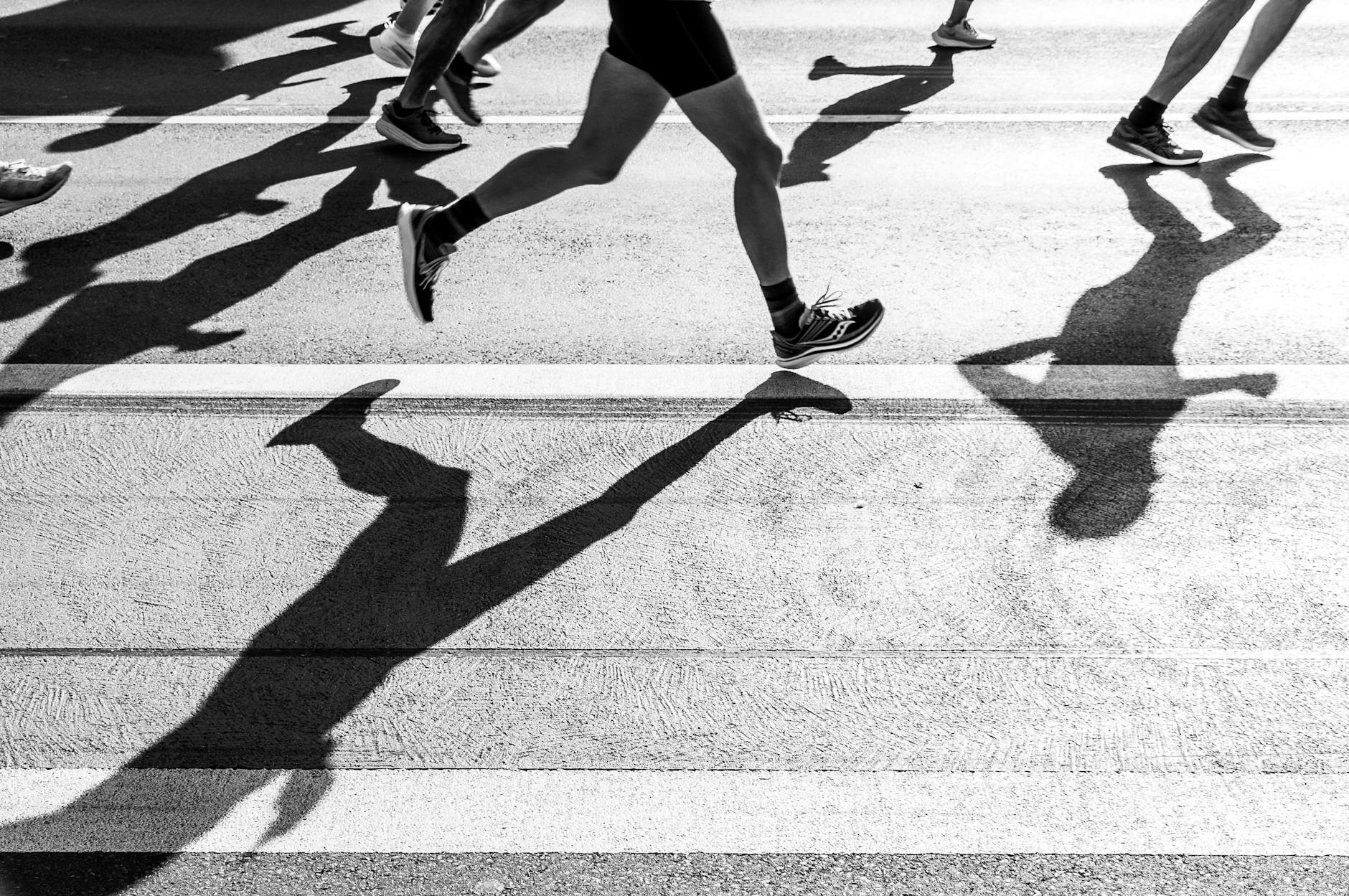
In a world obsessed with speed and instant success, we often overlook the deeper journeys that unfold quietly. This poem explores the idea that those who finish last are remembered not for their timing, but for their endurance, depth, and silent transformation. It is a reflection on patience, resilience, and the unseen paths that shape who we become.
“Because those who finish last are remembered—not for when they arrived, but for how they endured.”
By the time he arrived,
the banners had already begun to fall.
The air still held a memory of noise—
a faint echo of applause
lingering like dust in late sunlight.
But the crowd had moved on.
They always do.
The finish line ribbon
hung loosely now,
one side torn,
the other brushing gently
against the indifferent wind.
No one waited.
No one counted his steps.
No one marked his time.
And yet—
he did not stop.
He had started long before the others noticed.
Not at the sound of the gun,
but somewhere deeper—
where silence becomes a beginning.
His journey was not fast.
It was not efficient.
It did not bend itself
to the urgency of others.
He walked through seasons
that the winners never saw.
Autumn,
when leaves fell without audience.
Winter,
when the path disappeared under doubt.
Spring,
when hope returned quietly—
not announced,
but felt.
And summer,
where the sun burned questions
into his back
without offering answers.
Those who finished first
were lifted onto shoulders.
Their names were written
in bold, temporary ink.
Celebrated.
Photographed.
Shared.
And slowly—
forgotten.
Because speed leaves no time
for roots.
But those who finish last are remembered
in ways the world does not measure.
Not in headlines.
Not in trophies.
But in something quieter.
Something that stays.
He passed through valleys
where echoes refused to return.
He crossed rivers
that did not care
how long he took.
He climbed hills
that offered no summit—
only continuation.
Every step
was unrecorded.
Every breath
unwitnessed.
And yet,
something was being written—
not outside him,
but within.
The world never stopped to see
how deeply he walked.
How each step
was not forward—
but inward.
How each delay
was not failure—
but formation.
There is a kind of victory
that arrives too early.
It shines—
and disappears.
And there is another kind
that arrives late—
carrying silence,
weight,
and truth.
“Speed is seen. Endurance is felt. And only one of them lingers.”
Those who finish last are remembered
because they carry time differently.
They do not race against it.
They absorb it.
They let it pass through them
like wind through an open field—
leaving behind
something invisible,
yet permanent.
When he crossed the line,
there was no sound.
Only the soft rhythm
of his own breath.
Only the quiet certainty
that he had arrived
not just here—
but within himself.
No medal was placed
around his neck.
No voice called his name.
But the earth beneath his feet
held his story.
The path behind him
remembered his persistence.
The sky above him
acknowledged his presence
without spectacle.
And somewhere—
far beyond applause,
beyond recognition,
beyond the need to be seen—
he became something
the first never could:
A memory
that lingers.
A presence
that remains.
A story
that does not fade.
Because those who finish last are remembered
not for when they arrived—
but for how they endured.
And long after the noise dissolves,
after names blur into history,
after the world forgets
who came first—
it is the quiet footsteps,
the slow journeys,
the unseen battles—
that continue
to echo.
- Again
 Sometimes the familiar becomes new when we have changed. A quiet walk along an old road becomes a journey of rediscovery, reminding us that life can begin again without changing the road beneath our feet.
 - The Golden Megaphone: A Vicious Interlocking Rubaiyat on Donald Trump
 A viciously satirical interlocking rubaiyat aimed at Donald Trump, mocking his golden towers, political theatrics, tariff claims, attacks on dissent, and relentless self-mythologizing.
 - Corporate Public Libraries in India: Are They Truly Inclusive or Becoming CSR Showpieces?
 A new generation of corporate-funded libraries is emerging across India. But are these spaces genuinely inclusive, or does meaningful CSR require far more than free entry and impressive infrastructure?
 - Lymph System Supplements: What They Are, What Science Says, and Whether You Really Need Them
 Interest in lymph system supplements is rising rapidly. Here’s what science, lifestyle, and preventive health tell us before you buy.
 - Community-Funded Cancer Research Is Becoming the New Engine of Medical Innovation
 As traditional research funding becomes more constrained, community-funded cancer research is emerging as a powerful driver of medical innovation and patient care.
“The world applauds arrival—but time remembers the journey.”

This poem challenges the conventional idea of success. While society celebrates speed and visible achievement, it often forgets the quiet perseverance of those who take longer paths. The idea that those who finish last are remembered speaks to a deeper truth—lasting impact is not created in moments of applause, but in sustained endurance. These journeys, though unseen, carry emotional depth and authenticity. In real life, many of us walk such paths—slow, uncertain, and often unnoticed. Yet it is these very experiences that shape resilience, wisdom, and inner clarity. The poem invites readers to reconsider what it means to “arrive” and to value the quiet strength within their own journeys.
“Some victories fade in noise. Others remain in silence.”

Leave a Reply