Obedience vs Respect in India. We are raised to believe that obedience is virtue. That questioning is defiance. That silence is maturity. Over time, this conditioning becomes invisible. We stop noticing when respect quietly turns into compliance.
The Nod That Means Nothing and Everything
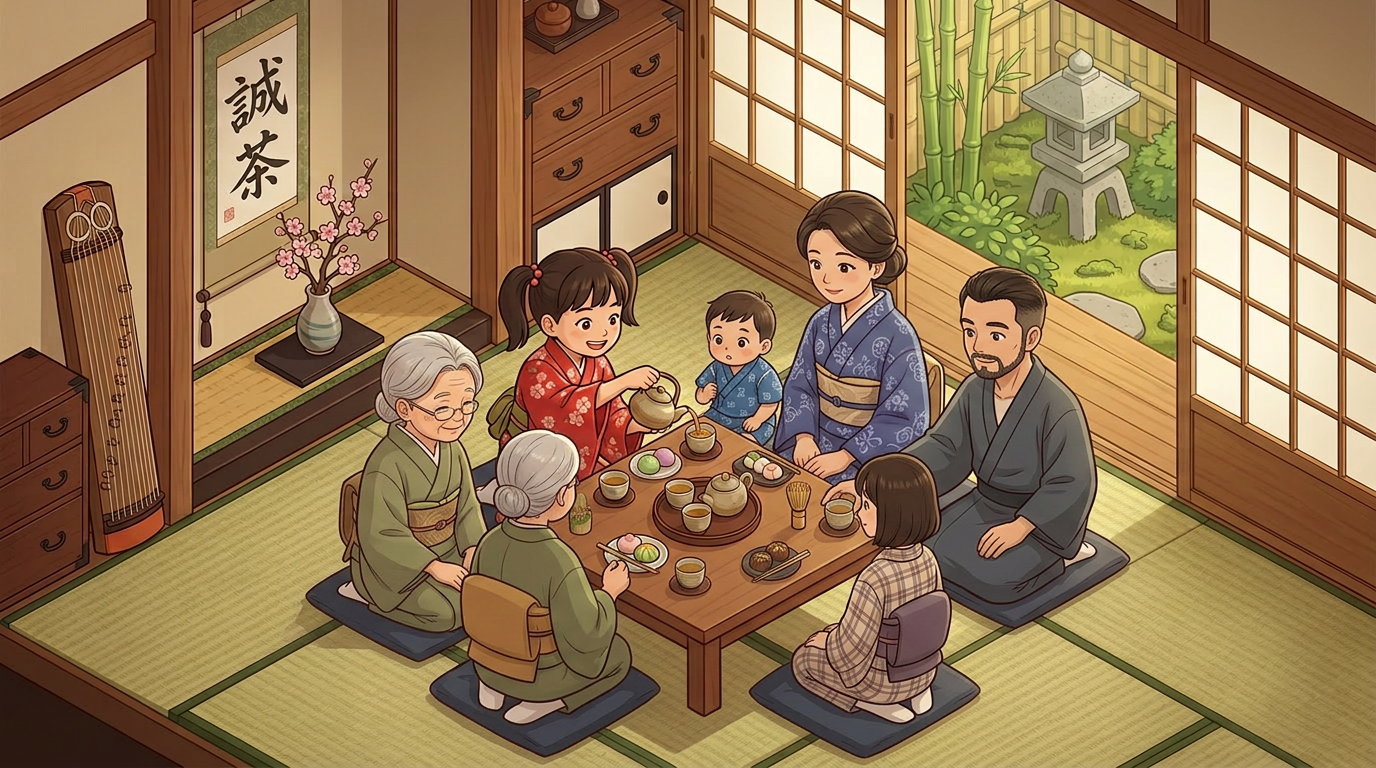
The tea glass arrives before anyone asks.
The youngest person at the table pours. Not because someone requested it. Not because they wanted to. The kettle was almost empty, the elder’s cup was almost dry, and the body already knew what to do. The hands moved. The tea flowed. The elder nodded once — not in thanks, exactly. More like acknowledgment of a sequence performed correctly.
Nobody called it obedience. Nobody called it respect. It simply happened, the way breathing happens, the way certain silences are understood before they form.
That nod. It appears in so many rooms across this country.
What the Classroom Kept Quiet
There is a particular kind of stillness in an Indian classroom when a teacher says something wrong.
Not the stillness of confusion. The stillness of calculation. Thirty-odd students, each one running a private arithmetic — the cost of speaking against the cost of staying silent. The hands remain in laps. The eyes drop to notebooks. Someone writes the incorrect fact down, carefully, because it will appear in the exam.
Later, outside, a student tells a friend: “Sir was wrong about the dates.”
The friend shrugs. “So? Would you have said something?”
A pause. Then, softly: “No.”
This is where obedience vs respect in India lives its most ordinary life. Not in dramatic confrontations. In the distance between what is known and what is said. In the measured silence of someone who understands but chooses — or feels they must choose — to disappear.
The teacher never knows. The fact stays wrong in thirty notebooks. And the classroom calls itself respectful.
Obedience vs Respect in India: The Languages We Live Inside
The languages we live inside do not make this easy to untangle.
Izzat — an Urdu word, rooted in Arabic, meaning honour. But whose honour? The elder’s, the family’s, the community’s — almost never the individual’s alone. Maryada — Sanskrit and Hindi, meaning dignity, but also boundary, also limit, also the unspoken rule that says: this far, no further. Aadar — Hindi, meaning reverence. But watch how it is earned, or demanded, or simply inherited through age.
These words were not designed to separate internal feeling from external performance. They hold both together, deliberately. A culture embeds its priorities in its vocabulary. And in India, the priority has long been this: that the feeling matters less than the gesture. That the inner life defers to the visible one.
The silent code shaping Indian society is not an accident. It was built — slowly, generation by generation — into the very structure of how people greet, address, eat, and disagree.
Or rather, do not disagree.
The Elder at the Table
She has lived in the same house for sixty years.
Her daughter-in-law touches her feet every morning. Has done so for thirty years. She watches the gesture closely, the way someone watches a familiar road for potholes. Some mornings it arrives quickly, without thought. Other mornings there is the smallest hesitation — a fraction of a second — before the hands reach down.
She notices. She does not say anything.
What she thinks in that fraction of a second, only she knows. Perhaps: Is it real today? Perhaps nothing at all. Avidly, perhaps the question no longer matters, because the gesture has become its own kind of truth, independent of the feeling behind it.
The tea glass sits between them on the low table. Steam rises. Neither speaks.
This is the texture of obedience and deference in Indian homes — not cold, not resentful, not even particularly conscious. Just present. Woven in.
Obedience vs Respect in India: What Gets Lost in the Weaving
A young man takes a job his father chose.
Not because he lacks ambition. He has ambitions — specific, privately held, occasionally examined late at night when the house is quiet. But the conversation never happened. Or it happened once, briefly, and the father’s face did that thing it does — not anger, not quite disappointment, something more ambient — and the young man found himself nodding.
The nod again.
He tells himself it is respect. That honouring his parents’ vision is a form of love. And perhaps it is. But there is also the other thing he does not name: the relief of not having to fight. The relief of being seen as a good son. The relief of the ambient face returning to neutral.
Obedience vs respect in India often lives inside this relief. The feeling of having performed correctly. Of the sequence completed without incident.
The distinction between the two — between honour freely given and compliance quietly extracted — does not always announce itself. Sometimes it only becomes visible years later, in a career that fits like someone else’s coat.
The Guru-Shishya That Actually Worked
Not every bowed head is empty.
There is a different story, older and more careful. The student who sat for years at the edge of the teacher’s room — not performing silence, but genuinely listening. Who disagreed, eventually, and said so in a particular way: not to challenge, but to understand further. Who earned the right to question not by asserting it, but by demonstrating something first.
This is the version India holds up as ideal. The guru-shishya parampara at its truest — not blind following, but deep attention. Respect as active, chosen, relational.
It exists. It is not myth. But it requires the elder to be worthy of it, and the structure to allow for it. Both conditions are rarer than the tradition implies.
More often, the classroom does not permit questions. More often, the father’s face does the thing it does. Moreover, more often, the silent code rewards performance over presence.
And so the two — obedience and respect — continue to share a face.
The Younger Room
Across the city, in a different kind of room, a different kind of conversation.
Three people in their late twenties, laptops open, chai going cold. One of them is talking about her mother. About the argument that happened over the phone last week. About being told that talking back is disrespect.
“I wasn’t talking back,” she says. “I was disagreeing.”
The others nod — this nod different, more complicated, carrying something between recognition and unease.
“She won’t see the difference,” someone says.
“I know,” she replies. And then, quietly: “Neither did I, for a long time.”
This is the generational fault line in Indian obedience culture. The younger generation is not abandoning respect. It is, haltingly, trying to separate it from something else — from the performance, from the ambient face, from the relief of not having to fight.
The separation is awkward. It does not come with instructions. And it costs something, every time, in the currency of being called difficult, ungrateful, Western.
What the Body Remembers
The child who never said no learns things.
Not intentionally. The body learns: that survival involves reading the room before reading oneself. That the ambient face is a signal to adjust. That love and compliance arrive together often enough that the distinction blurs.
These are not dramatic learnings. They do not arrive with revelation. They settle in quietly, become posture, become the way someone holds themselves in a room with authority. The way a person agrees before they have finished thinking. The way silence becomes the first response, every time, even when something in the chest wants otherwise.
The psychological cost of this silent code is not always visible as pain. Sometimes it looks like smoothness. Like a person who never causes friction. Like someone everyone calls respectful, and who has not yet examined what that word has cost them.
Meanwhile, the older structures hold. The ambient face still works. The nod still comes. And the question of whether it carries feeling, or only form, remains unanswered in most rooms — because most rooms never ask it.
The Tea Glass, Again
Evening. A different house. An older part of the city.

A grandfather sits with his granddaughter. She is perhaps nine. She pours tea for him — carefully, both hands, the way she was shown. He watches her.
“Why do you do that with both hands?” he asks.
She looks up. “Because Dadi said.”
He nods. Then, after a moment: “Do you know why Dadi said?”
She thinks. “Because it’s respectful?”
“Yes,” he says. “But do you feel it? Or are you just doing it?”
She looks at her hands, then at him. The question is too large for her. She doesn’t answer.
He doesn’t push. He picks up the glass. The tea is the right temperature. Outside, the evening traffic thickens into its familiar sound.
The question hangs there, between them, unanswered. Not because she is too young. But because some questions are not meant to be answered quickly. Because the space between feeling it and doing it is exactly where obedience vs respect in India has always lived — quietly, without resolution, passed from one pair of hands to the next.
REFLECT FOR A MOMENT
When you call something respect, are you certain it isn’t fear wearing a familiar face?
Fear is a quiet teacher. It trains the body long before the mind catches on. In many Indian households, the first lesson is not respect — it is the reading of consequences. We learn the elder’s expressions before we learn the names for what we feel. And so, for years, the two feelings — reverence and caution — occupy the same gesture. The question is not a critique. It is an invitation to sit with something uncomfortable: that love and obedience, grown in the same soil, may not always be the same plant.
What did your silence protect — you, or the relationship, or something you haven’t named yet?
Silence in Indian families is rarely empty. It carries the weight of every conversation that was started and quietly folded. Every disagreement that became a nod. Every time the ambient face appeared and the chest adjusted to accommodate it. That silence protects things — sometimes real things, tender things, relationships worth keeping intact. But sometimes it protects only the performance. The question is worth sitting with: which one was yours?
If the gesture remained but the feeling behind it changed — would anyone notice? Would you?
This is the most interior question of all. The ritual continues. The feet are touched, the tea is poured, the elder is addressed correctly. But the interior has shifted — or perhaps it never held what the gesture implied. The culture built its structures on visible behaviour, and visible behaviour can persist long after the inner life has moved elsewhere. The question is not whether the gesture is wrong. It is whether, somewhere along the way, you stopped asking what it means — and when you might begin again.
#ObedienceVsRespect #IndianSociety #PebbleGalaxy #BlogchatterA2Z #SilentCodeIndia
This post is a part of Blogchatter A2Z Challenge 2026.

Leave a Reply