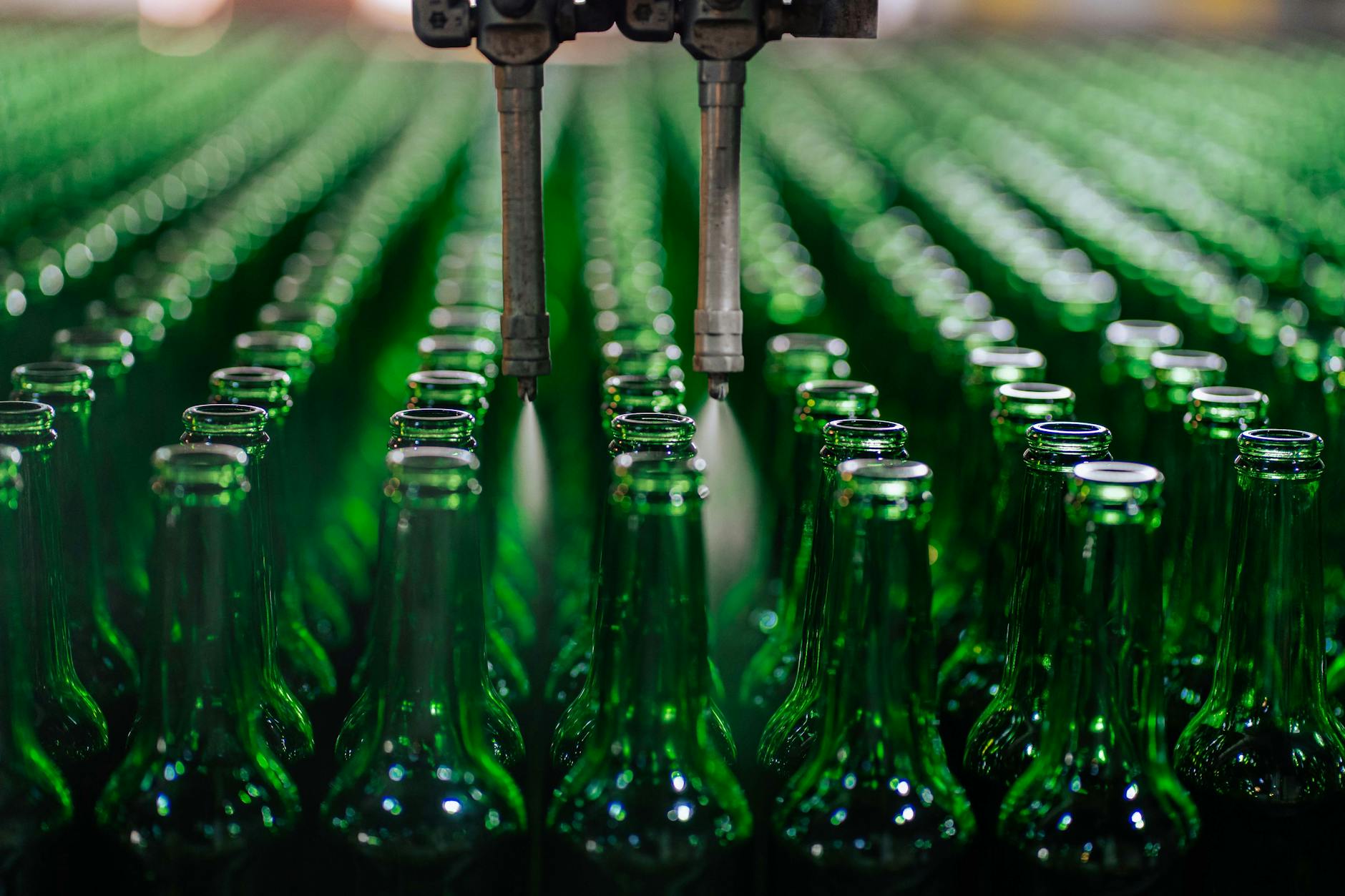
The future of manufacturing trust won’t be built in boardrooms—it will be embedded in machines. AI in manufacturing quality control is undergoing a fundamental shift.
It is no longer just about detecting defects. It is about ensuring that defects never reach the real world—and that every product can be trusted without question.
For decades, quality control has been reactive. A defect appears, it is identified, and corrective action follows. That model is now becoming obsolete.
What is emerging instead is something far more powerful: continuous, AI-driven trust systems.
What Is AI in Manufacturing Quality Control?
AI in manufacturing quality control refers to the use of machine vision, data analytics, and intelligent algorithms to monitor, detect, and prevent defects in real time. Unlike traditional inspection, AI enables continuous verification, pattern recognition, and traceability—ensuring consistent product quality, safety, and compliance at scale.
How AI in Manufacturing Quality Control Is Evolving
Traditional inspection systems acted like gatekeepers. They checked outputs at fixed points in the production line.
AI changes that architecture completely.
Instead of isolated checks, modern factories deploy continuous verification systems, where every stage of production is monitored and validated in real time.
This includes:
- High-speed machine vision detecting microscopic defects
- AI models identifying pattern deviations across batches
- Integrated systems tracking every unit across the supply chain
The result is not incremental improvement.
It is a system-level transformation of quality control into an intelligent, always-on process.
How AI Inspection Systems Work in Manufacturing
To understand the shift, you need to understand the stack behind it.
1. Data Capture (Machine Vision)
Cameras and sensors capture high-resolution images and production data at multiple stages.
2. AI Analysis (Pattern Recognition)
Machine learning models analyze:
- Surface defects
- Shape inconsistencies
- Color variations
- Structural anomalies
These systems learn continuously, improving detection accuracy over time.
3. Decision Layer (Real-Time Action)
If anomalies are detected:
- Products are automatically rejected
- Alerts are triggered
- Root cause analysis begins instantly
4. Traceability Integration
Each unit is tagged and tracked:
- Batch-level tracking
- Unit-level serialization
- Supply chain visibility
Companies like Antares Vision Group are integrating all these layers into unified platforms—turning inspection into an intelligent, connected ecosystem.
From Inspection to Continuous Verification Systems
The shift from inspection to verification is subtle—but transformative.
Inspection asks:
“Is this product acceptable?”
Verification asks:
“Can this product be continuously proven to be safe and compliant?”
This difference matters.
Because in industries like food, beverages, and aerosols, failures are not just operational—they are reputational and regulatory.
AI enables continuous proof of quality, not just periodic validation.
Why Packaging Is Becoming the Critical Trust Layer
Packaging used to be the final step in manufacturing.
Now, it is becoming the most strategic control point.
Why?
Because packaging is the last opportunity to guarantee:
- Product safety
- Authenticity
- Regulatory compliance
AI transforms packaging into an active validation system.
Every can, seal, or label becomes part of a network that confirms quality in real time.
Signature Insight: Trust Layer Manufacturing
Trust Layer Manufacturing is the shift where production systems are designed not just to create products, but to continuously validate their safety, authenticity, and compliance in real time.
In this model:
- Quality is not inspected—it is proven
- Traceability is not optional—it is embedded
- Trust is not assumed—it is engineered
This is the deeper transformation behind AI in manufacturing quality control.
Benefits of AI in Manufacturing Quality Control
The impact goes far beyond efficiency.
1. Defect Prevention at Scale
AI reduces reliance on sampling by enabling 100% inspection coverage.
2. Reduced Recalls and Risk
Early detection prevents defective products from reaching the market.
3. Stronger Regulatory Compliance
Automated documentation and traceability simplify audits and compliance.
4. Higher Operational Efficiency
Less waste, fewer reworks, and optimized production cycles.
5. Scalable Trust
Consistency across large volumes builds long-term consumer confidence.
Real-World Applications Across Industries
AI in manufacturing quality control is already transforming:
Food & Beverage
- Can and bottle inspection
- Seal integrity validation
- Contamination detection
Pharmaceuticals
- Packaging verification
- Serialization and anti-counterfeiting
- Compliance tracking
Aerosols & FMCG
- Structural integrity checks
- Label accuracy
- High-speed defect detection
Across these sectors, the goal is the same: 👉 Eliminate uncertainty in product quality
The Real Competitive Advantage: Trust at Scale
Most conversations about AI focus on efficiency:
- Faster production
- Lower costs
- Reduced waste
But the real advantage is defensive—and strategic.
AI enables:
- Prevention of large-scale recalls
- Protection of brand reputation
- Continuous compliance readiness
- Systemic trust building
In today’s environment, trust is not a soft metric.
It is a measurable operational output.
What This Means for the Future of Manufacturing
As AI systems mature:
- Every product will carry a verifiable digital history
- Production lines will operate as self-validating ecosystems
- Quality failures will become rare statistical anomalies
Consumers may never see these systems.
But they will depend on them—implicitly.
Because trust will no longer be assumed.
It will be engineered into every product.

FAQs: AI in Manufacturing Quality Control
What industries benefit most from AI in quality control?
Industries with high compliance and safety requirements—such as food, pharmaceuticals, and FMCG—benefit the most due to the need for precision and traceability.
Is AI replacing human inspectors?
No. AI augments human capabilities by handling high-speed, repetitive inspection tasks, allowing humans to focus on decision-making and system oversight.
How accurate are AI inspection systems?
Modern AI inspection systems can achieve extremely high accuracy, often exceeding human inspection, especially in detecting microscopic or pattern-based defects.
What is the biggest advantage of AI in manufacturing quality control?
The biggest advantage is continuous verification, which ensures consistent product quality and reduces the risk of defects reaching consumers.
Closing Thought
The biggest shift in manufacturing is not automation.
It is the quiet transition from making products…
👉 to proving they deserve to exist in the real world.
Reflection
If AI can guarantee product trust at scale…
Do brands still earn trust—or simply engineer it?

Leave a Reply