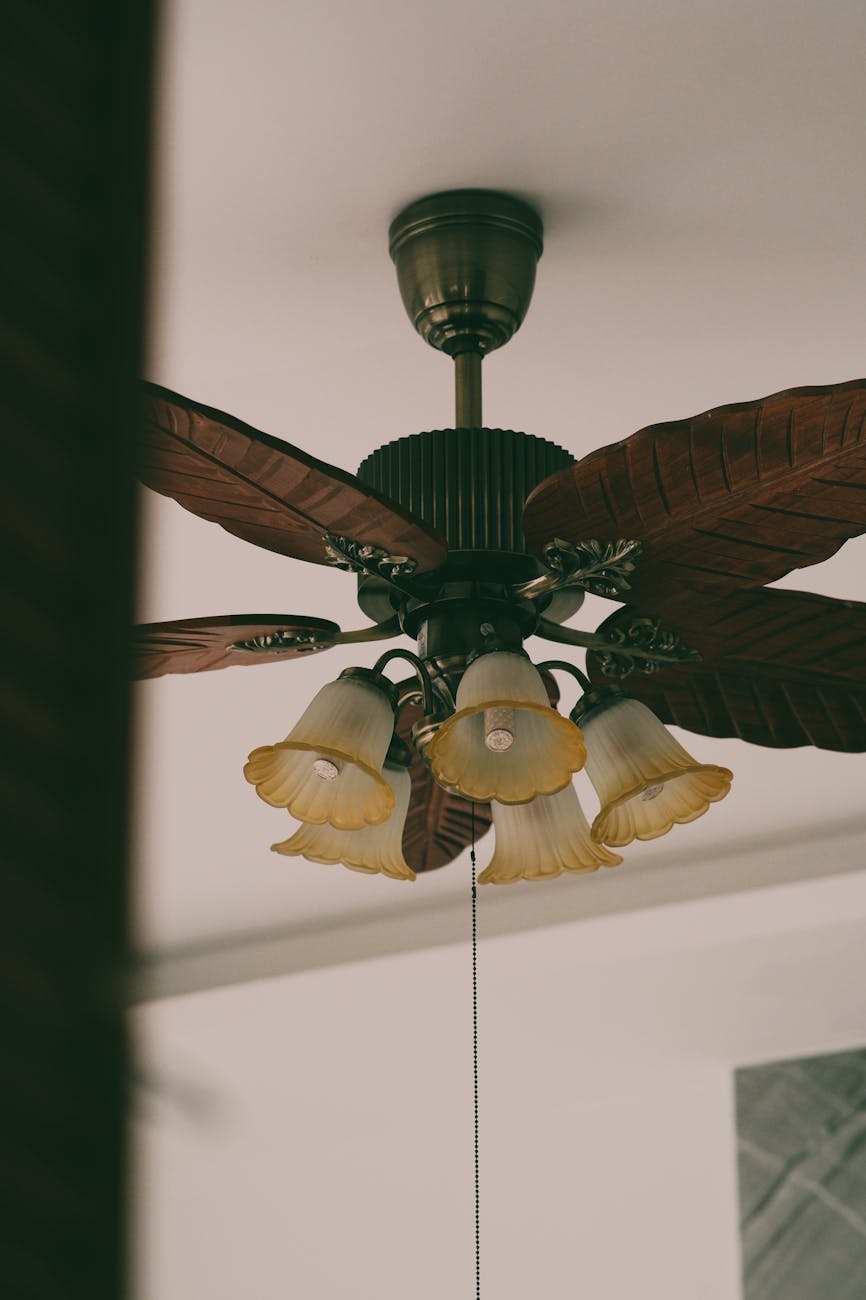
The Upgrade Everyone Recommends—But Few Truly Understand
Walk into any modern Indian home upgrade conversation today, and one recommendation comes up almost automatically: switch to a BLDC fan. But, the conversation around BLDC vs normal ceiling fan is missing something important.
The logic seems airtight—lower electricity bills, silent operation, smarter control. But the real story behind BLDC vs normal ceiling fan isn’t just about efficiency. It’s about a deeper shift in how everyday products are being designed—and what we’re quietly giving up in return.
For decades, ceiling fans were simple, durable machines you installed once and forgot. Today, they are evolving into electronically controlled devices that promise optimization, but introduce a new layer of complexity. And that shift deserves a closer look.
Why “Better” Isn’t Always What It Seems
Most consumers believe:
→ BLDC fans are simply “better fans”
But what’s actually happening is more nuanced.
Traditional ceiling fans were designed with a clear priority:
- Longevity
- Repairability
- Tolerance to real-world conditions like voltage fluctuation
Modern BLDC fans, on the other hand, are optimized for:
- Energy efficiency
- Precision speed control
- Smart features and convenience
So when you compare BLDC vs normal ceiling fan, you are not choosing between two versions of the same product. You are choosing between two different design philosophies:
- One built for survival over time
- One built for performance in the present
Inside the Machines: How These Fans Actually Work
The Old Guard: Built for Survival, Not Efficiency
Traditional fans use an AC induction motor supported by a capacitor. The system is mechanically simple:
- Alternating current creates a rotating magnetic field
- The capacitor helps start and sustain motion
- Speed is controlled through resistance (regulator)
What this means in practice:
- Higher electricity consumption (~75–90 watts)
- Heat generation and energy loss
- But exceptional durability
Failures are predictable and manageable:
- Capacitor wears out → replace cheaply
- Bearings degrade → serviceable locally
This is why many Indian homes still have fans running smoothly after 15–20 years.
The New Engine: Precision, Efficiency, and Electronics
Modern BLDC fans—popularized by companies like Atomberg Technologies —replace mechanical simplicity with electronic intelligence.
Here’s what changes:
- AC power is converted into DC internally
- A PCB (electronic controller) manages motor operation
- Permanent magnets replace electromagnetic coils
The result:
- Power consumption drops to ~28–35 watts
- Near-silent operation
- Stable speed even during voltage fluctuations
Supported by efficiency standards from bodies like Bureau of Energy Efficiency, BLDC fans represent a major leap in energy optimization.
But this leap comes with consequences.
What You Gain—and What Quietly Breaks
Long Life vs Low Bills: The Core Trade-Off
The most visible advantage in the BLDC vs normal ceiling fan debate is electricity savings.
A typical calculation:
- Traditional fan: ~80W
- BLDC fan: ~30W
- Daily usage: 10 hours
This can translate into annual savings of ₹1500–₹2500 per fan.
However, lifespan tells a different story:
- Traditional fans: 10–15+ years
- BLDC fans: 6–10 years (on average)
So while you save monthly, you may replace sooner.
From Fix-It Culture to Replace-It Reality
One of the most overlooked changes is repairability.
Earlier:
- Any local electrician could fix your fan
- Spare parts were universal and cheap
Now:
- Failures are often in the PCB
- Repairs require brand-specific service
- Replacement is often more practical than repair
Brands like Havells and Orient Electric are building service ecosystems—but this still reduces user autonomy.
This is not just a technical change.
It is a shift in control.
Why Modern Efficiency Comes with Hidden Weakness
Electronics introduce a new kind of fragility.
BLDC fans are sensitive to:
- Voltage spikes
- Heat buildup over long usage
- Quality of internal components
While high-quality models are robust, lower-end variants may face:
- PCB failure
- Remote or control malfunction
- Complete shutdown without warning
Unlike traditional fans, failures are often sudden, not gradual.
Why We Choose Savings Today Over Costs Tomorrow
This decision pattern reflects a well-known behavioral bias:
→Loss Aversion
Consumers tend to:
- Prioritize visible, immediate gains (lower bills)
- Ignore invisible, future risks (repair or replacement cost)
So in the BLDC vs normal ceiling fan decision, most buyers are optimizing for: → short-term savings
not necessarily
→ long-term value
This Isn’t About Fans—It’s About How Everything Is Changing
When Optimization Replaces Longevity
We are entering an era where products are no longer designed primarily to last—they are designed to perform efficiently within a lifecycle.
This shift is visible everywhere:
- Smartphones that last 3–5 years
- Appliances with embedded electronics
- Cars with increasing software dependency
Ceiling fans are simply a clear, everyday example of this transition.
From Ownership to Dependence
Earlier, buying a product meant: → You owned it fully
Today, buying often means: → You depend on the manufacturer’s ecosystem
This includes:
- Spare parts availability
- Service networks
- Warranty policies
The BLDC vs normal ceiling fan debate reflects this broader move from ownership → dependency.
Do You Really Save Money in the Long Run?
From a purely financial perspective, BLDC fans still make sense in many cases.
If:
- Electricity costs are high
- Usage is heavy (8–12 hours daily)
- Product quality is good
Then: → Savings outweigh replacement cost over time
However, for:
- Low usage areas (guest rooms, storage spaces)
- Budget-sensitive buyers
Traditional fans may still be more practical.
A Global Shift: From Mechanical Strength to Electronic Control
This is not just an India-specific phenomenon.
Globally, product design is moving toward:
- Electronics-driven systems
- Software-based control
- Energy efficiency standards
The trade-off remains consistent: → Efficiency increases
→ System complexity increases
And with complexity comes:
- New failure points
- Reduced repairability
Ceiling fans simply make this trade-off easier to observe because the contrast is so stark.

The Real Question Isn’t Which Fan Is Better
The debate around BLDC vs normal ceiling fan is not really about choosing the “best” fan.
It’s about understanding what you value more:
- A product that lasts longer and can be fixed easily
or - A product that performs better today and saves energy
Because modern technology is increasingly forcing this choice across categories.
And often, we make that choice without fully realizing its implications.
Final Takeaway
If your priority is:
- Long-term durability
- Low maintenance
- Independence from service networks
→ Traditional fans still hold strong value
If your priority is:
- Lower electricity bills
- Silent operation
- Modern convenience
→ BLDC fans are clearly superior
But the smartest decision is not choosing one over the other.
It is using both strategically:
- BLDC fans for high-usage rooms
- Traditional fans for low-usage areas
Because in the end, the real upgrade is not the product.
It’s the clarity of decision-making behind it.

Leave a Reply