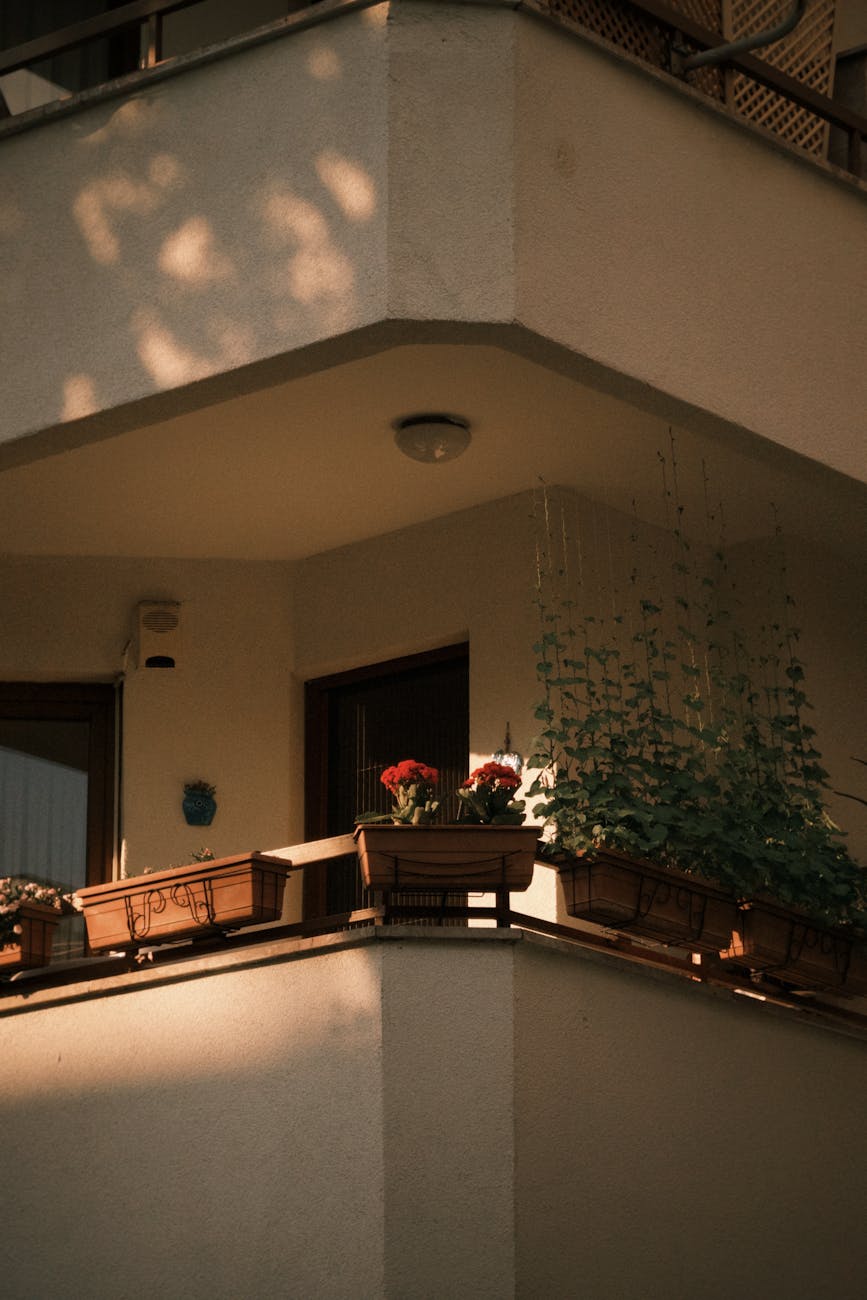
STORY I. The Balcony With the Broken Light
The first thing visible from the station platform was the balcony light.
Not the building. Not the neighborhood. Only the light — blinking weakly against the rain as if the apartment itself had been trying, unsuccessfully, to remain awake.
The train had arrived forty minutes late. The city looked smaller than memory permitted. Even the air seemed thinner, stripped of the density that childhood once gave to ordinary things.
The suitcase remained unopened for three days.
The apartment smelled faintly of turmeric, wet newspapers, and locked rooms. Dust had settled unevenly across the furniture, preserving outlines of objects that were no longer there. A clock remained fixed at 2:17. No one had repaired it because no one had remained long enough to notice it mattered.
The neighbors recognized the face immediately, though age had rearranged it.
“You came back,” one of them said carefully.
The sentence sounded less like a welcome than an accusation.
At night, the balcony overlooked the same alley where bicycles once crashed, arguments once echoed, and stray dogs once slept beneath parked scooters. Yet the silence felt engineered now. Urban loneliness often arrives not through absence of people, but through the disappearance of mutual recognition. Cities forget faster than individuals do.
The return had not happened out of longing. It happened because there was nowhere else left to postpone grief.
“I remember…” came suddenly while unpacking old steel utensils wrapped in newspaper from 2009. The words escaped into an empty kitchen. No continuation followed. Memory rarely arrives narratively. It arrives architecturally — through objects, angles, temperatures, and forgotten sounds.
Outside, the balcony light flickered again.
And for a moment, the apartment appeared inhabited by everyone who had already left it behind.
STORY II. The House Beside the Salt Road
The sea had moved closer over the years.
Not visibly enough for headlines. Not violently enough for panic. But enough that every monsoon left white residue along the outer walls of the old house near the salt road.
The decision to leave should have been practical. Economic collapse had already hollowed the fishing town. Young people disappeared first, then grocery stores, then schools. Eventually even festivals became abbreviated versions of themselves.
But departure becomes difficult when loneliness has fused itself with geography.
The old woman continued repainting the front gate every summer despite knowing nobody visited anymore. She boiled tea for two every evening though only one cup was used. Habits often survive emotional reality because routine is less painful than adaptation.
The government had offered relocation compensation twice.
Both letters remained unopened in a kitchen drawer.
The final storm arrived without spectacle. No cinematic winds. No collapsing roofs. Only relentless water entering silently through the floor tiles.
The shocking thing was not destruction.
It was beauty.
At dawn, after the flooding stopped, the entire road reflected the sky so perfectly that the town appeared suspended between two oceans — one above and one below.
For several minutes, the abandoned neighborhood looked transcendent.
Then electricity poles began collapsing into the water.
The woman stood ankle-deep inside her living room and understood something that modern life repeatedly conceals: people rarely stay because places are good for them. They stay because memory convinces them survival and belonging are identical.
When the evacuation bus finally arrived, she locked the front door out of instinct.
Not because she expected to return.
Because leaving permanently requires a kind of emotional vocabulary most people never learn.
STORY III. The Elevator That Stopped at Eleven
Every night at exactly 11:43 PM, the elevator paused on the eleventh floor.
Nobody entered.
Nobody exited.
The building supervisor insisted it was a software fault. Residents stopped mentioning it after a while because modern loneliness trains people to normalize the uncanny. In dense cities, emotional isolation often disguises itself as efficiency.
The man in apartment 1108 had lived there for twelve years without knowing the names of adjacent residents.
Packages accumulated outside doors like evidence of parallel lives.
The apartment itself resembled an interim space rather than a home. Minimal furniture. No photographs. Neutral walls chosen specifically to avoid attachment.
The loneliness had begun productively.
Long work hours became promotions. Promotions became travel. Travel became distance. Distance became habit.
By forty-three, conversations had acquired transactional precision. Food arrived through applications. Friendships survived through notifications. Entire weeks passed without physical touch.
Then one evening the elevator doors opened on eleven and remained open longer than usual.
Inside stood a child holding a paper windmill.
Impossible.
The building had no children.
The doors closed before speech became possible.
Sleep disappeared after that.
The following nights became investigations: CCTV footage, maintenance logs, conversations with security staff. None explained the recurring pause. Yet the obsession revealed something more uncomfortable than supernatural possibility.
The man was no longer searching for truth.
He was searching for interruption.
Loneliness eventually alters perception itself. The isolated mind begins manufacturing symbols because meaning deprivation becomes psychologically intolerable. Humans are pattern-seeking even in emotional starvation.
A week later, while cleaning drawers for the first time in years, an old photograph surfaced.
A hospital room.
A paper windmill.
A daughter who had died before kindergarten.
“I’m sorry…” he whispered into an apartment designed entirely to avoid remembering.
That night, the elevator did not stop at eleven.
It descended directly to the lobby.
STORY IV. The Winter Airport
Airports create a temporary equality among strangers.
Everyone is leaving someone.
Everyone is waiting for another version of life to begin elsewhere.
Snow pressed itself against the glass walls of the terminal while delayed announcements repeated every fifteen minutes in three languages. Travelers slept across metal chairs beneath artificial lighting that erased all sense of time.
The woman near Gate 22 had missed two connecting flights already.
The decision to leave had taken fourteen years.
Not because the marriage was violent.
Because it was quiet.
There are forms of loneliness more difficult to explain than cruelty. Entire relationships survive through procedural coexistence: shared bills, coordinated schedules, familiar arguments, socially acceptable silence.
Nothing catastrophic had happened.
That was the catastrophe.
She carried only one suitcase despite owning an apartment full of possessions. The reduction felt less liberating than forensic. Every abandoned object seemed to expose the accumulated weight of compromise.
Across the terminal, a child pressed both hands against the enormous windows overlooking the runway lights.
Beautiful things often appear most unbearable during emotional transition.
The aircraft lights moved slowly through snowfall like floating cities.
For a brief moment, departure looked romantic enough to justify itself.
Then her phone vibrated.
No message.
Only a calendar notification from years earlier:
Buy anniversary flowers.
Modern technology preserves emotional fossils accidentally. Devices become archaeological sites of former selves. The past survives algorithmically long after relationships stop emotionally existing.
She deleted the reminder.
Then restored it from the trash folder seconds later.
Not because reconciliation remained possible.
Because letting go is rarely an event.
Usually, it is a repetitive administrative process.
The boarding announcement echoed across the terminal.
Nobody moved immediately.
Even strangers seemed reluctant to participate in each other’s departures.

STORY V. The Window Facing the Flyover
The flyover had not existed when the building was constructed.
Back then, the apartment window faced open sky.
Now traffic moved past the seventh-floor flat continuously — buses, trucks, motorcycles, ambulances — an endless mechanical bloodstream carrying strangers toward destinations invisible from above.
The old man spent hours beside the window every evening.
Not watching vehicles.
Watching reflections.
At sunset, commuters briefly became visible inside bus windows as overlapping fragments: tired faces, glowing phone screens, sleeping children, arguments frozen mid-gesture. Hundreds of temporary human theaters passed each minute.
It comforted him strangely.
After retirement, conversations had narrowed with alarming speed. Friends died unevenly. Relatives migrated abroad. Calls became ceremonial. Festivals became logistical.
Loneliness in old age does not always arrive dramatically. Often it accumulates bureaucratically through canceled visits, delayed replies, inaccessible staircases, and shrinking social infrastructure.
Every evening he wrote letters nobody received.
Not out of delusion.
Out of preservation.
Language deteriorates without use. Memory does too.
One letter remained unfinished for months.
It contained only one sentence:
I remember the sky before the flyover.
During the first summer heatwave, electricity failed across the neighborhood. Air conditioners died simultaneously. For the first time in years, windows opened throughout the building.
Voices emerged.
Pressure cookers whistled.
Someone sang softly nearby.
Children argued in hallways.
A woman laughed loudly enough to echo between concrete walls.
The old man remained motionless beside the darkened window.
The shocking realization arrived slowly:
Loneliness had never been entirely personal.
It had been infrastructural.
The city had reorganized life so efficiently that accidental intimacy became rare.
When power returned, the building sealed itself again.
Windows closed one after another.
But for several minutes longer, he kept listening to the disappearing sounds of other people existing nearby.
As though the entire city had briefly remembered how to be human.

Leave a Reply