What’s a simple pleasure in life that brings you joy?
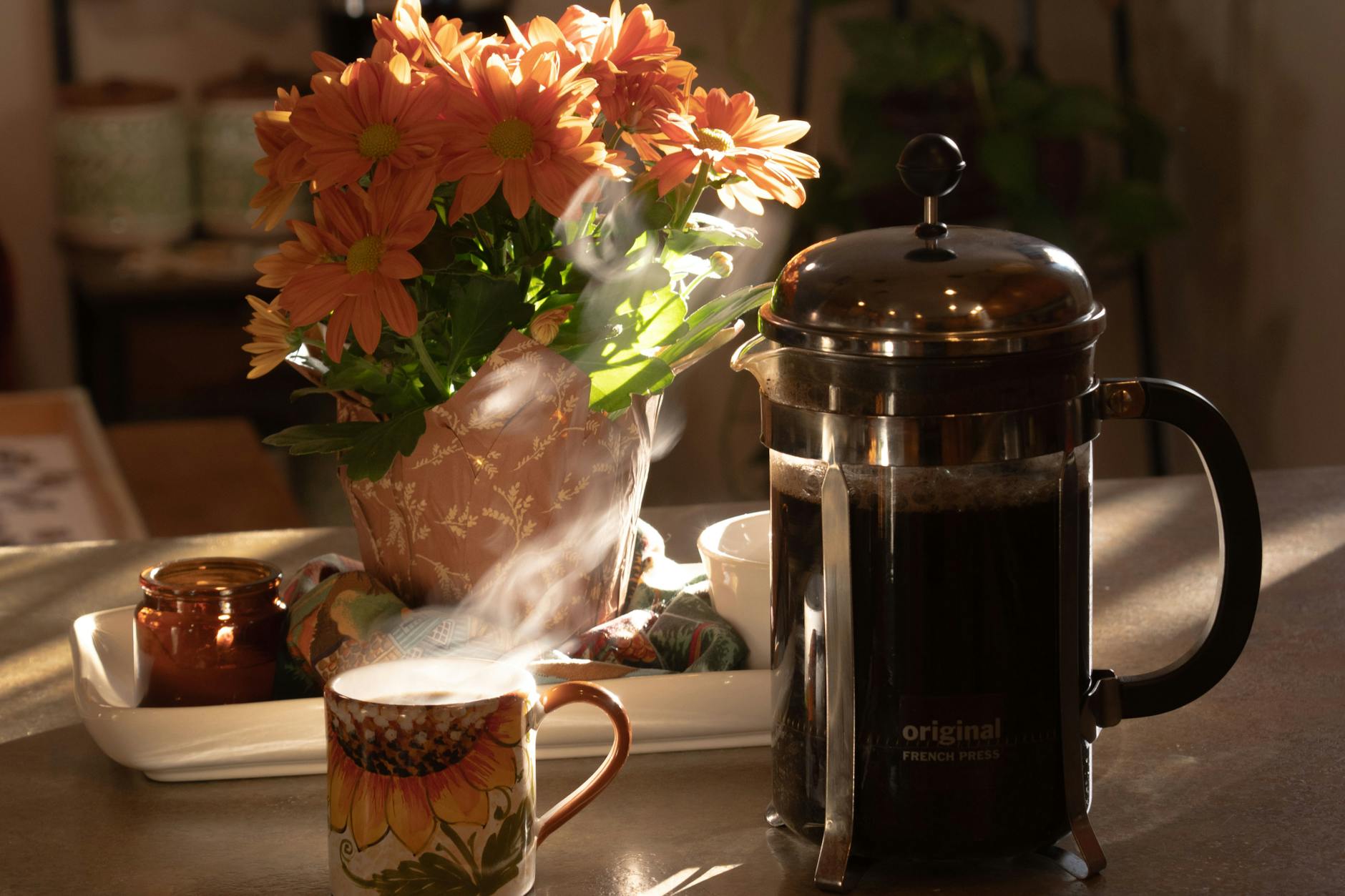
I sit in the stillness of my house at 6:00 AM, my hands wrapped around the comforting weight of a ceramic mug while the steam billows in a slow, white dance. In this fragile pocket of time, I have no deadlines, no social media feeds to scroll through, and no heavy “shoulds” weighing on my chest. There is only the tactile warmth of the coffee and the crisp air of the morning on my skin. I have come to recognize this moment as a “glimmer”—a micro-cue of safety for my nervous system that allows me to simply exist without the need to perform. For years, I overlooked these fragments of peace, convinced that simple pleasures in life were merely the white noise behind the “real” drama of my achievements. But I have learned that the little moments are not little; they are the very substance of my lived experience.
For a long time, I moved through my days in a state of perpetual “becoming,” always focusing on the “great pieces of good fortune”—the next promotion, a planned wedding, or a hypothetical lottery win—while I walked right past the “small conveniences” that occurred every day. I lived a busy, seemingly glamorous life in New York City, taking pride in my art gallery openings and a calendar filled with social engagements. I chased after external gold stars, money, and the approval of others, yet I felt a persistent restlessness. Ultimately, I have come to realize that I was caught in the Great Human Paradox: I was seeking a permanent state of bliss through external milestones, even though I was biologically programmed for hedonic adaptation.
Breaking the Treadmill
I now understand that the “hedonic treadmill” is a psychological reality where I quickly get used to both good and bad events. I noticed that when I finally achieved a long-term goal or made a significant purchase, the glow faded faster than I expected. Research confirms that even life-altering events, like winning the lottery or getting married, often see happiness levels return to a baseline within a year or two. I was misinterpreted my internal restlessness as a lack of resources, when it was actually a lack of appreciation—the intentional act of recognizing what I have and acknowledging the transient nature of my joy.
This treadmill of mine was powered by a biological leftover: the negativity bias. My ancestors survived by scanning for threats, and my modern brain still tries to do the same, priming me to ignore the warmth of the sun while I fret over a passive-aggressive email. I suffered from “intrusive thoughts,” where the weight of my long-term goals would shadow my attempts at relaxation. I felt that even a ten-minute break was a failure of productivity. But I decided to reject the idea that busyness is a badge of honor. I began to look for a different path, one that led toward ataraxia—an inner tranquility achieved by being content with simple things.
My Philosophy of “Enough”
I was inspired by the ancient wisdom of Epicurus, who argued that the most pleasant life is not one of “revelry” or “delicacies,” but one of ataraxia—freedom from worry and the absence of trouble in the soul. He taught me to distinguish between necessary desires, which remove pain, and unnecessary ones, like the craving for immense status or costly luxuries. I realized that if I put my stock in these volatile luxuries, I would always be anxious to obtain them and upset when I lost them.
This realization sparked my journey into “slow living”. For me, this wasn’t about laziness; it was a radical act of intentionality. I began to create daily habits that support rest rather than constant entertainment. I found a liberating moment when I realized I didn’t have my phone on me and felt entirely okay. Finally, I moved away from chasing external accolades and discovered that joy stems from within. By banishing the beliefs that led to my internal “tumult,” I found that “enough” was the most fertile ground for my peace.
Retraining My Brain for Small Wins
I used to deem short-term pleasures as a distraction from “loftier” goals, but I now see they are essential for my well-being. Research from the British Psychological Society helped me understand that my capacity to pursue these “hedonic” goals—like relaxing after work or enjoying a simple hobby—is significantly related to my general life satisfaction. I had to retrain my brain to see the “glimmers” in my environment.
Now, I look for the “smell of rain on a hot sidewalk” or the sound of a “toddler’s belly laugh”. I recall the internal conflict of my own “millennial burnout,” where social engagements felt like a soul-depleting chore. The shift happened when I gave myself permission to “eat, drink, and be merry” in the most literal, simple sense. I started jotting down my favorite moments of the day: drinking coffee in a quiet house, the first minute after meditation, or skipping stones across perfectly still, glass-like water. These “micro-wins” have collectively rewritten the narrative of my day, moving my focus from what I lack to the abundance of sensation that is already here.
The Practice of Presence and Language
I have also found power in changing my language. I no longer use the word “should,” because it implies force and a threat of self-punishment. Instead, I tell myself, “I’m excited to,” which encourages me to live with more appreciation. I am a generator of my own consciousness, and my words are my building blocks. I ground myself in nature, looking to the trees as my greatest teachers. A tree doesn’t question its purpose; it is simply fully present in its “treeness”.
When I slow down enough to notice these small wonders, my sense of identity shifts. I stop viewing my life as a series of boxes to check off—a process I found to be soul-killing—and I begin to see the beauty in the mundane. I realize that my purpose is not far off in the future; it is in whatever I am doing in this exact moment, whether I am stirring a pot of pasta or watching a heavy thunderstorm.
Universal Expansion and Interconnectedness
This deepening awareness reveals to me that human nature is not actually for the constant “high” of consumerism, but for the rhythmic pace of reflection. My modern distraction was merely a symptom of a nervous system that had forgotten how to recognize cues of safety. When I am present with each footstep and each breath, I feel an overwhelming sense of love for everyone around me, even strangers. I can literally feel the “woven thread” that unites us all as humans.
I have changed my view of the world from “I-You” to “We”. Now, I no longer see others as obstacles to my happiness, but as partners in this complex matrix of all beings. I take five minutes every day to notice the small wonders, like the steam from my coffee or a wildflower growing through a crack in the concrete. It reminds me to marvel at the fact that we are even here, floating on a blue planet in a massive galaxy.

A Contemplative Closing
Finding joy in the everyday is not a small feat; it is my life-long practice of surrender. As I move through my day, I make the radical choice to pause. I pause to watch the squirrels, to feel the wind at my back on a bike ride, or to simply take a “really deep breath”. I resist the temptation to take out my phone for company when I am in the presence of nature.
Happiness, for me, is no longer a destination I am racing toward; it is the way I travel. To find simple pleasures in life is to realize that the little moments were, all along, the biggest ones of all. My coffee may be over now, but the warmth remains in my mug. The world outside will eventually get louder, but that silence I found at 6:00 AM remains inside me, a foundational stone in the architecture of my peace. As the Finnish proverb says, “Happiness is a place between too much and too little”. I have finally found my place there, in the steam of my mug and the air on my skin.


Leave a Reply