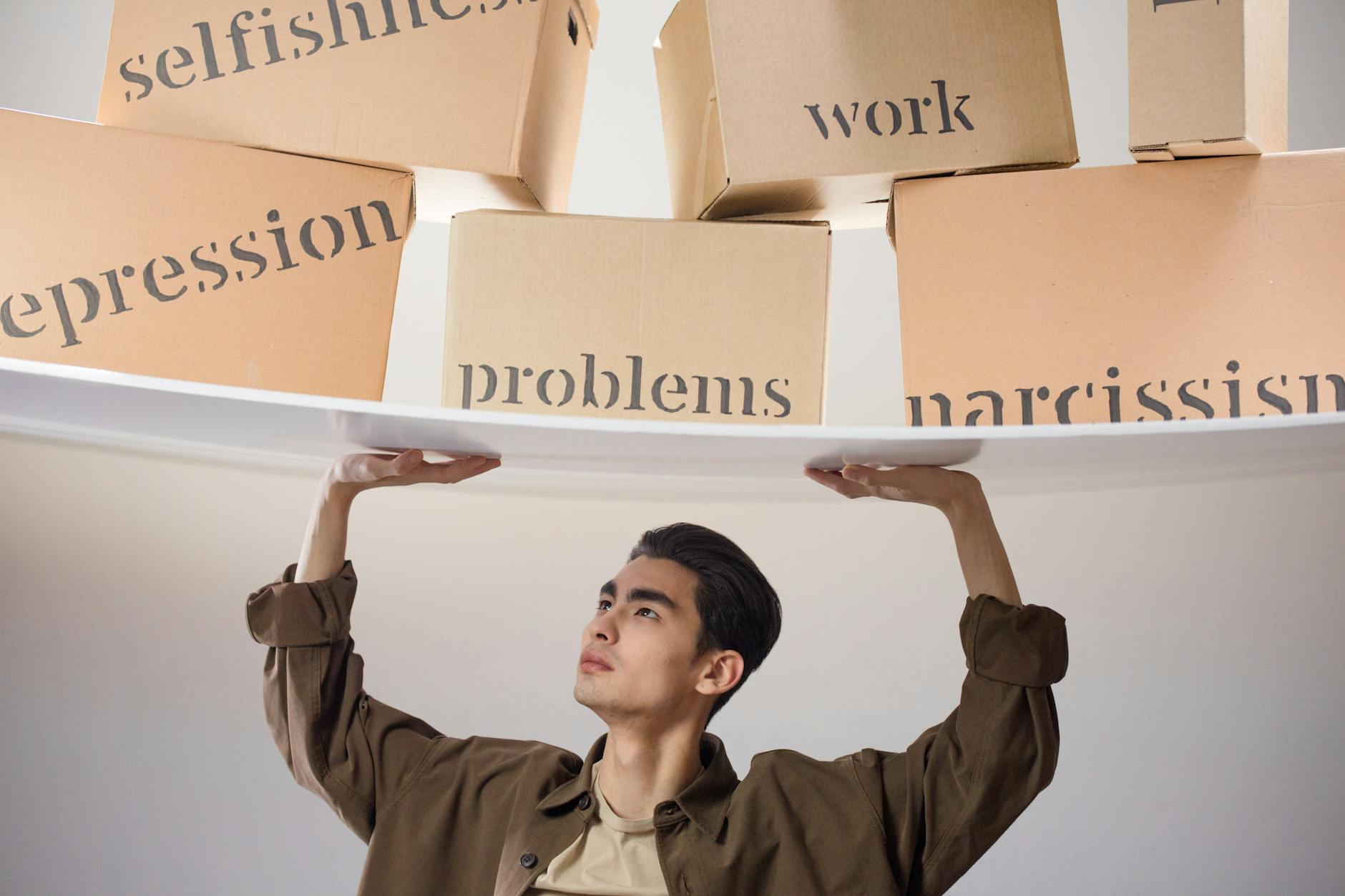
What’s a moment that made you realize you were stronger than you thought?
The Ordinary Magic of the Human Spirit: A Deep Dive into Psychological Resilience and Growth
I have often wondered what separates those who are crushed by the weight of life’s greatest challenges from those who somehow find a way to use that same pressure to forge themselves into something stronger. For a long time, I believed that resilience was a rare, innate trait—a “superpower” gifted to a lucky few. But as I delved deeper into the science of the human mind and listened to the echoes of those who have walked through fire, I realized I was wrong. Resilience is not a static endowment; it is a process. It is what researchers call “ordinary magic,” a set of internal and external resources that we all have the capacity to develop.
In my journey to understand how we adapt to adversity, I have discovered that surviving a crisis is only the beginning. There is a realm beyond mere recovery called post-traumatic growth, a phenomenon where the struggle with a new, unwanted reality leads to a profound transformation. This isn’t just about “bouncing back” to who you were before; it’s about “bouncing forward” into a version of yourself you never knew existed.
Understanding the Landscape of Psychological Resilience
To understand psychological resilience, we must first define what it actually looks like in the trenches of daily life. It is the ability to cope mentally and emotionally with a crisis or to return to a pre-crisis status quickly. But it is much more than just a quick recovery. When I look at the most resilient people I’ve encountered, I see a common thread: they don’t just resist the trauma; they integrate it.
The traditional view of resilience was problem-oriented, focusing on how to avoid disorders like PTSD. However, the modern perspective is strengths-based. It views stress not just as a disruptor of balance, but as an opportunity for growth. When I’m bombarded by daily stress, it disrupts my internal sense of balance, but it also presents a challenge. If I can appraise an event as comprehensible, manageable, and somehow meaningful, a resilient response becomes far more likely.
Biological research has even shown us that this isn’t just “mind over matter.” Our brains are wired for this. Systems involving dopamine and endogenous opioids, as well as structures like the prefrontal cortex and hippocampus, play vital roles in how we buffer stress. This means that my capacity for emotional strength is rooted in both my biology and my learned behaviors.
The Five Domains of Post-Traumatic Growth
One of the most life-changing concepts I’ve encountered is post-traumatic growth (PTG). It suggests that while trauma is undeniably distressing, the struggle that follows can yield positive psychological shifts in five key areas.
First, there is a renewed appreciation for life. Many survivors report that after facing a life-threatening illness or a profound loss, their priorities shift. The “small things” no longer seem small; they become the center of a rich, meaningful existence.
Second, there is a change in how we relate to others. Adversity has a way of stripping away superficial connections and strengthening the bonds that truly matter. I’ve found that those who have suffered often develop a deeper sense of compassion and empathy for the suffering of others.
Third is the discovery of personal strength. There is a specific kind of confidence that comes from looking a disaster in the eye and saying, “I am still here.” This isn’t the loud, boastful strength of a hero in a movie; it is the quiet, steady realization that I am stronger than I thought.
Fourth, trauma often reveals new possibilities. When an old life path is blocked by tragedy, we are forced to find a new one. This might mean a career change, a new hobby, or a new way of serving the community.
Finally, there is spiritual or philosophical change. The “why me?” questions that plague us in the aftermath of trauma often lead to a deeper exploration of existential meaning and a reconstruction of our core beliefs.
Navigating the Adversity Quotient
If resilience is the process, then the Adversity Quotient (AQ) is the metric of our ability to prevail. I’ve learned that our response to adversity is comprised of four interrelated constructs, often abbreviated as CO2RE: Control, Ownership, Reach, and Endurance.
- Control: When I face a setback, the first thing I must ask is, “How much control do I perceive I have over this situation?” Even when I can’t control the event itself, I can control my response. Those with a high AQ perceive they can influence whatever happens next, which fuels their tenacity.
- Ownership: This is about accountability. To what degree do I own the outcome? High-AQ individuals don’t waste time pointing fingers; they take responsibility for improving the situation, regardless of its cause.
- Reach: How far will this adversity “bleed” into other areas of my life? If I lose my job, do I let that failure impact my health or my marriage? Resilience means limiting the reach of a problem to the specific event at hand.
- Endurance: How long do I perceive this adversity will last? If I believe a situation is permanent and unchangeable, I am more likely to give up. Resilient people see even the darkest times as temporary.
The Moment Clarity Strikes: Stories of Unexpected Strength
I have found that the most profound lessons in resilience don’t come from textbooks, but from the personal narratives of those who discovered their strength in moments of intense pressure. I think of people like Varun, who lost his eyesight to tuberculosis and spent three months in a hospital. Instead of succumbing to despair, he realized that his disability was actually a catalyst. He found his calling working with others with disabilities, using his own journey to help them achieve their goals.
I think of Lunette, who fled the war in Sierra Leone and lost her hearing in a bombing. In the chaos of survival, she didn’t have the luxury of grieving her hearing; she simply had to keep moving. Her story reminds me that sometimes, strength isn’t a choice—it’s a survival mechanism that later reveals itself as a profound capacity for belonging and purpose.
There are also the quiet, professional realizations. I’ve heard from women who worked full-time while earning advanced degrees, exhausted but showing up every day. They realized that pressure didn’t break them—it refined them. I recall a mother who fled a toxic relationship with two young boys, having no stability or support. Her resilience showed up in the way she adapted and problem-solved for her children’s safety, proving that strength is often found in the commitment to someone other than yourself.
How to Build Your Reservoir of Resilience
The most encouraging news I have discovered is that resilience can be cultivated. It is a buildable resource. If I want to enhance my own mental toughness, I must be intentional about the habits I foster.
Prioritize Social Support. I cannot stress this enough: we are not meant to walk alone. Strong relationships with family, friends, and community are the primary protective factors against the negative effects of stress. Social support provides a “solid base of security” for our endeavors.
Practice Cognitive Reframing. My internal monologue reinforces my beliefs about my self-worth. If I tell myself, “I can’t handle this,” I am likely right. But if I replace that negative self-talk with, “I have navigated hard things before and I can do it again,” I reduce my psychological stress and empower my problem-solving skills.
Find Meaning in the Struggle. Meaning-making is a cornerstone of post-traumatic growth. This might involve storytelling, journaling, or creative expression. By crafting a narrative of my experience, I confront the questions of “why” and “what now,” allowing me to reconstruct a world that makes sense again.
Embrace Mindfulness and Alignment. In a world of constant motion and urgency, finding inner stillness is a radical act of resilience. Practices like meditation help me move through growth from a place of clarity rather than pressure. When my inner foundation is steady, my progress unfolds with intention and ease.
Focus on Character Strengths. I’ve found that focusing on virtues—such as bravery, perspective, gratitude, and hope—helps me stay grounded. When I use my “signature strengths” to solve problems, I feel more authentic and motivated. For instance, using humor during a crisis isn’t about being flippant; it’s a sophisticated way of reducing stress and encouraging creativity.
The Role of Failure and Humility
True resilience requires me to reject the image of perfection. I’ve learned that a “perfect record” is often the enemy of growth. To be truly resilient, I must learn to handle failure. Conflict and setbacks are not just obstacles; they are the very experiences that allow me to practice and refine my adaptive resources.
Humility is also a vital component. Arrogance is brittle; it breaks when things don’t go according to plan. Humility, on the other hand, is flexible. It allows me to be open to new information, to seek help when I need it, and to learn from the wisdom of those around me.

Final Thoughts: The Journey of Becoming
As I look back on everything I’ve learned about the human spirit’s capacity to adapt, I am struck by the realization that resilience is not about reaching a final destination. It is a lifelong journey of development. It is the continuous process of integrating my reason with my “trained emotions”—those stable sentiments of habit that help me weigh my concern for people and things properly.
I used to think that being “strong” meant being bulletproof. I now know that real strength is being willing to be upset, being willing to cry, and being willing to say, “I am not okay.” True resilience is the courage to admit my vulnerability and then choose to rise anyway.
Life will inevitably deal us cards we didn’t want. We will face illness, loss, and uncertainty. But the choice of how to play those cards remains ours. We are all capable of “extraordinary human strength.” We are all important. Most importantly, we all matter. And most of all, we are all much stronger than we realize. By fostering our social connections, reframing our narratives, and finding meaning in our struggles, we don’t just survive the storm—we learn how to sail through it, emerging on the other side wiser, deeper, and more fully alive.

Leave a Reply