How do you handle fear and self-doubt?
I · The Arrival
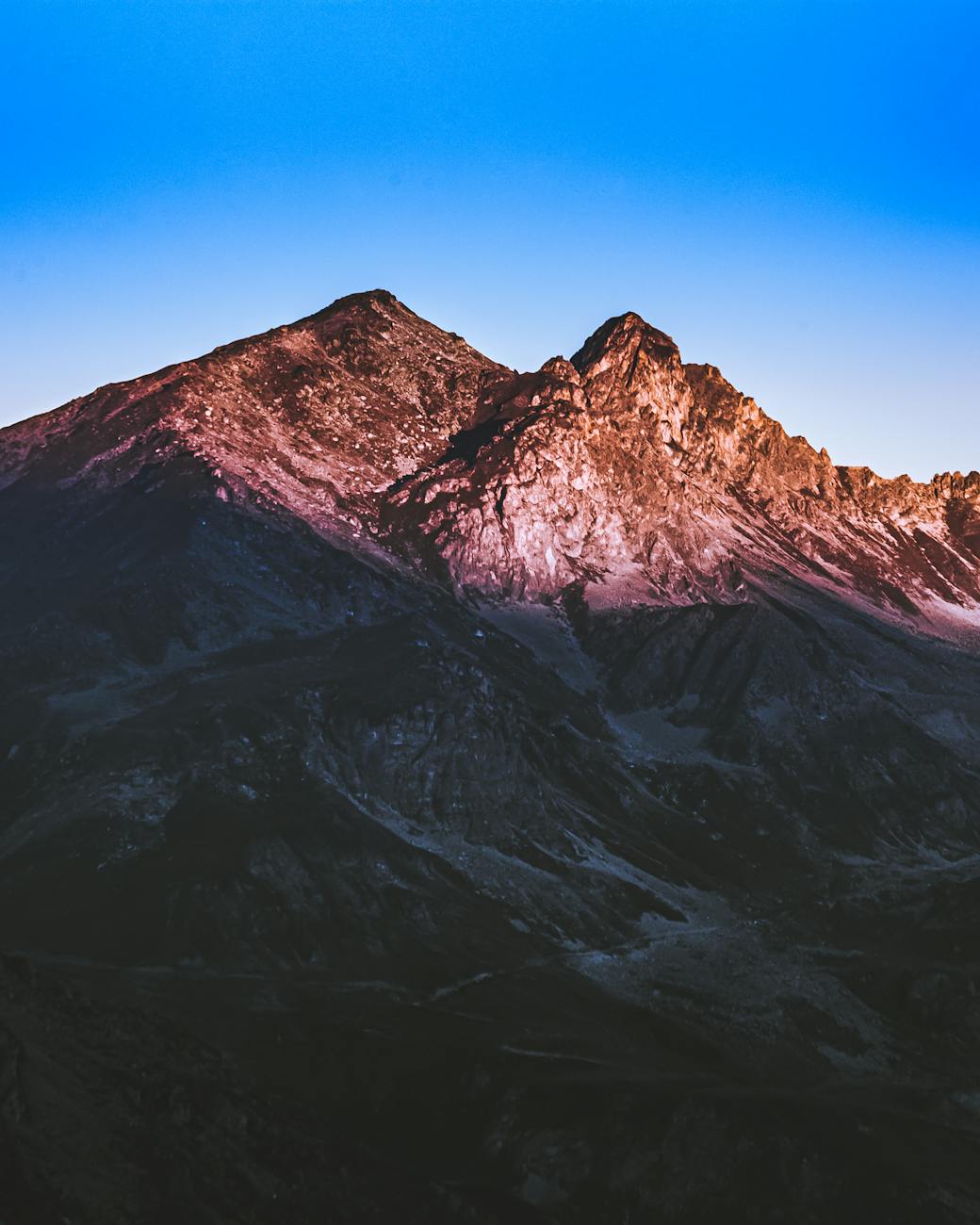
I have known fear the way the mountain knows weather —
not as enemy,
not as failure,
but as something that comes
without asking,
moves through the high passes,
and leaves the rock exactly
as it found it.
There were mornings I woke already braced —
some low familiar pressure in the chest,
the body running its old rehearsals:
you are not ready,
you are not enough,
the others will notice.
I did not argue with these voices.
Argument gives them a seat at the table.
I learned, slowly and with many failures,
to observe them the way you observe frost
forming on glass in the cold hour before dawn —
intricate, temporary,
belonging entirely to the conditions that made it,
not to the glass.
The glass is never frost.
That distinction saved me
more than once.
II · The Riverstone Years
I spent years trying to become
someone who did not feel this —
someone for whom the open door
was simply an open door,
not a threshold asking something of me
I wasn’t certain I could give.
I watched others step through,
easily.
I made a private science of their ease,
catalogued all the ways I was not them.
It was meticulous and it was useless
and I was very good at it.
There were rooms where I had words
and did not speak them.
The words sat in my throat
like stones that had not yet learned
they were capable of becoming rivers.
I did not know then
that silence chosen in fear
compounds — that each unspoken word
becomes a small weight
pressing on the next one.
The river has no such problem.
It does not look at the boulder
and rehearse inadequacy.
It simply finds
the long way around,
and in the finding,
deepens.
This is not metaphor I chose.
This is what water actually does.
I had to sit beside a river
for a long time
before it became obvious.
III · What the Winter Trees Know
In December, I walked often at dusk.
The trees stood stripped to their architecture —
every branch legible against the pewter sky,
nothing withheld, nothing performing.
They did not look diminished.
They looked more themselves
than they ever did in summer,
when the leaves were busy
being beautiful.
I thought: perhaps self-doubt is a kind of winter.
Not a dying — a stripping.
The ornamental parts fall away
and what remains is the true shape of the thing —
the trunk’s fidelity to itself,
the root’s long conversation
with the dark.
The seed does not panic
in the underground.
Or perhaps it does —
perhaps that cracking open
is exactly what panic feels like
from the inside —
and it cracks open anyway,
not because the darkness has lifted
but because something in it
has decided to become
more interested in growing
than in staying safe.
IV · The Reclassification
Here is what I have learned about fear:
it attends everything I care about.
It showed up the morning I said
the true thing to someone I loved.
It was there before every beginning,
every blank page, every first step
onto uncertain ground.
The indifferent feel no fear.
The ones who do not try
are very calm.
I began to notice
that fear was arriving
in the places I was most alive —
and this reordered everything.
Self-doubt is the shadow
cast by something real in us
that is reaching toward light.
No shadow without a source.
No doubt without a self
genuinely trying to become.
I stopped calling it weakness.
I started calling it evidence.
V · What the Sky Teaches About Looking
There is a thing astronomers know:
the faint stars cannot be seen
by looking directly at them.
The eye’s center is its weakest point
for gathering light.
You have to look
slightly to the side,
hold the star in peripheral vision,
and trust what you cannot quite
look at directly.
I think confidence is like this.
The ones who force it, who stare hard
at their own adequacy,
tend to lose it in the staring.
It appears, instead, in the peripheral —
when you are so absorbed in the work
that you forget to audit yourself,
when the question of whether you are good enough
becomes less interesting
than what you are making.
The cosmos does not ask
whether it is expanding correctly.
It simply expands,
in all directions,
without apology,
without a committee.
We are made of the same material.
The fear that visited this morning
is also made of the same material.
We are, all of us, the universe
briefly worrying about itself —
which is,
when you sit with it long enough,
quite beautiful.

VI · What Remains After Weather
I will not tell you the fear is gone.
That would be the kind of ending
that only exists in the kind of story
that has never met a life.
What I will tell you
is that I have learned to let it pass through —
the way the mountain lets the storm pass,
not by resisting,
not by becoming storm,
but by being
mountain.
I have learned to say —
quietly, and sometimes out loud —
here you are again.
I see you.
You are not me.
And then the step.
Always the step.
Not fearless —
never that,
not yet, not entirely —
but present,
moving,
the fear alongside
the way a cold wind
accompanies the walker
who chose to go
out into the morning anyway.
The bird on the branch’s edge
does not wait for certainty.
There is no certainty in flight.
There is only the moment
the wings open
and the branch
is no longer necessary.
I am still learning
when to let go of the branch.
But I have felt the wind.
I know what it is asking.
And some mornings —
more mornings than before —
I answer.

Leave a Reply