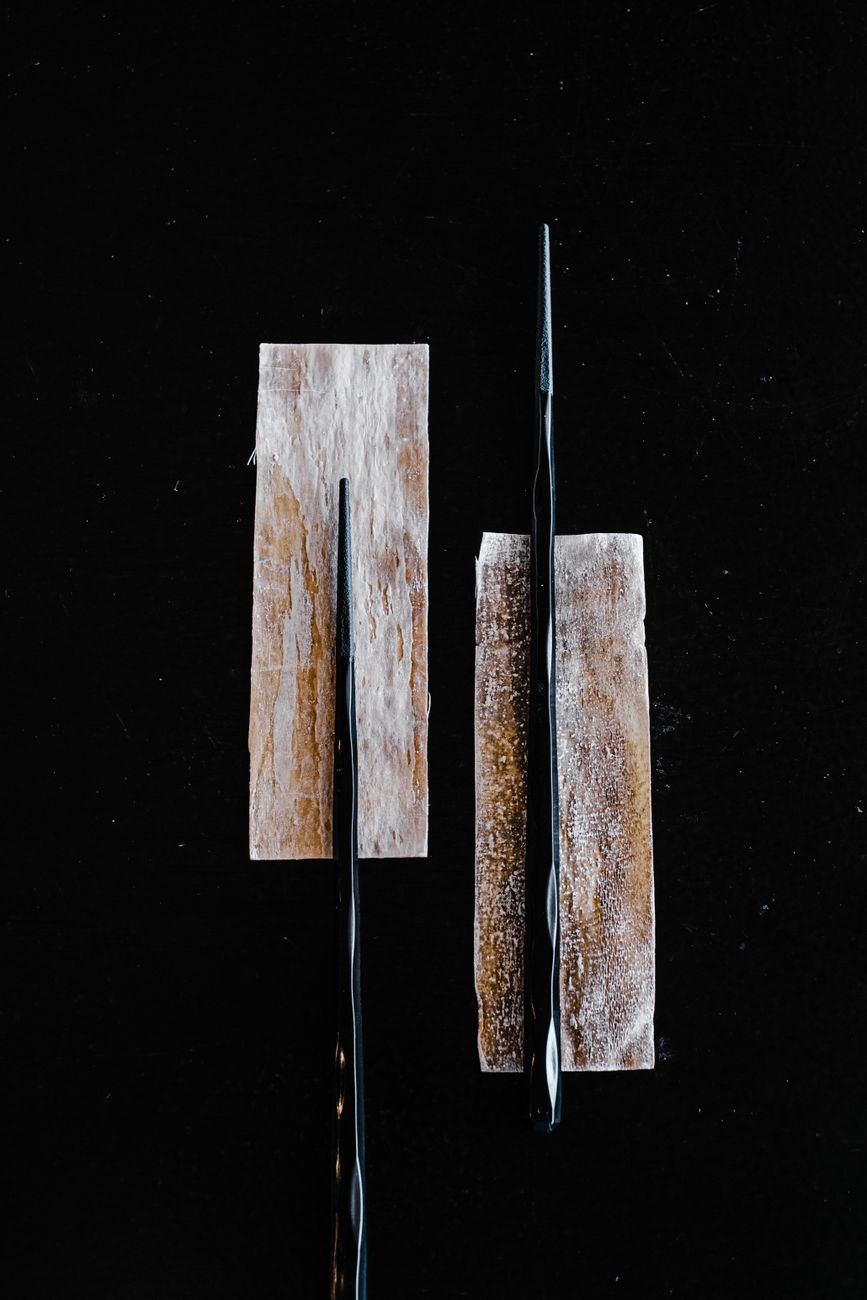
Theme: Yohaku
Yohaku, often translated as “empty space,” is not emptiness in the sense of lack. It is presence through absence. It asks whether what is omitted might speak more deeply than what is shown.
Philosophically, Yohaku exists in tension with modern impulses toward accumulation—more words, more noise, more proof of existence. Yet human experience repeatedly reveals that meaning often arrives through intervals: pauses between conversations, winter between harvests, distances between stars.
Emotionally, Yohaku carries solitude without necessarily becoming loneliness. It contains grief because loss creates spaces. It contains love because closeness depends on distance. Moreover, t contains memory because remembering is partly reconstruction around what disappeared.
There is contradiction here: emptiness can comfort and unsettle. Silence can heal and accuse. Space can feel like freedom or abandonment.
Human life repeatedly teaches this paradox: what remains unsaid often shapes us more than declarations. The room after someone leaves. The mountain path between villages. The night sky between constellations. We live inside intervals as much as events.
Yohaku proposes that incompleteness is not failure. It may be the architecture of meaning itself.
I. The Incomplete Morning
There are mornings
when the world arrives incomplete.
Not broken—
only unfinished
the way dawn is unfinished
while mist still carries pieces of night
through the river valley.
I stood once beside water
before the birds had decided
whether morning was worth announcing,
and the river moved
without explanation.
Not quickly.
Not slowly.
Only enough.
Mist lifted from its surface
in thin white threads
as if the earth
were quietly removing bandages.
There was space everywhere.
Between stones.
Between reeds.
And,
Between my thoughts.
I had spent years
trying to close such distances.
Filling notebooks.
Filling rooms.
And,
Filling conversations
until language became furniture
stacked against every wall.
As if silence
might enter otherwise.
As if silence
were dangerous.
But rivers never hurry
to explain themselves.
Mountains do not rush
to complete their outlines.
Even the sky
leaves enormous sections blank.
Above me,
one fading star remained visible—
not because it was large
but because darkness
gave it room.
II. The Architecture of Absence
I think about this often now:
how absence participates.
How the empty chair
keeps the shape of its missing person.
Or,
How old houses remember voices
through spaces
between wooden beams.
How grief
rearranges architecture.
Winter taught me this first.
Not through snowfall.
Through what snowfall covered.
Paths disappeared.
Edges softened.
Fields lost certainty.
And suddenly
distance itself
became visible.
I walked mountain roads then,
wet stone,
pine shadows,
cold air entering lungs
like difficult truth.
There were stretches
where no one passed for hours.
Only wind.
Only my own footsteps.
And,
Only the strange discovery
that loneliness changes form
when you stop arguing with it.
The mountain said nothing.
Yet somehow
I returned carrying sentences.
Clouds opened briefly
around the ridges.
Then closed.
Enough.
Always enough.
III. Vanishing Edges
Some evenings
I watch birds vanish into fog.
Not fly through it.
Vanish.
As though existence itself
occasionally prefers softer borders.
And perhaps it does.
Because oceans speak through retreating waves.
Because music survives
through pauses.
And,
Because breathing depends
on what leaves us.
In cities
we inherit another rhythm.
Notifications.
Headlines.
Crowded sidewalks.
The endless project
of proving we exist.
We illuminate every corner.
Name every feeling.
Measure every second.
Yet still,
after midnight,
the room grows quiet.
Dust floats through streetlight.
Refrigerators hum.
Walls expand and contract.
And somewhere beneath ordinary noise
another world waits.
Not hidden.
Only quieter.
IV. Lessons from Winter Fields
I remember an old winter field—
long shadows crossing frozen grass,
sunlight arriving sideways,
everything reduced
to line and space.
No flowers.
No spectacle.
Just enough light
to reveal
how much darkness cooperates.
Perhaps this is what stars know.
From earth
we call them constellations.
But between them—
distance.
Enormous distance.
Galaxies held together
not only by matter
but by separation.
Even the cosmos
requires intervals.
Even light
travels mostly through emptiness.
So why should humans
be different?
Why should we expect
love without distance,
memory without loss,
identity without change?
V. River Questions
I once believed understanding
meant collecting answers.
Now I suspect
understanding resembles standing still
beside moving water
long enough
for questions to become landscape.
The river from that morning
still exists somewhere.
Perhaps wider now.
Perhaps narrowed by drought.
And,
Perhaps carrying leaves
from forests
I will never visit.
Its surface still breaking around stones.
Still leaving spaces.
Always spaces.
And I think of all that shaped me:
doors closing.
People leaving.
Letters unanswered.
Journeys postponed.
The strange mercy
of unfinished conversations.
At the time
each absence felt like subtraction.
Now
they resemble windows.
Wind enters through them.
Light enters too.
Sometimes sorrow.
Sometimes stars.
And,
Sometimes nothing.
Nothing is underrated.

VI. The Space That Listens
The world began teaching me this slowly.
Through pauses after rainfall.
Through moonlight touching
only half the lake.
And,
Through snow preserving
unfinished footprints.
Through the moment after thunder
when hills briefly remember silence.
We spend years fearing emptiness.
Then one day
while watching evening gather
between branches,
or standing alone
beside winter water,
or looking upward
into distances older than language,
we notice:
space was never empty.
It was listening.
And perhaps
that is enough.
Perhaps meaning itself
arrives this way—
not crowded,
not complete,
but opening.
Like clouds around mountains.
Like river mist.
And,
Like the widening darkness
that allows one star
to remain visible
a little longer.
And when night finally settles,
when words become unnecessary,
when the world loosens
its grip on explanation,
there is still wind moving
through dry grass.
Still mountains keeping shadows.
Still rivers carrying silence
without spilling it.
And,
Still space
holding everything apart
so that everything
may belong.
Yohaku.
The shape left open.
The room left breathing.
The quiet
that keeps the world
from closing completely.

Leave a Reply