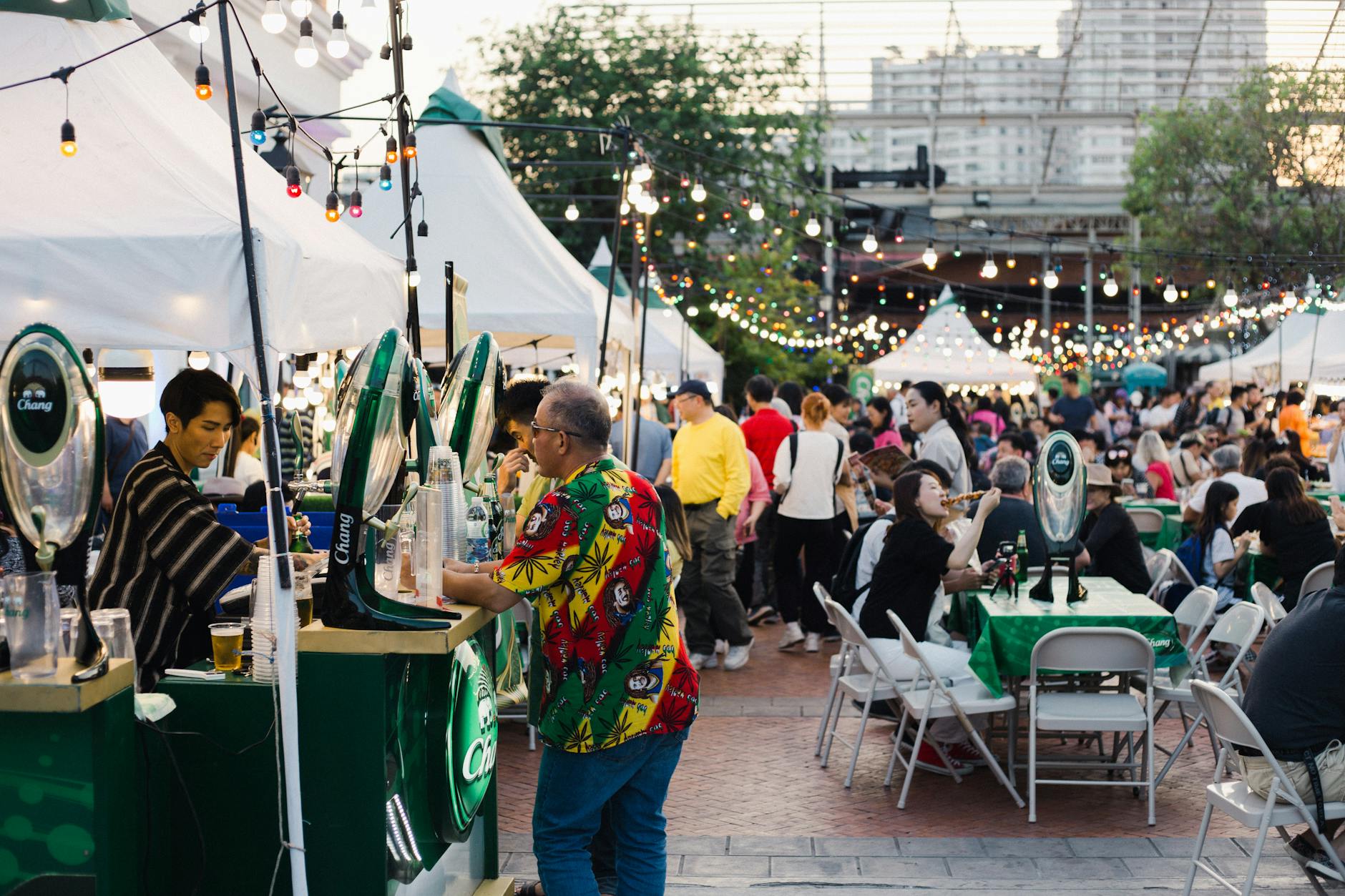
Understanding why food-safe packaging matters in food festivals reveals a shift most of us haven’t consciously noticed.
The ritual of eating together is quietly becoming engineered
There was a time when eating at a food festival felt like a gamble. You trusted the aroma, the crowd, the chaos. Hygiene was a visible guess, not an invisible guarantee.
But something subtle has shifted—and understanding why food-safe packaging matters in food festivals reveals a deeper transformation. We are no longer just consuming food. We are consuming systems of trust that operate silently beneath the surface.
The experience still feels spontaneous. But the safety? Increasingly pre-designed.
Repetition is turning occasional indulgence into routine behavior
Food festivals are no longer rare cultural bursts. They are becoming recurring lifestyle rituals—weekend defaults, social habits, predictable escapes.
And repetition rewires behavior.
The first time you eat from a crowded stall, you observe carefully. The fifth time, you relax. The tenth time, you assume safety. This is where why food-safe packaging matters in food festivals becomes critical—not because risk disappears, but because attention does.
Familiarity compresses vigilance.
And reduced vigilance demands stronger systems.
Trust is shifting from human judgment to material cues
We used to trust people. Now we trust signals.
The cleanliness of hands has been replaced by:
- The firmness of a container
- The tightness of a seal
- The texture of a wrap
- The absence of grease stains
These cues are not accidental—they are cognitive shortcuts.
They tell the brain: this is safe enough to proceed.
This is the real answer to why food-safe packaging matters in food festivals—it replaces human judgment with material assurance, reducing friction in decision-making.
And the transition is so smooth, most people never notice it happening.
Scaling food experiences requires invisible infrastructure layers
As food festivals expand, variability becomes the enemy. Different vendors, different practices, different levels of hygiene.
Human consistency doesn’t scale well.
So systems intervene.
Packaging evolves into:
- A contamination barrier
- A standardization mechanism
- A regulatory compliance layer
- A portable trust signal
It is no longer passive. It is operational.
Without this invisible infrastructure, large-scale food experiences would struggle to maintain reliability. Packaging doesn’t just protect food—it stabilizes the entire ecosystem.
Perceived safety is beginning to override actual verification
Here’s where things get complicated.
When packaging looks safe, we stop asking deeper questions.
We assume:
- Clean packaging equals clean preparation
- Sealed food equals hygienic handling
- Branded material equals regulated quality
But these are associations, not guarantees.
This reveals a hidden dimension of why food-safe packaging matters in food festivals:
it creates a perception layer that can sometimes substitute for reality.
And perception, in high-speed environments, often wins.
Cleaner formats are quietly reducing sensory engagement
Food festivals were once immersive and raw.
You saw flames, smoke, oil splatter.
You smelled the cooking process.
And, you felt the environment.
Now, improved packaging is changing that experience.
Food arrives:
- Contained
- Structured
- Controlled
Less mess. Less chaos. And, Less sensory overload.
But also, less connection.
We gain hygiene and efficiency—but lose a layer of immediacy. The experience becomes smoother, but slightly more distant.
Regulation is shaping behavior far beyond compliance requirements
When safety standards for packaging tighten, it seems like a technical shift.
But it is also behavioral design in action.
Standards influence:
- What vendors can use
- What consumers expect
- What feels “safe enough”
You will glance at the packaging—and decide.
Over time, these expectations harden.
Consumers begin to equate:
- Better packaging with better food
- Cleaner appearance with safer consumption
This is how regulation reshapes perception—not just outcomes.
The better systems get, the less visible they become
The paradox is simple:
As systems improve, awareness declines.
You don’t think about:
- Chemical composition
- Material safety
- Contamination pathways
Because the system handles it.
This is efficiency—but also cognitive outsourcing.
Understanding why food-safe packaging matters in food festivals requires recognizing that trust is no longer actively constructed—it is passively received.
Convenience is reshaping how and why we consume food
Modern food festivals are optimized for flow:
- Faster transactions
- Easier mobility
- Minimal friction
We are no longer just consuming food.
We are consuming pre-validated trust.
Packaging enables all of this.
It allows you to:
- Walk while eating
- Carry multiple items
- Share effortlessly
But convenience changes engagement.
You eat quicker.
You reflect less.
And, you move on faster.
Consumption becomes efficient—but also more automatic.
Food experiences are transitioning from human to system design
The direction is clear.
Food experiences are becoming:
- More standardized
- More engineered
- More system-dependent
Packaging will continue evolving—toward smarter materials, better sustainability, stronger compliance.
But the real shift is conceptual.
Trust is no longer built in the moment.
It is embedded in the system before the experience even begins.

What this shift reveals about modern human behavior
This is not just about food.
It reflects a broader pattern:
- We trust systems over individuals
- We rely on signals over verification
- We prioritize ease over awareness
Food festivals are simply a visible expression of this shift.
At its core, why food-safe packaging matters in food festivals is a story about how humans adapt to complexity—by simplifying, outsourcing, and automating trust.
The unnoticed question hidden inside everyday choices
The next time you pick up food at a crowded event, observe your decision-making.
You won’t ask who prepared it.
You won’t inspect the process.
Instantly.
That moment reveals something deeper than convenience.
And the uncomfortable question is:
How much of our daily life now runs on trust we never consciously chose?

Leave a Reply